July 2006 Archives

Unconscious Attraction

| No Comments
MindBody0706.jpg

Who or what is in
control of your life?

By Chris Lucerne, PCC

Are you willing to faithfully explore the inner depths of yourself to discover just what makes you tick? Do you want to have more in your life -- more money, more love and more fun? Would you like to think, feel, and act differently than you currently do? If so, you are not alone!

This article begins a 12-part series on how to attract all that you desire by using the 12 universal laws of manifestation. If you are willing to set aside the questioning of whether or not these laws are real in favor of testing them out in the laboratory of your own life, read on.

The Law of Unconscious Attraction
We attract by default those life experiences that are appropriate to our unconscious programming. Then we tend to see those life experiences as ordained. We say, 'that's just the way life is,' rather than seeing them as products of our conditioning that can be changed by conscious design.
~ Gay Hendricks, Ph.D.

Our belief system is being formed from the time we are conceived, and it continues to be created throughout the developmental years of early childhood. Solidly in place, these beliefs radically influence the shaping of our lives. By their very nature, beliefs are not provable and they are quite arguable, yet we tend to stake our lives on our beliefs. Many beliefs will hinder us: beliefs such as, "Nothing I do is ever good enough," "Wealth is for other people; I know I will never be wealthy," and "I'm fat, stupid and ugly." Your beliefs create the reality in which you live. You may think that your life is just the way it is and that you have no control over it, but that is NOT so.

What is true is that our lives are a reflection of the beliefs that we hold at a conscious and unconscious level. Through the dynamic law of unconscious attraction, we have attracted people and circumstances into our lives that are in alignment with our beliefs. Although it is difficult to accept, we don't see the world as it is, we see it as we are. And, looking through the filter of our beliefs, we align our behaviors and arrange our lives in response to what we see, thereby creating the self-fulfilling prophesy of our beliefs.

For instance, Sheri has the belief, "Nothing I ever do is good enough." This belief manifests in her life through constant striving to do better and better and her always trying to measure up to others' expectations. In her job, she works harder and longer trying to gain the approval of her superiors. And, even when she does get accolades for her excellent work, it is not enough. Why? Because she is looking through her belief, the filter of "Nothing I ever do will be good enough," and so, in her mind, it isn't. No matter the evidence presented to the contrary, she refuses to believe it.

Then there's Jack, who shares the same belief with Sheri, yet it manifests in a very different way. Jack has been terminated by multiple employers. His attitude is "Why try? Nothing I ever do is good enough anyway." So this belief becomes a self-fulfilling prophesy in his life. It keeps him on the treadmill of one failure after another.

Is there a way out of this dilemma? Yes! We want to bring the unconscious beliefs that run our lives out into the light of day so that we can change them. You have the choice of continuing to act out of your current beliefs or, instead, intentionally challenging and changing them. When you change your beliefs, you change your reality. If you want to know what your beliefs are, all you have to do is look at the results you have produced in your life. For example, if you argue with your partner consistently, you have some belief about arguing that keeps this behavior going. If you only have enough money each month to makes ends meet, then you have a belief about that. Your unconscious beliefs are evidenced by what you continually create in your life.

Activity:
Explore what you believe at an unconscious level by focusing on one specific aspect of your life that you would like to change (i.e., relationships, money, work, fun and leisure time, emotional health, physical health, spiritual health, contribution to community) and then bring to mind a specific current situation.
Ask yourself these questions and write down the answers.
- In this area of my life, what are the results that I am producing?
- In this area of my life, what do I complain about most?

Keeping in mind the answer to the above questions, answer the following sentence stems:

• I should/shouldn't ... • They always ...
• If only ... • I can't ...
• I never ... • They (he/she) won't ...
• I always ... • I'm not ...
• They (he/she) never ...
• They (he/she) should/shouldn't ...

Once you have identified the beliefs, you now have the opportunity to transform them into beliefs that inspire, motivate and fully serve your aliveness and your happiness. While you may not know how to transform your beliefs, you have at least taken the first step. You now have awareness, and awareness is the key to change. Take a moment to love and appreciate YOU for being willing to take this step.

Many people go through life on autopilot, blaming themselves or other people, and/or outside circumstances for their lives. Don't let that be you. You have the opportunity to create what you want, and it begins with self-exploration. If possible, I encourage you to hire a skilled and talented coach or therapist, or to participate in a well-designed personal growth workshop to discover and transform your beliefs. Outside support is valuable to all of us. We each have many blind spots -- things we simply cannot see about ourselves. Skilled practitioners can gently support us in seeing what is not obvious. You deserve to create an awesome life. I encourage you to embark on the journey of self-discovery and create your life by conscious design. It is an inside out job.

Note: This article is inspired by Drs. Gay and Kathlyn Hendricks. The 12 laws of manifestation are based on the two-part CD set The Manifestation Course by Gay Hendricks, and the set is available at www.Hendricks.com.

Chris Lucerne is a Professional Certified Coach. Using a body-mind centered approach, she specializes in two areas: supporting clients to build relationships that matter (including the relationship with one's self) and to go beyond loss and embrace life. Visit her Web site at www.ChrisLucerne.com. Contact Chris Lucerne at (210) 408-7699.

Keeping Track of the Miles

| No Comments
running0706.jpg

On your mark, get set, log!

By Paul Baltutis

While leg muscles are certainly a runner's primary mover, our hands can serve as a secondary mover. Writing mileage down or entering your distances into a computer after a run can provide a daily dose of motivation. When you account for your mileage, you create a mini-reward, a figurative pat on the back. And not filling in the blanks for three, four, five days (i.e. too many rest days) should generate enough guilt to steer you back toward running. On many levels, a training log can provide that incentive for you to put one foot in front of the other.

Especially useful for beginners, training logs are analogous to scaffolding on a building. Its purpose is to provide temporary support to the structure until such time as when the structure can stand on its own. Temporary measures can lead you to the point where running becomes self-perpetuating and your journey can begin.

This is what Bob Fletcher, author of the book Spaghetti Every Friday, said about keeping a running log: "I kept a log for the first five years that I started running. Mind you, I was a total beginner, running at Memorial Park in Houston. I kept it because the club I belonged to would send us incentives when we reached various benchmarks. They gave us patches at 500 miles, 1,000 miles, etc. It worked because I wanted to keep building my miles." As Fletcher became more fit, he mentally kept track of his miles. His routine was set and included 80 miles a week and workouts twice daily. Like most runners, once his mileage increased, he wanted to attempt the marathon. After his first marathon, Fletcher was pretty well hooked on them and thought of different challenges to make them interesting.

His book, written back in 1983, was a running journal about completing 50 marathons in 50 weeks when he turned 50: "I wanted to do something special when I turned 50. I took a year off of work and hit the road. My wife and I traveled to 37 different states in those 50 weeks. I kept track of it all and decided to write a book about it." Fletcher continued his marathon running ways, making the 50 States Club in 1988, and totaling 201 marathons so far. Fletcher ran most of his marathons while he lived in Houston, and he retired to Fredericksburg in 1994. You can read more about Bob Fletcher's book on the Web site www.spaghettieveryfriday.com.

When you start your log, a good rule is to keep it basic. Entries can be as simple as "Two miles - easy." More complex entries that delve deep into your emotional state of mind can come sometime later. As a matter of fact, you will probably find that running is a path of self-discovery, and your logbook will be a convenient place to record all your epiphanies. On the more practical side, you can use your old logs to look back at times you were racing well, when you bought or replaced your running shoes, or what might have caused an injury and how long it took to heal. As long as you write it down somewhere, the information can be retrieved later.

I suppose I am "old school," for I enjoy the process of putting the pen to the paper. If you prefer newer technology, there are numerous online journal and computer programs that can be used. Check out some of the available online journals at coolrunning.com, runnerslog.com or logarun.com, to name a few.

What have worked for me are the writing-type journals. A written logbook can be nearly anything. I have used a wide variety of calendars to write on, from M.C. Escher, Sierra Club, The Far Side, Dilbert, and the original Jim Fixx, or John Jerome's Complete Runners Day-By-Day Log that is usually on the New York Times bestseller list. I have even used blank index cards and wall charts. It doesn't make too much difference as long as you have lines and a blank space on which to write.

I started my journal, back on October 10, 1975, when I was a freshman at Arizona State University. My first entry went something like this: "Start. Run 3 Miles - day, Calculus Exam 78." (Why did I write "day"? In Tempe, Arizona, I did most of my running at night to escape the desert heat.) My first logbook was a 4" x 5" term planner/calendar I picked up for free at the ASU bookstore. Evidently, I felt an obligation to keep track of my schoolwork, and I threw in my workouts for the heck of it. I found out that I liked to keep track of my mileage, and it became a habit just like running itself.

My running log collection so far goes back 30+ years and totals 48,000 miles, but who's counting? What is nice about old logs is that you can reminisce not only about your running but also about your life. Remember those epiphanies I mentioned earlier? And that's why running, which is a sport about legs, sometimes needs a helping hand.

Paul Baltutis is the manager of Soler's Sports at 5933 Broadway and a certified marathon coach for Team in Training. Contact him at sage_run03@yahoo.com.

Smart Snacking

| No Comments
health0706.jpg

Making healthful choices
when you want a snack

By Raymond Wei, MHA,
CHE for The Health Collaborative

You've hit the home stretch at the office. It's mid-afternoon. Lunch time has passed, and it's too early for dinner. It's time for a snack.

A Columbia University study revealed that most Americans eat at least one snack a day. Summer can be prime snacking season for many families. With kids out of school, family schedules and mealtimes become even more unpredictable because of outdoor activities and vacation schedules. With a most hectic schedule, many families substitute snacks for meals and, unfortunately, choose snacks for taste and convenience instead of nutrition.

Contrary to popular belief, snacking does not have to be bad for you. In fact, snacks can provide an opportunity for you to add balance to your diet and keep you from feeling deprived between meals.

Here are some guidelines for smart snacking.

Smart snacking
Consider snacks as mini-meals. Smart snacking starts with thinking of a snack as a mini-meal that's part of a healthy diet instead of a treat or splurge. Make snacks an integral part of your daily meal plan. Planned snacks complement your calorie intake for the day as opposed to the chips, candy, doughnuts and other high-calorie snacks that are convenient but not nutritious. Enjoying a planned, healthy snack during the day also will help you avoid overeating at dinner.

Plan for success.
Planning is essential to make healthy snacks as convenient as the high-calorie ones. For example, clean and prepare fruit and vegetables as soon as you get them home from the store. If you wait until later, you'll become hungry and reach for a convenient snack instead of a nutritious one. Other convenient snacks to have on hand are low-fat yogurt, low-fat cheese and lean deli meats. Stock your pantry with items such as whole-grain cereal, snack-sized packages of pretzels and small boxes of raisins or other dried fruit.

Maintain a balanced diet.
Having balanced snacks means eating many different types of foods from all of the food groups. Use the Food Guide Pyramid as your guide for snacks, as well as for meals. For example, snacking on fresh fruits and vegetables will help you reach the recommended number of servings in these groups. Selecting low-fat yogurt and cheeses will help meet your daily calcium requirement.

Taste and texture are important.
The sensory qualities of food - such as crunchiness or how it melts in your mouth - are important to how we enjoy food. If snacks taste good and have a mouth-pleasing texture, you are less likely to miss the foods with higher fat content. Combining food groups adds taste and texture. Eat cereal and fresh fruit, low-fat cheese on crackers or a rice cake with a fresh apple.

Read labels.
It's important to read snack food labels to be sure that you understand the portion size and calorie count as well as fat, sugar and sodium content.

Shop for alternatives.
Look for the low-calorie, fat-free or low-sodium version of your favorite food. Make your selections with these definitions in mind:

Fat-free: less than 0.5 grams of fat per serving
Low-fat: 3 grams or fewer per serving
Light: one-third fewer calories or half the fat of the regular version
Low-sodium: 140 milligrams or fewer per serving
Lightly salted: at least 50 percent less sodium per serving than the regular version
Reduced: when describing fat, sodium or calorie content, the food must have at least 25 percent less of these nutrients than the regular version

Consider trade-offs.
Even the most health-conscious among us will admit that there are times when only cookies, chips, dips and other traditional snacks will do. Remember that you still have options. Decide whether you would rather have a larger portion of a reduced fat or reduced calorie snack or a smaller portion of the full-fat version.

Tips for smart snacking
• Schedule snacks with a beginning and an ending.
• Try not to eat snacks while sitting in front of the television or in the car.
• Remove a portion of the snack from its package, and place it in a bowl or on a plate before eating.
• Avoid eating snacks within one hour before a meal. The snack could interfere with your appetite at mealtime.
• Eat snacks only when you are hungry.
• Snack one to two hours after you exercise to keep your energy level high.
• Keep portions small. Snacks should contain 250 calories or fewer per serving.

More than two years ago, The Health Collaborative began working with the vending machine industry and the San Antonio Dietetic Association to develop healthful vending guidelines that meet Health Collaborative goals for a healthy lifestyle and guidelines that are realistic for consumers. The efforts of The Health Collaborative and other similar organizations throughout the country were instrumental in the recent announcement that the nation's largest beverage distributors have agreed to stop selling non-diet sodas to schools. School vending machine beverage choices will include water, unsweetened juice and low-fat and non-fat milk, flavored and unflavored.

These guidelines developed by The Health Collaborative for snacks in vending machines are helpful when selecting snacks at other times as well.

Most healthful choices:
• 3 grams of total fat or fewer per serving.
• 30 grams of carbohydrates or fewer per serving.
• Nuts and seeds are acceptable because they are high in monounsaturated fat.
• Fruit in any form is permitted.
• All candies are considered unhealthy.

Suggested selections:
• Animal crackers, graham crackers.
• Nuts and seeds.
• Trail mix - plain.
• Fresh, canned or individually packed fruit - light syrup or natural juices only.
• Dried fruit - raisins, dried cranberries, fruit leather
• Fat-free popcorn.
• Granola bars, whole grain fruit bars.
• Baked chips, corn nuts, rice cakes, cereal/nut mix.
• Nuts with light sugar covering; honey roasted.
• Popcorn/nut mix.
• Fruit-flavored snacks.
• Pretzels - any flavor.
• Light popcorn.
• Sugar-free gelatin; fat-free pudding.

For additional information, please visit our Web site, www.healthcollaborative.net.

A cutting-edge, public-private model for solving community health issues, The Health Collaborative began informally in 1997 when several area health care organizations agreed to put aside their competitive business practices to conduct the first community health assessment. The mission of the organization is to improve the health status of the community through collaborative means. Representatives of this group are dedicated to the health and well-being of our community in the spirit of collaboration. Partners include the major health systems in San Antonio, Metro Health, the YMCA of Greater San Antonio, Community First Health Plans, Methodist Healthcare Ministries, and a community representative. For more information, visit www.healthcollaborative.net

fitness0706.jpg

Challenging that
voice in your head

By Shelly R. Probber, Psy.D.

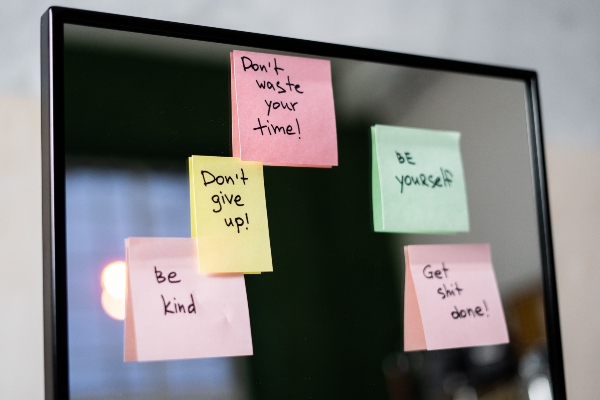
We all have that little voice in our heads that speaks to us as we are working out or training. You know that voice: the one that yells at you to run faster or criticizes you for not training more. Unfortunately, that voice has a lot to do with your ultimate athletic performance. Even when your body might be able to perform at its peak level, that little voice may undermine all your efforts. Humans are unique in that we can experience ambiguity and a complexity of thoughts and feelings that may not always be consistent.

When you experience conflicting feelings and thoughts, you will likely begin performing in a less than optimal way, thus compromising your performance. Imagine running or cycling down a hill, your legs turning over quickly, gravity pulling you along. It feels effortless. Your breathing is even and you feel relaxed and calm. Then, you start saying, "Wait. I am not a fast runner or cyclist. I can't be going this fast. What if I can't make it to the end because I am going so fast now?" Chances are that you will slow down and begin to lose confidence.

Confidence
We all know we need confidence to perform our best in many areas of life. Just what is confidence? Within sports and athletics, confidence is basically your assessment of your own ability to perform to your potential. Thinking about the difference between what you think you can achieve and what you really achieve is when confidence can become shaky.

That critical voice in your head can be trained to become more positive. The use of positive self-talk can be a powerful tool to help you perform to your potential. Sports psychologists have demonstrated that when we say negative and self-defeating self-statements, we will become frustrated and discouraged. This leads to poor performance.

Try it yourself. Get on a treadmill or a track. Start jogging or running and say to yourself: "I can't run very well. I am out of shape and I have no business trying to run." Now get back on the treadmill. Start jogging or running and say to yourself: am a good runner. I train regularly and I deserve to become a better runner." Notice the difference between how you feel when running the first time versus running the second time. If you tell yourself to be a better runner, then you are, in a sense, training your mind as well as your body.

Part of the benefit of examining your self-statements is that it allows you to challenge your assumptions about yourself. What do you believe about your own abilities? Do you believe that you can run? Do you believe that you deserve to compete in a particular race and try your best? What is your best? It is important to be realistic about your goals and not set them too high. Think about what you believe you can really achieve. Now go out on your training runs, and say to yourself, "I can achieve the goal I have set for myself."

In part, this is why races are so much fun to participate in. The cheering of the spectators essentially challenges that negative voice in your head. Running the last few miles of a marathon or a triathlon, most athletes are not feeling their strongest. However, run by someone who calls out your number and yells to you: "You're looking strong!" Suddenly, you believe it. If you watch people in a race as a spectator cheers him/her on, you will notice that the athlete begins to run taller and stronger and might even pick up the pace a bit. Of course, the body is still tired. But the image of being a strong runner has just affirmed your belief in yourself. Perhaps, for just a few moments, it has displaced the negative self-talk.

Most sports psychologists suggest that you invest equal time into mental skills training and physical training. It is generally an accepted fact that your mental abilities play a vital role in your athletic performance. This means that, in addition to getting yourself to the gym or to the track, you need to spend some time actively working on changing your negative self-statements into more positive statements that will allow you to push through during the tougher races and training days.

Risky business
This is risky, though, for you might have to confront some unpleasant assumptions about yourself. For example, you may discover you are frightened of success or fearful of failure. Perhaps you are holding yourself back because you are apprehensive about confronting a view of yourself as a strong athlete, when for all your life you have considered yourself to be unfit. Of course, with risk can come enormous growth and self-discovery.

Shelley Probber is a licensed psychologist in private practice in San Antonio.
Her practice encompasses children and adults, with a focus on athletes.

Superior Sports Nutrition

| No Comments
Feature0706.jpg

Plan for a good nutrition before,
during and after exercise.

By Karrie S. Itz-Thompson, RD/LD

So the day has finally come, the day of the big race. You have awakened early for three months in a row to train for this event. You've purchas-ed the trendiest gear. You've traveled many miles to this event. And then you ask yourself as you stand, ready to take your spot at the starting line, "Should I have eaten that bagel, and should I have eaten it earlier in the morning? Maybe I should not have eaten anything and just had a glass of juice." These are common questions that go through the minds of many athletes who train for competitions as well as those who exercise for the pure enjoyment of being active.

Internet sites, magazines and your favorite training partner may all have different ideas about what are the best foods to eat before, during and after exercise. Many research studies and experts also have slightly varying options on what defines superior sports nutrition. I encourage you to assign yourself the task of researching the information and finding out what works for you based on these personal pillars: your current state of health, the sport you are performing, your nutritional needs, your food preferences and your body weight/body composition goals.

The American Dietetic Association, Dietitians of Canada, and the American College of Sports Medicine have published a position paper that outlines appropriate selection of food and fluid, timing of intake and supplement choices for optimal exercise performance. The following information summarizes many of the ideas and research of these well respected organizations.

Eating to exercise
During times of high-intensity training, ample energy needs must be addressed, and sufficient energy-enabling foods must be consumed, to ensure maintenance of body weight, to maximize training effects and to preserve good health. Inadequate energy intake can result in loss of muscle mass, irregular menstrual cycles, loss or failure to gain bone density, increased risk of fatigue, injury and illness. Body weight and composition can affect exercise performance but should not be used as the sole criterion for choosing a sport in which you may participate.

You should not weigh yourself daily; it can be discouraging, and it is not always a good indicator of improved health. If weight loss is desired, you should start working on that goal before you plan to compete in an organized event, and you should consult a trained health and nutritional professional.

Carbohydrates are important for maintaining blood-glucose levels during exercise and to replace muscle glycogen (digested carbohydrate, converted from glucose and stored in the liver and muscles. Glycogen is used as a fuel during exercise.) Recommendations for athletes range from six to 10 g/kg body weight per day. (Example 130 lb/2.2=59.1 kg *6=354.54 g carbohydrates per day) The amount requires will depend on the athlete's daily energy expenditure, type of sport performed, gender and environmental training conditions.

Protein requirements are slightly increased in highly active people. Protein recommendations for endurance athletes are 1.2 to 1.4 g/kg body weight per day. Athletes that do resistance and strength-training may be as high as 1.6 to 1.7 g/kg body weight per day. These protein recommendation can usually be met through diet alone, without the use of protein amino acid supplements.

Fat intake should not be restricted. There are no proven benefits to consuming a diet with less than 15 percent of energy from fat, compared to 20 percent to 25 percent of energy from fat. Additionally, there is no evidence to support recommending a high-fat diet to an athlete. Fat is an important diet component because it provides energy, fat-soluble vitamins and essential fatty acids.

Pre-exercise meal
Eating before exercising, as opposed to exercising in fasting state, has been shown to improve performance. The meal eaten prior to exercise should leave you neither hungry nor with undigested food when you begin to exercise. The meal should contain fluids to maintain hydration, should be low in fat and fiber to decrease chances of gastrointestinal distress, should be high in carbohydrates to maintain blood glucose levels and be moderate in protein. Many athletes do not like to compete on a full stomach; smaller meals should be consumed if the race time is in closer proximity to mealtime. If time allows, a larger meal can be consumed. The individual needs of the athlete must always be the deciding factor when determining pre-exercise meals and meal times. Some athletes perform well when eating a substantial amount of food two to four hours before their activity; however, others may suffer from severe gastrointestinal distress if following this regimen. Athletes should know what works best for them by experimenting with new foods and beverages during practice sessions and planning ahead to ensure access to these foods at the appropriate time on race day.

During exercise
Consuming carbohydrates in amounts typically found in sports drinks, in order to improve performance in events lasting one hour or less, has been controversial. Current research now supports this practice, especially in athletes who exercise in the morning after an overnight fast. Providing carbohydrates under these circumstances would help sustain blood glucose levels and improve performance. For longer events, consuming 0.7g carbohydrates/kg body weight per hour has been shown to extend endurance performance. Consuming carbohydrates during exercise is even more crucial when athletes have not carbohydrate-loaded, consumed pre-exercise meals or restricted energy intake for weight loss. Carbohydrate consumption should begin shortly after the onset of activity; consuming carbohydrates in a large amount after two hours of exercise is not as effective as consuming the same amount at 15-to-20 minute intervals during the first two hours of activity. The primary carbohydrate consumed should be glucose; fructose alone is not as effective and may lead to diarrhea. Some athletes prefer sports drinks, while other prefer solids and gels and consume water.

Post-exercise meal
The timing and composition of the post-exercise meal or snack depends on the length and intensity of the exercise session. Most athletes will finish a marathon with depleted glycogen stores; whereas, glycogen depletion would not be as much following a 90-minute training run. However, most athletes competing in a marathon in the morning will not be doing another race or hard workout in the afternoon. Timing and composition of the post-exercise meal are less critical for these athletes. On the other hand, a tri-athlete completing a 90-minute run in the morning and a three- hour cycling workout in the afternoon needs to maximize recovery time between training sessions. Consumption of carbohydrates beginning immediately after exercise results in higher glycogen levels at six hours post exercise than when ingestion is delayed for two hours. Carbohydrate repletion is recommended at 1.5 g carbohydrate/kg at two hour intervals. The practice of timing of ingestion does not need to be followed if there are one or more days between intense training sessions. The type of carbohydrate consumed can affect post-exercise glycogen synthesis. When comparing simple sugars, glucose and sucrose appear equally effective when consumed at a rate of 1.5 g/kg body weight for two hours; fructose alone is less effective. When consuming whole foods with a high glycemic index, it results in higher muscle glycogen levels 24 hours after exercise, as compared with the same amount of carbohydrate provided by foods with a low glyemic index.

Hydration
Exercise performance is optimal when athletes maintain a fluid balance during exercise, while exercise performance is impaired with progressive dehydration. Athletes should be well-hydrated when beginning to exercise. In addition to drinking generous amounts of fluid 24 hours before exercise, it recommended that 400 to 600 ml of fluid be consumed two-to three-hours before exercise. During exercise optimal hydration can be achieved by drinking 150 to 350 ml of fluid at 15-to 20-minute intervals, beginning at the start of exercise. After exercise in most cases, athletes do not consume enough fluids during exercise to balance fluid losses, and thus they tend to be dehydrated when they finish their exercise session. Including sodium in post-exercise re-hydration process may be helpful by maintaining plasma osmolaity and, thereby, the desire to drink. Changes in the environment increase an athlete's risk of dehydration: Hot and humid environments, cold environments and high altitude can all be responsible for fluid losses.

Recommendations
All nutritional recommendations for athletes should be based on current scientific data and, most importantly, the needs of the individual athlete. Many factors go into making a personalized recommendation for calories, carbohydrates, fat and protein. Careful assessment of nutritional status and the option of a professional in these fields is recommended. So, the next time you stand at that starting line be confident that you have fueled your body for peak performance that day. Plan ahead, and never underestimate the power of food.

Karrie S. Itz-Thompson is a registered, licensed dietitian in private practice, who has competed in numerous triathlons, duathlons, marathon and cycling events. She was USAT ranked in 2000 and 2001, and she placed in the top 50 female finishers in the Moe's Better-Half Half Marathon in 2003. She was one of the top 100 female finishers in the Big-D Dallas Marathon in 2004. While in her personal life she focuses on strength training, swimming, biking, light jogging and running, professionally Itz-Thompson is a nutritional counselor in the San Antonio and New Braunfels areas. She may be contacted by e-mail at karrie_itz@hotmail.com, or by calling (830) 377-3871.