December 2006 Archives

HAPPY HEALTHY HOLIDAYS!

| No Comments
nutrition1206.jpgHow to survive the holidays
without gaining weight


By Fran Werner, CPT

The holiday season is traditionally a time to eat, drink and be merry -- and usually gain between five and ten pounds. With some knowledge and awareness of your food intake, you can still enjoy the merriment of the holiday season while still maintaining or even losing weight. Here are some easy-to-follow strategies:

"Bank" your calories by not having dessert at lunch or dinner; for example, cut back on the size of your regular meals, but don't skip meals in anticipation of a party. Try to save your calories for special foods or meals. A roll with butter may add 200 or more calories and is not all that special. It's easier to save up calories for those special foods and occasions instead of paying for it later with weight gain.

Try to increase your activity during this season. Take a walk or a bike ride. Park at the far end of the parking lot on your holiday shopping trips. While this may not seem like it makes a difference, you'll be rewarded with many calories "banked" at the end of each day.

At parties, head for the veggies and skip the dip. Put the food you're planning on eating on a plate, so you can see how much you're consuming. Don't stand next to the potato chips -- the temptation to finish the bowl unconsciously is too great. Look over the buffet table first, step back and preplan what you're going to eat. Remember, you don't have to clean your plate!

Beware of alcohol. Almost any way you drink it, alcohol packs in 150 to 300 calories per drink. Beer and wine are at the lower end, while mixed drinks, liqueurs and eggnog are higher. Try no-or low-calorie drinks, such as Virgin Marys or flavored mineral water.

Use chicken broth, defatted stock, wine or fruit juice for basting turkeys, moistening stuffing or saut8Eing vegetables. Try applesauce (in the same quantity) instead of oil, butter, or margarine in baked goods. Use two egg whites in place of one egg in recipes.

Those are just some of the many things you can do to have the merriment of the holiday season without the weight gain. Willpower works well -- for a short period of time. Your biggest help during this season is to plan ahead.

Fran Werner is a certified lifestyle and weight management consultant and a certified personal trainer specializing in weight management.You can contact her at (512) 794-3848, email fran@lifestyle-consulting.com or find out more online at www.lifestyleconsulting.com.

Note: If you have any questions regarding nutrition, weight control or exercise, please send them to stfh@lifestyleconsulting.com.

Have a Jolly New Year

| No Comments
running1206.jpgCounting the smiles and miles
with the Jolly Roger Club


By Paul Baltutis


As the New Year approaches, many of us look at January 1, 2007, as a time to assess our health and lifestyles. Some are content to maintain their fitness levels; some may want to increase their conditioning, and others want to "kick-start" their exercise activities. Everyone that plans on walking or running during the coming year would agree that a little positive reinforcement can go a long way. So with that in mind, I want to start a new mileage club in the greater San Antonio area. Your mission, if you choose to accept it, is to join our effort and account for your miles in 2007.

I got this idea from a T-shirt I recently purchased from Nike that reads "Pirate 2,000 Mile Club." The shirt is part of Nike's Prefontaine series and dates back to "Pre's" high school days in Coos Bay, Oregon. "Pre" attended Marshfield High School, whose team was called the Pirates. The track club there had a Pirate Run for your Life Club and made T-Shirts with various mileage thresholds. They would award T-Shirts to whomever reached these milestones

I am not sure how many of those T-Shirts Prefontaine collected, but the 2,000 mile shirt was one of his favorites. The 2,000 represented the training mileage he ran from 1967 to 1969, when he was a junior and senior at Marshfield High School. If you ever saw the movie Without Limits, starring Billy Crudup, you will see Prefontaine wearing this shirt on several training runs. It was the one he was wearing when he received a recruiting letter from legendary coach Bill Bowerman, who encouraged him to attend the University of Oregon. It was this letter that persuaded "Pre" to attend Oregon and propelled him toward his amazing running career.

The greater San Antonio-area club will be called the Jolly Roger 2000 Club, in honor of our fearless leader, Roger Soler, and to maintain the pirate theme. The counting of mileage for Jolly Roger will commence on January 1, 2007. All you have to do to join is contact any of our three San Antonio area stores. We will put your name on a master list, and you then forward your mileage count to us on the last day of each month in 2007. Details about the club will be provided on a flyer at the store and on our Web site.

We will keep a running tally for walkers and runners. There will be recognition posted on the Web site, along with other miscellaneous awards given out at 500, 1,000 and 1,500 miles, and, for those overachieving types, at 2,000 before the year's end. We hope that, with the success we expect in 2007, this program will continue year after year.

So shiver me some timbers and strap on your Nike + Ipod Nano's, pedometers, fancy-dancy GPS watches or whatever technology you use to determine your mileage covered, and be prepared for some swashbuckling fun. Remember, the further you go, the jollier it gets!

Paul Baltutis is the manager of Soler's Sports on 5933 Broadway in Alamo Heights. He is a certified marathon coach for Team in Training. He can be reached at (210) 930-3148 or at sage_run03@yahoo.com.

STRESSED OUT THIS SEASON?

| No Comments
health1206.jpgCan stress lead to poor
health and performance?


By Jennifer Herriott, MPH


My husband and I work just a few blocks away from each other, so to save money on gas and parking, we usually try to carpool. We both have pretty stressful and busy jobs, and with two young children, about once a week one of us will have a conflict and we'll end up having to drive separately. One day last week we drove to work in separate cars, but at the end of the day we drove home together. It wasn't until we pulled into our driveway and noticed that our other car was missing that we realized what we had done. We argued, while laughing at ourselves, about whether we should drive back downtown to pick up our other car or just leave it there for the night. We settled on leaving it there (but only after my husband had confirmed that he had not left his golf clubs in the trunk) and then we tried to decompress from a busy day. My husband often refers to our life as a "whirling dervish." I am not sure I know what those words mean, but I certainly know what they feel like. They feel like stress! Can stress cause two relatively smart and organized individuals to forget that they had driven in two different cars earlier that same day? Apparently so!

Stress can have a significant impact on our mind and on our body. It can cause us to forget even the simplest things. Though a little stress can actually help us to heighten productivity, too much stress can lead to conditions that can result in both physical and emotional problems.

To perform well and to feel well, the mind and the body need to both be working well and they need to both be working together. There are a wide variety of things that you can do to reduce your stress. However, just as what causes a person to feel stress is different for each person, so is there no one stress reduction formula that will work for everyone. Though running and other aerobic exercises in conjunction with yoga tend to work well for me, some people may find them boring or dull. Some of the other things that people have found helpful in reducing stress, and are recommended by the Mayo Clinic Guide to Self-Care include...

Learning to relax. Techniques such as guided imagery, meditation, muscle relaxation and relaxed breathing can help you relax.

Discuss your concerns with a trusted friend. Talking helps to relieve strains and put things in perspective, and it may lead to a healthy plan of action.

Plan your work in a step-by-step manner. Accomplish small tasks.

Deal with your anger. Anger needs to be expressed, but carefully. Count to 10, compose yourself and respond to the anger in a more effective manner.

Get away. A change of pace can help develop a new outlook.

Avoid self-medication. In other words, don't use too many prescription or non prescription drugs, such as alcohol to help you get through the day or through the night.

Get plenty of sleep, exercise and eat nutritional food. The key to keeping stress to a minimum is to find a balance that works for you and your family such as showering at night, packing lunch the evening before and making preparations for the next evening's dinner.

Seek help. Sometimes seeing a counselor can help you determine your stress triggers, as well as help you learn to deal with stress through stress management therapy.

Seek relaxation techniques to reduce stress including progressive muscle relaxation, visual imagery, and relaxed breathing.

Be realistic. Set realistic goals. Prioritize. Concentrate on what is important. Setting our goals unrealistically high invites failure. Decide on your priorities and concentrate on the things that are most important to you.

Again, identifying sources of stress in your life is important in your stress-management journey. If you know that waiting to do something until the last minute will cause you to feel a huge amount of stress, try to make a conscious effort to get things done ahead of time. If you get stressed and overwhelmed thinking about all the things you have to remember to do, keep a detailed task list and check each item off the list as you accomplish the task. If you know that you need time to yourself to rejuvenate, then factor that time into your schedule. What ever it is that causes you to feel stressed out, and that you have some control over, work toward figuring out a way handle the situation differently. If what causes you stress is something that you have absolutely no control over, then work toward not trying to control the situation and work toward controlling the way you react or respond to a stressful situation.

Jennifer Herriott is the program manager for Steps to a Healthier San Antonio (Steps-SA), an initiative for the San Antonio Metropolitan Health District funded by the Centers for Disease Control and Prevention (CDC). The Steps-SA initiative identifies and promotes efforts that encourage our community to make small behavior changes to reduce the burden of diabetes, obesity and asthma by addressing three related risk factors - physical inactivity, poor nutrition and tobacco use.

New Year, New Rear!

| No Comments
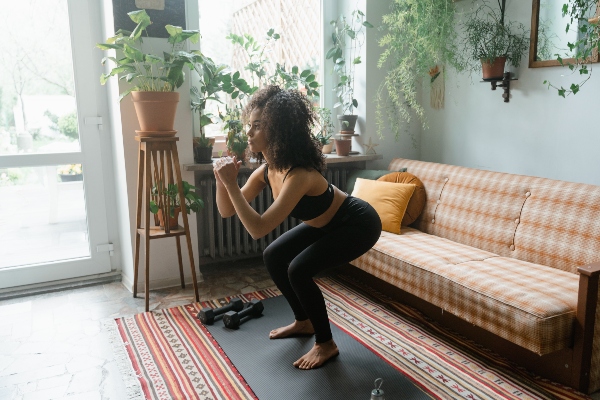
fitness1206.jpgMaximizing the assets
of your gluteus maximus

By Shannon Sutton, CPT

What to do? What to do? Is your gluteal region reaching its maximum intended capacity, or is it disappearing? Not all hope is lost! Cardiovascular exercise, a healthy, well-rounded diet, regular massage and the proper exercise regimen can help restore your "fanny" back to its once youthful self.

The gluteal muscles are the three muscles that many of us are sitting on right now. Continuous pressure and disuse (too much "sitting around") can lead to atrophy which can result in a round, saggy rump. Whether you would like to minimize or maximize your "assets," the following are some tools to help you achieve your goals:

Gluteal extension and release:
Begin by lowering your upper body to about 35 degrees from parallel with the floor. Engage your glutes and lower back while raising up until parallel with (or slightly higher than) floor. Slowly return to starting position. Repeat for 15 repetitions. Note: Cease exercise if lower back begins to tighten or you feel any pain.

Floor bridge:
Lie on your back with feet planted just beyond your glutes - hips width and parallel. Slowly raise your torso, beginning with your tailbone, and curl up until your spine is elevated and your body weight is rested between your heels and your shoulders. Lower your gluteal/abdominal region a couple of inches, and rise back to starting position. Keep your abs tight and focus on the gluteal contraction. Repeat. Note: Placing a medicine ball or Pilates ring between your knees will provide a compound workout. Maintain the "squeeze" throughout.

Extension lunges:
Perform as you would a normal lunge (with your knee directly over your foot and weight through your front heel). Upon standing, raise your rear leg and squeeze your glutes. Be sure to keep your hips square, abs tight and chest up. Perform 15 to 25 repetitions, and repeat with alternate leg.

Step-ups:
Place your left foot on a properly sized step or bench (about 12 to 15 inches). Make sure your knee is no higher than your hip. With your chest up and your abs tight, transfer your weight to your left foot, and step up (pressing your weight through your heel). Extend right leg up and back while contracting your glutes. Repeat 15 to 25 repetitions with your left leg, and then switch to your right. Note: Dumbbells may be used for additional weight.

These are just a few of the numerous exercises that are beneficial to the behind. Running, climbing stairs or bleachers, bicycling, squats, leg presses, and other exercises are also great! Keep in mind that the actual shape of the gluteal muscle mass is not only a result of the muscle itself but also of the overlying adipose (or fat) tissue which gives it its rounded shape. Therefore, I want to once again stress the importance of the nutritional and cardiovascular factors. Good luck and train hard!

Shannon Sutton is an independent certified personal trainer. Her certifications include ISSA, NASM, APEX and Reebok. She has invested years in helping individuals reach their health, fitness and wellness goals. Contact her at (210) 722-3962.

Erin Leonard:

| No Comments
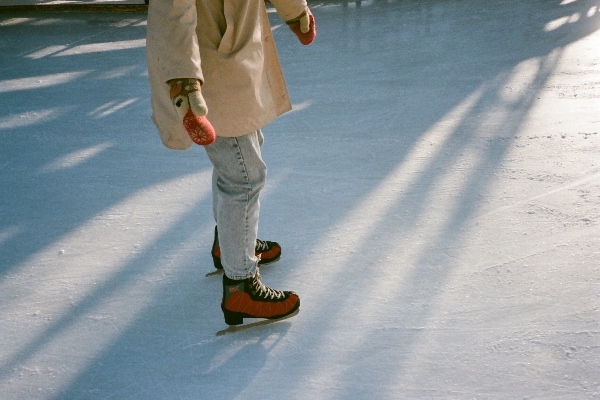
feature1206.jpgPutting fitness on ice

By Kelly A. Goff
Photography by Robert French


When you think of athletics in San Antonio, you might picture outdoor sports such as soccer, swimming or golf. With average temperatures well above 75 degrees most of the year, ice skating probably doesn't spring to mind.

Former professional figure skater Erin Leonard is one of the people helping to expose San Antonio to the joys and fitness benefits of ice skating. She's the figure skating director at the Ice Center at Northwoods, which has been open since December 2002.

A Canadian, Leonard was born in Calgary and raised in British Columbia. She learned to ice skate at age three, for she lived in a small town where the public rink was just minutes away. With an older brother who played hockey and a younger sister whom she taught how to skate, she has fond memories of that rink.
"We skated pretty much every day," recalls Leonard. "I loved it from the beginning. The smell of the rink, the cold, the sound of my blades -- I immediately had a passion for it."

As Leonard got older, she became more competitive. At age 12 she went to nationals and then started competing internationally. At that point, her schedule consisted of skating two hours before school, one to two hours during the school day and then another three hours after school. Leonard reached a crossroads as she neared 16.

"To really pursue a competitive skating career, I would have had to move to a larger city and be tutored so I could spend the majority of my day practicing," she explains. "I decided I didn't want to compete anymore, but still wanted to continue figure skating. Basically, I wanted the best of both worlds -- to be with my friends and family, but still skate."

Leonard found a way to do just that. She sent a video of an ice show performance to the now defunct Ice Capades, a traveling ice show showcasing Warner Bros' cartoon characters, much like Disney on Ice today. She was hired, and at age 18 she went on tour, starting in Las Vegas.

"It was a fantastic experience," Leonard says of her years of traveling the United States, Asia and Canada. "I was fortunate because one of my friends with whom I'd competed most of my life was also on the tour. That helped me feel not so far from home."

However, skating in a Yosemite Sam costume left Leonard missing the showier and more technical aspects of figure skating. So she decided to leave the Ice Capades and joined a smaller show managed by Advanced Entertainment that took her all over Australia, Mexico, the United States and Malaysia, and she became one of the principal skaters in a cast of 12 rather than 100. She worked hard during the weeks when they would typically perform the show three times a day, but then she would have a week off while the sets were being taken down and transported to the next city.

"It was amaz-ing to have that time to relax and explore each city," Leonard says.

Although her fellow cast members became her second family, she began to yearn for more stability in her life. It was about that time that she met her future husband, a U.S. Marine. She resigned from the tour and had every intention of starting a new chapter in her life that wasn't centered on ice skating.

"I said I wasn't going to coach, that I was going to do something new," says Leonard. But after she had her first child and the Ice Center opened in San Antonio, she recalls that she found herself coaching: "I believe when you have a passion for something, you'll find it wherever you are, whatever your situation."

As the skating director, Leonard gets to share her passion for the refreshing sport with both children and adults. She teaches "Learn to Skate" classes to all age groups and coaches power skating for the Diablos, San Antonio's Junior B hockey team. "I love my job!" says the 28-year-old skating veteran. "I learn something new every day from the kids, clients and fellow coaches."

Fun fitness
Although Leonard no longer performs, noting she hung up her fishnets long ago, she does get a couple hours of personal skating time in each week. And one of the fringe benefits of her job is being able to be on the ice all day, getting a workout while coaching.

"It definitely keeps me in shape," Leonard says. Regular exercise is even more important for Leonard since she developed Type 2 diabetes after the birth of her second child two years ago.

"Even though I take insulin now, the regular exercise helps regulate my sugars and keeps me physically fit." 


The physical benefits of skating are many and can be a great alternative to working out in the heat and humidity. Ice skating boosts your endurance and the better you are, the more aerobic benefits you'll get. It's good for your abdominals, calves, gluteus muscles, hamstrings and quadriceps; furthermore, it improves balance and coordination.

Skating, like any kind of physical activity, also has side effects that are particularly beneficial to children. Better academic performance, improved judgment, increased self-discipline and better goal setting can be observed in children who are active in sports. Higher self-confidence and self-esteem mean a greater potential for them to realize their goals and dreams.

Not just for the young
Ice skating is also something you can learn to do at any age. "I really think it's an amazing and versatile sport," says Leonard. "You don't have to be competitive. Recreational skating is something you can do alone, with friends or as a family. We have a coffee club that comes every Thursday morning to skate and socialize. Fridays and Saturdays we turn on the disco lights and turn up the music for open skating time. You can tell everyone is really having fun -- young and old." Leonard enjoys seeing parents who start out bringing their toddlers to "Mommy & Me" skating classes and then end up being motivated to learn to skate.
"It's contagious!" says Leonard.

A lifetime of opportunity
Figure skating has provided Leonard not only with the physical benefits of an active lifestyle but also with a number of mental, psychological and social benefits. "I learned self-discipline and how to be competitive, as well as the importance of consistency," she recounts. "All the travel helped me develop a wider world view, along with social skills and street smarts. I believe that everyone is in control of his or her life's dreams, and skating has given me a way to achieve many of mine."