April 2007 Archives

Win the Weight-ing Game

| No Comments
nutrition0407.jpgBy Fran Werner, CPT

If you're reading this article, you've probably tried losing weight before -- and, if you're like most people, the weight has found you again. Despite the claims of new weight loss plans, the basic truths of weight loss haven't changed: it's all about calories in vs. calories out. To lose weight, you must consume fewer calories than you expend. To maintain that lower weight, you must continue to consume fewer calories than you used to consume.

We like to think that there's some magic secret to weight loss and weight maintenance. Thinking that way allows us to not take the responsibility for ourselves. But, the reality is that your success is dependent on you, not on a "magic" combination of foods, or eliminating foods, or anything like that. It really is as simple as calories in vs. calories out.

Go slowly. Starvation or fad dieting is not realistic, and you often end up losing muscle tissue and water along with the fat. Diet success requires making realistic, long-term lifestyle changes. Aim for a calorie deficit of 250 to 500 calories per day. You'll lose a half pound to a pound of fat per week, and you'll be able to sustain that change. That may not sound like much to you, but remember that half pound a week equals a weight loss of 26 pounds in a year. Besides, you'll be able to stick with your plan much better because you'll be making slow, gradual changes.

Choose fruits and vegetables. They can help you feel full, and help you lower your caloric intake. These foods contain the most water and a lot of fiber, so they fill you up for very few calories. Be careful of adding calories and fat, though, in salad dressings and sauces.

Don't expect perfection, and do expect setbacks. That's life. Everyone gives in to temptation from time to time. Thin people splurge, but they balance it out by being more careful the rest of the time. One splurge does not derail your weight loss plan; the "it's hopeless, what difference does it make, so I might as well binge" attitude does. One slip (say, 500 calories) is a lot easier to "pay back" than letting that lead to a 2,000-calorie binge, which would take you four times as long to compensate for in the long run. When you slip (and you will), just return to your healthful eating and exercise plans as soon as possible.

Recognize that everyone has his or her own strengths and weaknesses. Just because one thing works for one person doesn't mean it'll work for you. Trial and error will show you what things work well for you. You're the one who has to sustain these changes.

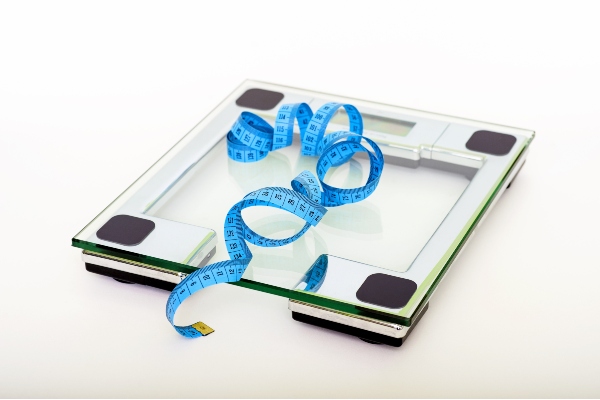
Be patient. There will be times when it seems like you're stuck at a plateau. If you're still reducing your caloric intake, the weight WILL come off. Don't let the scale rule your behavior. Just keep making those gradual changes, and you will be rewarded with weight loss. If you're giving up 250 calories a day, that would be a half-pound weight loss a week. Most bathroom scales aren't sensitive enough to necessarily show a half pound. In addition, your body holds and loses water all the time, which would also affect the numbers on the scale. Pay attention to your behavior, and the scale will follow.

Include physical activity. Many fitness experts say that successful weight management is 50 percent diet and 50 percent exercise. Some studies have even found that, while the weight loss phase is 80 percent dietary changes, weight maintenance is 80 percent physical activity changes. Both are important to your success. You can use each to varying degrees, but implementing both tools (diet and activity) dramatically increases your odds for long-term success.

Long-term thinking pays off. Think about making changes that you can stick with forever, and then stick with them!

NOTE: Future columns will address your healthy eating and weight management questions. If you have questions you'd like answered, please send them to stfh@lifestyleconsulting.com.

Fran Werner is a certified lifestyle and weight management consultant as well as a certified personal trainer specializing in weight management. She has been the owner/director of Lifestyle Consulting since 1981, and has maintained an office in Austin, Texas since 1993. Fran has helped thousands of individuals achieve and maintain healthy weights and healthy lifestyles. You can contact her at (512)794-3848 or at fran@lifestyleconsulting.com. She also maintains an interactive Web site, www.lifestyleconsulting.com.

Color Me Simple

| No Comments
running0407.jpgChoosing the right
running shoes


By Paul Baltutis

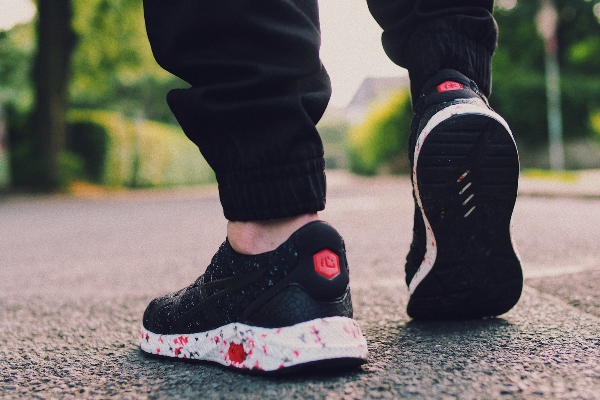
Why is it so complicated to pick the right running shoes? Well, I have decided to completely simplify the selection process. Now the only consideration in buying a running shoe will be its color.

I base this on the fact that color comprises such a large and significant role in our social and personal lives. Color, and color alone, clearly outweighs any other consideration, such as non-consequential engineering and technical design features of the shoes.

So we'll concentrate on colors. Since most running shoes are primarily white, we will have to use the color that outlines the shoe or is considered the shoe's trim. Simply use the chart listed below, and select a color that suits your personality and motivation level. The next step is to then go to your local running specialty store, find your color, and within seconds you're done!

Red It is hot color, and if you need to have a "Type A" or "go-getter" personality, this is the shoe for you. Red is known to naturally produce adrenaline, so be careful in selecting this shoe if you are into Starbucks. If you are not a true overachiever, this color shoe could be dangerous because you'll start off your training runs and races too fast, and you will peter-out too early in the run.

Blue This color appeals to a serious person who believes in steady progress. Blue is a moderate color and it is helpful for someone who is using a training schedule to structure his running. There is no "coloring outside the lines" with this color personality. A blue-shoe person thinks about not how you start but how you finish. This shoe is well-suited for a person with long-term goals who is patient to see things through to the finish. Accountants like blue.

Green This color suits an outgoing person who appreciates nature. Do not pick this color if you belong to a gym or if you commonly use a treadmill. The shoe will be very "conflicted" in an indoor environment with all that fluorescent light. Green shoe wearers respect the environment and will occasionally run to work. Green shoe runners are not particularly competitive, but they do want to succeed without stepping on anybody's toes.

Yellow Is a bright and cheerful color, so is a good choice for a beginner or someone who is getting back into the swing of running. This color provides the spark to show what running can be -- fun and rewarding. This shoe will get you out of the door when you may not feel like going for a run. The experienced runner will generally not pick this color because he has "been there, done that."

Orange Orange is another warm color that producers energy. It is a high visibility color, so it's for runners who like to see and be seen in crowds. These runners like to run in big races or in large training groups. You will rarely see an orange runner running alone, for the concept of the "Loneliness of the Long Distance Runner" just doesn't apply to orange. If you need a little lift and extra motivation to get out the door, this color will help. Of course, University of Texas Fans use burnt orange for all occasions.

Remember, the right color shoes can lengthen your stride, making you look younger, and will help to bring out your best. The wrong color will shorten your stride and will make you want to quit before you even start. So pick your shoe color carefully, and be on your merry way. What could be easier?

Paul Baltutis is the manager of Soler's Sports in Alamo Heights. He is a certified marathon coach for Team in Training. He can be reached at sage_run03@yahoo.com.

Bill of Good Health

| No Comments
health0407.jpgTexas Legislature to consider
health and wellness issues


By Nicole Rogers, MPH, CHES

The Texas Legislature will consider several bills related to health and wellness before the regular session concludes at the end of May. We wanted you to be aware of some of the health issues that are coming up before the State Legislature.

Children's Health
Insurance Program

Several bills have been introduced this session that will impact thousands of Texas children through the Children's Health Insurance Program, also known as CHIP. CHIP is designed for families who earn too much money to qualify for Medicaid yet cannot afford to buy private insurance for their children. CHIP provides a full range of health services, such as check-ups, immunizations, and prescription drugs. Changes being considered include:

Allowing 12 months continuous eligi-bility for CHIP. Eliminating bureaucratic roadblocks to encourage personal respon-sibility and help low-income families achieve self-sufficiency. This includes fixing the Integrated Eligibility System to prevent eligible children from losing CHIP and Children's Medicaid. It also means eliminating the CHIP asset test and the 90-day waiting period for coverage to begin, getting children into the system faster. Also being proposed is allowing families to deduct child care and child support expenses when calculating income for CHIP.

Instituting adequate reimbursement for Medicaid and CHIP providers, as provided prior to budget cuts made in 2003.

Investing in the funding of outreach and education efforts for the children's health insurance at 2002 levels.

Mental health
Children's mental health. Requiring health insurance plans to cover mental health diagnosis and treatment for children under the same terms and conditions as physical illnesses.

Eating disorders. Including the diagnosis and treatment of anorexia nervosa, bulimia or other eating disorders on the list of mental illnesses that must be covered under the same terms and conditions as physical illnesses.

Self-inflicted injuries. Requiring health insurance plans to cover the treatment of self inflicted injuries under the same terms and conditions as physical illnesses.

Other diseases
Chronic kidney disease. The creation of a Chronic Kidney Disease Task Force to develop a plan to educate health care professionals about the advantages and methods of early screening, diagnosis and treatment of chronic kidney disease and related complications. The task force would also be charged with educating health care professionals and individuals with chronic kidney disease of the advantages of end-stage renal disease education and early renal replacement therapy. The task force is being suggested due to the fact that early diagnosis and effective treatment of chronic kidney disease can prolong lives and delay the high cost associated with the disease.

Diabetes. The creation of a diabetes mellitus registry pilot program to be managed by the Department of State Health Services in coordination with a public health district.

Obesity. The establishment of a research program for the prevention and treatment of obesity-related health concerns. The Department of State Health Services, with the assistance of the Texas Department of Insurance, will be asked to identify and encourage evidence-based clinical inter-vention to prevent and treat obesity. This may include guidelines for the medical community, insurers or other health benefit plan issuers in developing plans for obesity-related health concerns.

For more information please visit www.capitol.state.tx.us.

Nicole Rogers, MPH, CHES, is the executive director of The Health Collaborative, public-private model for solving community health issues. For more information, visit www.healthcollaborative.net.

Turn up the heat

| No Comments
fitness0407.jpgExercises to help you
look hot this summer


By Shannon Sutton, CPT

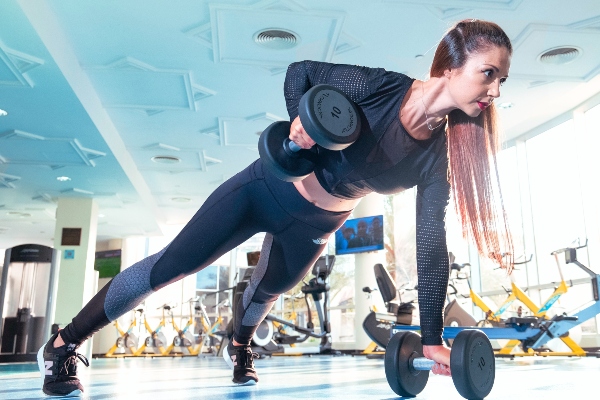
South Texas summers are beautiful and hot, making it almost impossible to hide under frumpy sweaters and long-sleeved shirts. Make this the year to bare those arms proudly. The following shoulder exercises will have you looking "hot" in your sleeveless shirts and swimsuits in no time.

Deltoid sculpting with tubing
Using tubing with handles on each end, begin by wrapping the tube around a solid, stationary object. Pull both ends of the tubing tight, and bend your right elbow to 90 degrees just in front of your rib cage (resistance should be to your left). Pull handle out perpendicular to your body, keeping elbow bent at 90 degrees. Return to starting position and repeat for 15 repetitions. Switch resistance to left hand, and pull in toward your abdomen for 15 repetitions. Now, turn around and repeat exercise (one pulling in, the other pulling out).

Remember to keep a tight core and relax your neck and traps. Stand on the center of the band while gripping handles. Bend your knees slightly, tighten your core, and slowly raise arms laterally almost to shoulder height. Lower back down slowly and repeat. In the same position, raise arms 90 degrees to the front. Repeat. Again, you want to keep your chin up and tension out of your neck. Your feet should be at hips width with a slight bend in your knees. Try to keep your abs drawn in throughout the exercises (this will not only double as an ab workout, it will help protect your spine).

Shoulder press
Begin seated on an upright bench holding dumbbells out at 90 degrees from the shoulders. Draw abs in, and press the spine firmly to the backrest. Raise weights up and over the shoulders to parallel level, and lower back to starting position. Repeat.

Reverse flyes
Remain seated and hinge forward from the waist (chest should be parallel with quads). Using dumbbells (much lighter than used for shoulder press), extend your arms down in front of you. Begin by pulling your shoulder blades together and raising your arms out to shoulder level. Hold for a count. Slowly lower back down and repeat.

Shannon Sutton is an independent certified personal trainer. Her certifications include ISSA, NASM, APEX and Reebok. She has invested years in helping individuals reach their health, fitness and wellness goals. Contact her at (210) 722-3962, or E-mail her at jssutton2003@yahoo.com.

Billie Jean King

| No Comments
billieJeanKing0407.jpgTennis star works to ensure
a bright future for girls


By Joy Capps
Photography by Robert French


Billie Jean King, tennis legend and founder of the Women's Sports Foundation, recently visited San Antonio to talk about a unique program she developed called GoGirlGo!, created to get one-million girls between the ages of 8 and 18 physically active and keep another one-million girls from dropping out of sports. San Antonio became the third U.S. city to launch the initiative in November 2006. Under the umbrella of The San Antonio Sports Foundation, $100,000 in cash grants will be awarded to local girl-serving agencies which implement and enhance physical activity and sports programs. King knows the importance of this program; before she was a tennis star, she was a girl who needed encouragement, too.

A legend in the making
As a young girl in the 50's and 60's, King felt like a second-class citizen. When her keen athletic abilities began to surface in school activities, she encountered teachers who discouraged her from using superior coordination. "My fourth grade teacher sent derogatory notes to my parents about my athletic abilities, sharing that it wasn't proper for a young lady to actively use these skills," King reflected. In those days, it was considered strange for a girl to excel in athletics.

"By the age of 12, I knew I wanted to change things for women who wanted to compete athletically," she continued. Her parents decided she should give up playing football and baseball for more "ladylike" sports. Her father, Bill Moffit, suggested tennis since it involved running and hitting a ball. "After my first lesson, I knew what I wanted to do with my life." She went on to win her first championship match by age 15.

Throughout her legendary tennis career, King earned a phenomenal 20 Wimbledon titles. Among other victories, she also won three World Team Tennis Championships and four U.S. Opens. King's pursuits revolutionized women's sports while championing social change and equal rights for everyone. She moved tennis out of country clubs into the national spotlight while proving women could compete athletically like men.

In 1974, King started womenSports magazine, the first magazine dedicated to women in sports. During the publication's inception, Bob Hope and Tony Randall each gave King $5,000 checks to help launch the Women's Sports Foundation simultaneously. Currently in its 33rd year, the organization successfully continues the charitable mission to "ensure equal access to participation and leadership opportunities for all girls and women in sports and fitness." This goal led to the development of programs such as GoGirlGo!

GoGirlGo!
San Antonio was selected to implement the GoGirlGo! program because of its increasingly high number of cases involving obesity and diabetes, especially among Hispanics. Statistics have shown most girls will grow up inactive unless they are encouraged to build physical activity into their daily routines when they are young. Historically, active young women maintain a positive body image, confidence and self-esteem not typically found in those who are inactive. The simple act of moving and playing consistently can reduce the risk for diabetes, cancer, obesity and other debilitating diseases, as well as unwanted pregnancies.

Girls' health is a significant issue locally. Statistics have shown that girls in Texas have a more sedentary lifestyle (39.5 percent), poorer nutrition (17.6 percent) and a higher incidence of obesity (11.2 percent) than girls nationwide. Ranking sixth in the nation, Texas residents include over 17 percent of the U.S. population living below the poverty level.

During her March visit, King discussed GoGirlGo!'s goals and benefits at a San Antonio Sports Foundation reception held at the Koehler Cultural Center at San Antonio College. Joining King at the event were Donna Lopiano, CEO of the National Women's Sports Foundation and Texas State Senator Leticia Van de Putte.

"In the U.S. today, two out of three girls are not getting enough exercise," shared King. "We started [the program] in Atlanta and Chicago. San Antonio was selected because we knew the San Antonio Sports Foundation would take ownership in the project to help educate local Hispanic girls who are growing up in the nation's second worst city for diabetes." Understanding the impact of this statistic, it is vital to have a project like GoGirlGo! to educate and motivate San Antonio girls to develop good physical and emotional health.

A call to action
King's philosophy is: "You never know how you're going to change the lives of the people you meet in life. We need to be awake and look for the opportunities standing right in front of us." San Antonio's GoGirlGo! program is an expression of this philosophy.

This program educates and motivates girls to appreciate that health and wellness is an asset. By teaching active lifestyles today, this approach instills healthy habits for life. In today's society, many girls grow-up to become primary caregivers for their families. With established wellness routines, the families they lead will develop healthy and strong who will mature and repeat the process with their children.

Committed to the cause, the San Antonio Sports Foundation, coupled with other key individuals and organizations, has earmarked funds to develop the program in the San Antonio community. U.S. Representative Charlie Gonzalez secured $200,000 in federal funds dedicated to the program. Local individuals and companies have donated thousands of dollars to the cause. The long list of contributing champions includes companies such as, the Pepsi Bottling Co., Creative Link, IKON Office Solutions, The San Antonio Express-News, Valero Energy Corporation and many others.

"We need to work together to empower girls while changing San Antonio dynamics to provide equal opportunities. This can only be achieved through an army of organizations and individuals working together in the community," King says.

To learn how you can get involved visit www.kintera.org/faf/home or www.gogirlgo.com.