May 2007 Archives

WIN the Weight-ing Game

| No Comments
nutrition0507.jpgStrategies for weight loss

By Fran Werner, CPT

If you're reading this article, you've probably tried losing weight before -- and, if you're like most people, the weight has found you again. Despite the claims of new weight loss plans, the basic truths of weight loss haven't changed: it's all about calories in vs. calories out. To lose weight, you must consume fewer calories than you expend. To maintain that lower weight, you must continue to consume fewer calories than you used to consume.

We like to think that there's some magic secret to weight loss and weight maintenance. Thinking that way allows us to not take the responsibility for ourselves. But, the reality is that your success is dependent on you, not on a "magic" combination of foods, or eliminating foods, or anything like that. It really is as simple as calories in vs. calories out.

Go slowly. Starvation or fad dieting is not realistic, and you often end up losing muscle tissue and water along with the fat. Diet success requires making realistic, long-term lifestyle changes. Aim for a calorie deficit of 250 to 500 calories per day. You'll lose a half pound to a pound of fat per week, and you'll be able to sustain that change. That may not sound like much to you, but remember that half pound a week equals a weight loss of 26 pounds in a year. Besides, you'll be able to stick with your plan much better because you'll be making slow, gradual changes.

Choose fruits and vegetables. They can help you feel full, and help you lower your caloric intake. These foods contain the most water and a lot of fiber, so they fill you up for very few calories. Be careful of adding calories and fat, though, in salad dressings and sauces.

Don't expect perfection, and do expect setbacks. That's life. Everyone gives in to temptation from time to time. Thin people splurge, but they balance it out by being more careful the rest of the time. One splurge does not derail your weight loss plan; the "it's hopeless, what difference does it make, so I might as well binge" attitude does. One slip (say, 500 calories) is a lot easier to "pay back" than letting that lead to a 2,000-calorie binge, which would take you four times as long to compensate for in the long run. When you slip (and you will), just return to your healthful eating and exercise plans as soon as possible.

Recognize that everyone has his or her own strengths and weaknesses. Just because one thing works for one person doesn't mean it'll work for you. Trial and error will show you what things work well for you. You're the one who has to sustain these changes.

Be patient. There will be times when it seems like you're stuck at a plateau. If you're still reducing your caloric intake, the weight WILL come off. Don't let the scale rule your behavior. Just keep making those gradual changes, and you will be rewarded with weight loss. If you're giving up 250 calories a day, that would be a half-pound weight loss a week. Most bathroom scales aren't sensitive enough to necessarily show a half pound. In addition, your body holds and loses water all the time, which would also affect the numbers on the scale. Pay attention to your behavior, and the scale will follow.

Include physical activity. Many fitness experts say that successful weight management is 50 percent diet and 50 percent exercise. Some studies have even found that, while the weight loss phase is 80 percent dietary changes, weight maintenance is 80 percent physical activity changes. Both are important to your success. You can use each to varying degrees, but implementing both tools (diet and activity) dramatically increases your odds for long-term success.

Long-term thinking pays off. Think about making changes that you can stick with forever, and then stick with them!

NOTE: Future columns will address your healthy eating and weight management questions. If you have questions you'd like answered, please send them to stfh@lifestyleconsulting.com.

Fran Werner is a certified lifestyle and weight management consultant as well as a certified personal trainer specializing in weight management. She has been the owner/director of Lifestyle Consulting since 1981, and has maintained an office in Austin, Texas since 1993. Fran has helped thousands of individuals achieve and maintain healthy weights and healthy lifestyles. You can contact her at (512)794-3848 or at fran@lifestyleconsulting.com. She also maintains an interactive Web site, www.lifestyleconsulting.com.
running0507.jpgOne runner's Boston
Marathon qualifier story


By Paul Baltutis

Somewhere in the fine print on the Boston Athletic Association's guidelines there are two lesser known rules involving qualifying for the Boston Marathon. Most runners are either unaware of them or are a little fuzzy about the details. Local runner Heather Sanders literally learned about them "on the fly" during her qualifying race, and as it turns out, not a moment too soon.

Heather Sanders of New Braunfels was a high school and college volleyball player and admits to running as little as possible during her team sports days. But after college and settling into life and a career, Sanders tried running to stay fit. After a while, she even found herself getting into it. When some co-workers found out she ran, they recruited her to participate in the Austin Marathon five-person relay. As each member completed around five or six miles, Sanders experienced the world of racing and long distance running. Curious of what running and racing longer would be like, she started increasing her training miles and her race distances.

In January 2004 she entered her longest race, the San Antonio Road Runners Endurathon 25K (15.5 miles). After she finished the race, Paul Frost, a local competitive runner and high school track coach in New Braunfels, congratulated her and remarked that her pace put her within striking distance of a Boston Marathon qualifier. Encouraged by Frost's comments, Sanders entered the Austin Motorola marathon with the belief that the 3:40 standard for her age group was possible.

As Sanders lined up with the 3:40 pace group, she recognized that Bruce McConaghy, a running friend, was leading the pace group. She looked at this as a good sign. Meanwhile, during the pre-race chatter, Sanders overheard several runners talking about the nuances of the five-year Boston qualifying standards. She found out that because she was about ready to jump into a new age group (35-39) that she would have an extra five minutes to qualify. Sanders had yet another lucky star shining down upon her.

So Sanders begins her marathon run in Austin with a pace group, high hopes, and an extra five minutes she hadn't known she had. Things were going well until after the 20-mile mark when Sanders' pace began to falter. Sanders' held with the 3:40 group as long as she could, but just couldn't stay with them. "It's OK. I just need to stay ahead of the 3:45 pace group now," Sanders told herself. While she held pace for a while, the 3:45 group caught her with the finish line in sight. Sanders felt like she was in slow motion, and it was just slipping away. The 3:45 pace group finished just ahead of her, and her hopes for qualifying were pretty much dashed.

As Sanders settled into the finish line area, she felt like she missed a golden opportunity. As she wandered around and chatted with other runners, the second Boston Marathon qualifying idiosyncrasy invariably came up:

"Oh yeah, everyone gets an extra 59 seconds just as long as you don't go into the next minute."

Sanders' hopes immediately rose yet again. Staring at her stopwatch, she could hardly believe her eyes because it read 3:45:59. She had made it with absolutely no time to spare. Sanders went from depression to elation, and checking the computer results confirmed it. She was in.

Runners who qualify for the Boston Marathon sometimes have to decide if they are really going to run in Boston. In Sanders' case her decision was cut and dried. Sanders said, "How do you not go after an experience like that?" Sure enough, she went to Boston in April 2005 with no "second" thoughts.
Paul Baltutis is the manager of Soler's Sports in Alamo Heights. He is a certified marathon coach with Team in Training. He can be contacted at sage_run03@yahoo.com.

Get Sun Smart!

| No Comments
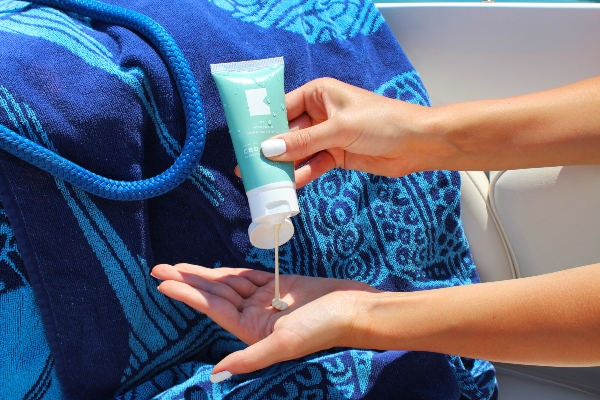
health0507.jpgSave your skin this summer

By Marisela Andrade-Krasiewski

Many of us are good at putting on sunscreen when we are planning to spend a weekend at the beach or exercising outdoors, but how sun-smart are you? Even if you are savvy about using sunscreen, it may not be enough to ward off the damages too much sun can cause, like wrinkles and cancer. Although it feels great, too much sun isn't a good thing. Too much sun can lead to skin cancer. A tan is the body's desperate attempt to protect itself from the sun's harmful rays. Before you step out to enjoy the sun, learn to protect yourself!

The sun's rays, which are called ultraviolet A, and ultraviolet B rays or (UVA and UVB rays) damage your skin. If your skin isn't protected, this will lead to early wrinkles, skin cancer and other skin problems. What's the difference between UVA and UVB rays, you ask? For starters, both cause damage, including skin cancer. UVA rays are the cause of wrinkles later in life, and UVB rays are what cause your skin to burn. The SPF (Sun Protection Factor) number applies only to the UVB. There isn't a rating for UVA protection; however, you can ensure the best UVA protection by using a sunscreen that contains zinc oxide and or titanium dioxide. Both these minerals act as barriers that deflect harmful rays.

Understanding SPF numbers
The effectiveness of an SPF is percentage-based. For example, an SPF of 15 blocks 93 percent of UVB rays, and 30 blocks 97 percent. No product shields 100 percent, but every bit counts! SPF numbers help you determine how long a product will protect you. If you tend to turn pink after spending three minutes in unprotected sun, multiply that number by the SPF number you are using. For example, if you turn pink after spending three minutes in the sun, and you use an SPF 15, multiply that number by three (15 x 3 = 45). That's 45 minutes of sun protection. If you use an SPF of 30 you can rely on 90 minutes of sun protection. It's up to you to determine what SPF works best for you. Use the time examples as an estimate of sun protection; however, take into consideration that you may sweat, swim and towel off; therefore, you will inadvertently remove the sunscreen, which will leave you unprotected.

Water resistant, all-day protection does not mean waterproof
If your sunscreen states that it's water-resistant or that it offers all-day protection, you can typically count on being protected for up to 40 minutes in the water. If you swim or sweat, choose a waterproof formula, for this contains polymers that create an invisible film that helps the ingredients stay put. Be certain to reapply the sunscreen after spending more than an hour in the water, and after toweling off.

Makeup with sunscreen?
Just because your makeup contains sunscreen doesn't mean that you shouldn't use a moisturizer or an oil-free moisturizer that offers SPF protection. Consider using a moisturizer for maximum protection, especially if you are outdoors for an extended period of time, or if you spend a lot of time in and out of your car throughout the day.

Not a sun worshiper?
If you spend as little as 15 minutes in the sun, you should still wear sunscreen. Your skin is like a sun bank; 15 minutes deposited each day could eventually add up to premature wrinkles and skin cancer. For short spurts of sun exposure, you can use a daily moisturizer with broad-spectrum SPF 15 or higher to protect you from casual exposure.

Darker skin tones and sun damage
People with darker skin tones are not immune to sun damage. The melanin in dark skin serves to protect it; however, dark skin can still burn and develop skin cancer. The sun is just as damaging to dark skin. It just takes longer for the damage to take its toll.
African-Americans are less likely to get skin cancer than Caucasians; however, they are more likely to die from it because it is usually detected at an advanced stage because of the belief that darker skin is safe without sunscreen. Regardless of your skin tone, protect yourself by using sunscreen, and watch out for suspicious spots.

Skin cancer
There are three main types of skin cancer: Basal cell carcinomas and squamous cell carcinomas are slow-growing and easy to treat. The third type of skin cancer is known as malignant melanoma. Malignant melanoma is very dangerous, fast-growing, and it spreads quickly. According to the American Cancer Society, being over-exposed to sun during childhood will put you at a higher risk of developing malignant melanoma later in life.

You are at a higher risk of developing skin cancer if you have fair skin that burns easily, have more than 50 moles on your body, have had skin cancer before, and if you have close relatives who have or have had skin cancer. Ultimately, there isn't much we can do to avoid the sun; however, we can take every precaution by applying sunscreen each time we step outside.

Marisela Andrade-Krasiewski, MPA, is the media and community liaison for Steps to a Healthier San Antonio, San Antonio Metro Health District. The program is part of Steps to a Healthier US, a national program focusing on the prevention of diabetes, obesity and asthma by addressing related risk factors such as poor nutrition, physical inactivity and tobacco use and exposure.

Core Training

| No Comments
fitness0507.jpgWhat is it, and why
is it important?


By Shannon Sutton, CPT

I'm sure you have probably heard the terms core, core strength, and spinal health, but what exactly do these things mean? The National Academy of Sports Medicine defines core as the center of the body and the beginning point for movement (core refers to the lumbo-pelvic-hip complex, thoracic spine and cervical spine). Core strength is defined as the ability of the lumbo-pelvic-hip complex musculature to control an individual's constantly changing center of gravity. Finally, the components of spinal health are strength, stability, flexibility and endurance.

When you stop yawning, ask yourself, What does this mean to me? The answer is everything! Without a strong, healthy, flexible core, your limbs do not have a solid foundation from which to grow, function, strengthen and perform! You need stability before you can achieve safe mobility (just like a baby!).

One of my favorite, most well-rounded examples of a thorough core workout (that can be performed at multi-fitness levels) is Pilates. It is a method of physical movement that stretches, strengthens, tones and balances the body while focusing on breathing. Pilates also improves circulation and increases lung capacity, while promoting enhanced posture and core strength, and it is easy on the joints. It can be performed with equipment (using spring tension with head, neck, back and shoulder supports) or performed as mat work.

The following is a demonstration of the Pilates teaser as well as other lower back, abdominal, and oblique moves to get you started on your core routine. These exercises will also benefit the glutes, hip flexors, neck, shoulders and many other related muscles.

Pilates Teaser: With arms and legs extended and spine lengthened, inhale deeply through your nose, exhale completely while simultaneously pulling your navel in and rolling up to a V position with arms and legs parallel. Inhale, extend upper body up to lengthen spine, and SLOWLY roll back down to starting position as you exhale completely. Be sure to keep your navel pulled in. Repeat.

Abs, obliques and lower back / Roman Chair: Position body to side stance and engage your abs. Slowly lower your upper body sideways (ribs toward hip). Feel the stretch and slowly come back up. Repeat 15 to 25 reps, and repeat on other side. Rotate your body forward (hip bones should be resting on the pad) and begin performing lower back extensions. Try not to hyper-extend your back. Repeat desired number of repetitions. Rotate your body while resting your glutes on the pad. Extend back until abs are engaged and crunch forward SLOWLY. Repeat.

Always remember to listen to your body. Set challenging, yet safe and realistic goals and do not follow the no pain, no gain mentality when performing core work. Muscle burn should be the only pain you experience. I recommend trying a Pilates class (or three!) to get started, and when in doubt, ask questions. Always keep safety first in mind.

Shannon Sutton is an independent certified personal trainer. Certifications include ISSA, NASM, APEX and Reebok. You may contact her at (210) 722-3962.

William Parker

| No Comments
feature0507.jpgThe brains and the brawn at the
San Antonio WingTsun Academy

By Janis Turk
Photography by Robert French


At first glance, yes, William Parker seems fairly "brawny": He looks great, he's in excellent health, he's agile and active and, clearly, he works out. But Parker will be the first to tell you that's not what he's about. In fact, Parker has devoted a sizable part of his life instructing others in a certain philosophy that maintains it's not the brawn but the brain that's the body's most important weapon -- an instrument that must be finely tuned and trained along with muscles and reflexes.

It is that principle -- that a keenly honed intuition, a carefully planned response, a well-thought-out technique and endless hours of practice -- that WingTsun™ is all about. At the San Antonio WingTsun™ Academy, Parker, a fifth-level practician and certified master level instructor, teaches this special branch of Kung Fu martial arts, which holds that one's success isn't necessarily dependent on the size or strength of you or your attacker. Using a logical approach in responding to an attack, WingTsun teaches that defense is all about an "economy of motion," which requires more training than toning, and brains over brawn.

Parker, one of the first two Americans to be promoted to the rank of Master in Hong Kong in 2005 in the Leung Ting Organization, instructs men and women in WingTsun, a very contemporary system of self-defense with roots going back to Southern China over 350 years ago. WingTsun is based on the premise that small, precise, properly timed and carefully positioned movements can deflect even the most forceful attacker.

As Parker explains, "WingTsun also teaches that successful self-defense involves immediately turning the tables on the attacker and assuming the role of the aggressor until safety is assured. We actually have a joke that we don't call it 'self- defense,'but rather 'self-offense,' as you must learn to be extremely offensive and unpalatable to your enemy!"

Sounds tough? Well, this isn't something one learns overnight, as Parker well knows. He's been at it for over 20 years, and he claims he's still learning as much as he is teaching.

"I was introduced to WingTsun shortly after finishing undergraduate school in 1985 and was immediately impressed with the logic and concepts behind the system. I'd always been a fairly good athlete, but this went beyond sheer athletic prowess. The principles of WingTsun just make sense intellectually. It employs elements of geometry, physics, and common sense," explains Parker. "Though everyone must find what works for him or her, I felt this was a good fit for me."

Ideas like, "Don't kick the head and punch the toe," seemed so logical and obvious, the more Parker thought about it. The movements, responses and trained reflexive actions are all carefully conceived. As he explains, "This isn't a breaking boards and screaming at each other kind of thing; It's basically about programming your body to react in a natural, logical and efficient manner according to visual and tactile cues."

Born and raised in San Antonio, Parker also spent four years in Virginia and four in Tennessee, but he always considered San Antonio home and settled here as an adult. With a master's degree in communications, he went on to become a stockbroker and work in sales before he left all that to begin devoting himself, full time, to what he loved most: his study and training in WingTsun. Most fortunately for Parker, for years he was able to learn from several high-ranking instructors within the Leung Ting organization. And in 1990, he was adopted as a direct disciple to Grandmaster Leung Ting, who was the first to take WingTsun out of Hong Kong and show the rest of the world what it's all about. It was Leung Ting who suggested that Parker begin training others.

"It wasn't my idea to start teaching," recalls Parker with a grin. "My interest was always in being a student -- learning is a lot more fun. Being a teacher can be difficult because people want instant results. We're living in a fast-food society where everyone wants things right now, and few are really willing to put forth the effort it takes to master anything. Teaching WingTsun is a lot like teaching music because, in music, in the beginning you have to teach simple scales and practice them over and over. People don't always want to do that -- to start at square one and practice that much. But that is what it takes in both music and martial arts: repetition and discipline."

Discipline was one of the first things about WingTsun that appealed to Parker. At the time he was a student, and he knew the dangers of a normal college-kid's routine: staying out late, sleeping in, being lazy, lacking focus. He wanted to break away from that lifestyle.

"It would be fair to say that I was enthusiastic about everything nonscholastic that university life had to offer. My dad still jokes that my dog at the time attended more classes than I did. Of course, by the time graduate school rolled around, I had evolved somewhat!" he says.

"That's what got me started, but what kept me involved was the logical approach WingTsun takes. It involves a conceptual system rather than a mere collection of techniques, and three basic cores govern the execution of WingTsun: economy of motion (be as direct as possible), sensitivity to force (we don't clash our force and get into a strength contest with the enemy) and a continuity of action (there's no disengagement with the enemy -- this is a one-round deal. We don't disengage until it is over). This is a system that becomes part of you. It is something I still learn. I take my lessons all the time," says Parker.

While the path of father/teacher or "SiFu" may not have been the one Parker set out to take 20 years ago, it has been very rewarding for him. And while most of his students happen to be men, Parker explains that women are encouraged to join the classes.

"This is the martial art that is most ideal and best suited for women. A woman can defend herself against an attacker, even if he's really coming at her and he's clearly got superior strength, speed and youth on his side. Here, you learn to use the attributes of the enemy to your advantage. WingTsun also teaches you to read and use body language to your advantage. It teaches prevention and awareness, and it improves your chances of surviving an attack," says Parker.

Parker has been teaching men, women and children (the youngest have been around 12 or 13) for the past 15 years, and he says he would like to start new classes for special groups outside of his school. "Any group that would like to organize a venue and set a time twice a week can have classes. We'll come to them," he explains.

Parker leans heavily on a Taoist philosophy of becoming one with the rhythm of life, both mentally and physically, and lately life's rhythms have taken him to some pretty special places. He lists adventure travel, scuba diving, music, reading and (most precious to him) raising three daughters as some of the most thrilling paths life's taken him on. Another thrill came from his recent trip to Budapest, Hungary, where SiFu Parker went to honor his own mentor, SiFu Ting, for Ting's 60th birthday and to train in six-hour daily WingTsun seminars. But that's just one of many of Parker's thrilling world travels. Still, he's not in a hurry to get anywhere fast: through WingTsun, he's learned to appreciate the journey.

"I try to teach others, and to remember myself, not to get in a hurry -- to enjoy the process, to make goals. That way, your confidence develops and the ability to protect yourself improves. As you do, you will come to find that if you stick with something, you can overcome your own preconceived limitations about yourself. That's the greatest thing to learn -- that you can do something you didn't quite know you could do," says Parker.

When asked if one needs to be super-fit or ultra-trim to fit into one of his WingTsun classes, Parker replies with a smile, "Well, it's good if you can dribble a basketball with a bowl of fruit on your head and not drop anything; but, seriously, if you can fall out of bed without hurting yourself, then you qualify!"
Brawn is purely optional.