June 2007 Archives

Get the Skinny on Fat!

| No Comments
nutrition0607.jpgWho knew?
Fat is good for you!


By Melinda Navarro, RN, MPH

What is the first thing you think about when you see or hear the word "fat"?

It is probably not a positive reaction. You usually think of a negative image, diet or weight gain. Have you ever thought that some fat is actually good for you? The answer is yes!

Fat is an essential part of everyone's diet, but it has to be good fat in specific quantities. Everyone needs fat in his diet for several reasons. Fat has many functions when it comes to health, including the following: it provides your body with energy, it supports cell growth, it keeps your body warm, and it produces hormones. In addition, it helps absorb vitamins such as Vitamin A, D, E and K.

Which are the good fats?
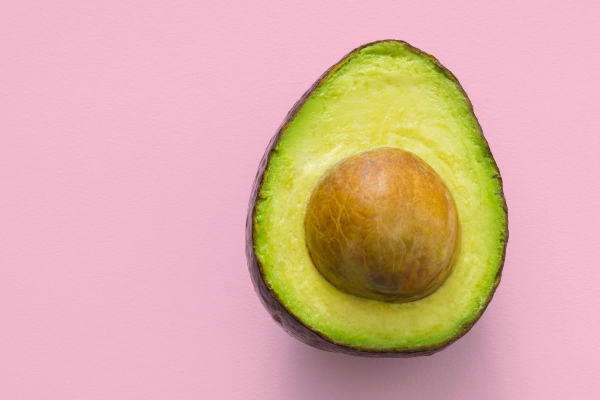
The fats we will be talking about are monounsaturated and polyunsaturated fats. Both of these fats have some similarities, but have some differences. First, monounsaturated fat is usually liquid at room temperature, and then it begins to solidify when chilled. This type of fat helps the body by reducing the bad cholesterol in your system, therefore reducing your risk of heart disease and stroke. In addition, monounsaturated fats aide in the development and maintenance of the body's cells. Finally, these fats are usually high in Vitamin E, which is an antioxidant that promotes the protection of cells from daily damage. Some examples of foods that contain monounsaturated fats are avocados, peanut butter, seeds and nuts, specifically almonds. In addition, vegetable oils including olive oil, sesame oil, canola oil, peanut oil and sunflower oil are foods that are rich in monounsaturated fat.

Second, polyunsaturated fat is liquid at room temperature and when chilled. This type of fat acts by reducing cholesterol levels in the body, therefore lowering the risk of heart disease. In addition, polyunsaturated fats provide fats such as Omega-6 and Omega-3. These are fats that the body cannot make on its own but are needed for cell development. Omega-3 fatty acids can be obtained by consuming seafood such as salmon, tuna, sardines, mackerel or shellfish. This type of fatty acid is beneficial for healthy peoples, those at risk for cardiovascular disease or for those who already have cardiovascular disease. On the other hand, the consumption of Omega-6 fatty acids has been linked to a decreased risk of coronary heart disease. Some sources of Omega-6 fatty acids are in vegetable oils such as soybean oil, safflower oil, sunflower oil and corn oil.

So does this mean that you can eat as much of these monounsaturated and polyunsaturated fats as you want? The answer is no. It means that your fat intake should come mostly from monounsaturated and polyunsaturated fat rather than saturated and trans fat. In addition, your total fat intake should be between 20 - 35 percent of your total calories. So how do you accomplish this? There are several things you can do. Some include learning to read food labels, preparing healthful meals, grocery shopping and sensible options.

First, learning to read a food label may sound simple, but sometimes labels can be deceptive. Start by reading the serving size and the number of servings per package. Then look at the number of total calories, fat and cholesterol per serving. How many servings are you actually consuming? Multiply these numbers by the number of servings you are actually eating. You will be amazed at what you are consuming.

Second, learn to prepare healthful meals. Invest in a few health-friendly cookbooks for recipe ideas. If you are going to purchase red meat or pork, select those that are labeled "loin" or "round" which have the least amount of fat. For poultry, choose breast instead of legs and thighs, and make sure to remove the skin. If you are preparing a recipe that calls for dairy products try using low-fat or fat-free varieties of milk, yogurt or cheese. Instead of eggs try using only egg whites by substituting two egg whites for each egg yolk. Finally, when preparing meals, use vegetable oils such as canola oil or nonfat cooking sprays.

Third, learn how most effectively to shop for groceries. Start by preparing a list, and stick to the list. Stock plenty of fruits and vegetables, including fresh or frozen. Choose lean cuts of red meat, pork and poultry. In addition, try preparing fish at least twice a week by grilling or baking it. If looking for bread, try choosing whole-grain breads and limit the number of baked goods such as doughnuts, cakes and cookies.
Finally, make sensible options. We all like food that is not so healthful, but what is so hard about enjoying and choosing items that taste good and are healthier choices? For instance, instead of serving devil's food cake, why not try angel food cake with fruit? Also, instead of ice cream why not try sherbet or fat-free or low-fat yogurt? Another option would be frozen fruit bars instead of ice cream bars. Do you enjoy chips? Why not try pretzels or low-fat potato chips instead of regular potato chips? There are a lot of options you just have to be willing to try before dismissing them.

Yes, there are "good fats" and "bad fats," but even with good fats you still have to watch your intake. For more information on fats and fat intake suggestions, please visit the Web site at www.americanheart.org, or visit the Eat Right Web site at www.eatright.org.

Melinda Navarro, RN, MPH, is the school liaison for Steps to a Healthier San Antonio, San Antonio Metro Health District. The program is part of a national program focusing on the prevention of diabetes, obesity and asthma by addressing related risk factors.
strides0607.jpgA most appealing
pre-run or post-race snack


By Paul Baltutis

The day after I ran the Oklahoma City marathon, I was at the airport waiting for my flight back to San Antonio when I noticed the women sitting next to me had on sweat pants, a sporty Timex watch, a new pair of Asics shoes and a banana on her lap. Well, it doesn't take Inspector Jacques Clouseau of The Pink Panther fame to figure out that she was a runner. The technicality that we both stiff as a board when we walked was possibly another clue, but for me the banana was the clincher. Why? Because bananas and running go hand-in-hand.

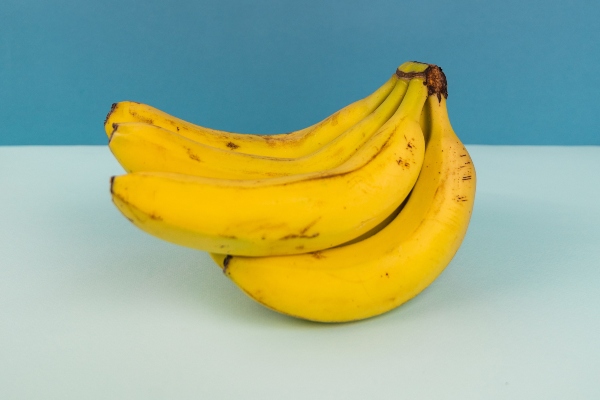
A banana is the ideal pre-run and post-race snack. Bananas are everywhere, from our kitchen counters to the post-race refreshment line. How special are bananas to a runner's diet? I've been known to take special late night trips to HEB just to pick up bananas for my Sunday long run. For me, it's just one of those things that I hate do without. So, I've asked other runners and experts in their fields share their opinions about the value of bananas to a runner's diet.

Kendra Appelt, registered dietitian says, "Bananas are a good carbohydrate, and a good pre-run snack. Afterward, bananas will help replace electrolytes, and by adding some protein, like peanut butter, they will help balance your recovery needs. Another nice thing about bananas is, because of their size, a banana generally counts for two servings of fruit out of the five daily servings that are recommended."

"You can call me a fan of the banana," says Dale Londos, who is a full-time massage therapist. "They have a good flavor, they're easy on the stomach, and, nutritionally speaking, they are high in potassium, which is a key mineral for runners," says Londos. "Potassium is known to assist in the prevention of cramps, which is also an important consideration in long distance events. "The potassium in banana also helps to balance out the abundance of sodium we have in our diets, particularly from processed foods."

"Bananas are high in B6, Vitamin C and potassium," says Sher Stone, owner of Bodies by Sher. "Bananas are easily digested and strengthen your stomach lining. If, for some reason, bananas don't agree with you, try some alternatives. Apricots or figs, for example are also high in potassium."

Bree Newman, a registered dietician, added this comment, "Bananas are high in simple sugars and are good for recovery. Like most fruits they work with the right combinations. A diet that includes a variety of fruits and vegetables will provide the added magnesium that you need along with the potassium from bananas. Having a balance is the best approach in preventing muscle cramps."

Bananas are one of nature's best energy sources. Nutritionally they have natural sugar and fiber. "I recommend eating a banana either an hour before running for fuel or up to an hour after your workout for recovery" says Joe Sulak, endurance coach for Peak Fitness. "Bananas are like the equivalent of nature's GU."

Are bananas the top banana in the food pyramid? The general consensus of the group of runners I queried was that bananas are nutritionally sound and can play an important role in your diet; however, like all things, moderation and variety of healthful and natural foods often works best. Rest assured that bananas are on a runner's training table. With so much going for them, runners that have a clue will always continue to find bananas "appealing."

Paul Baltutis is the manager of Soler's Sports in Alamo Heights. He is a certified marathon coach with Team in Training. He can be reached at sage_run03@yahoo.com.
health0607.jpgBy Nicole Rogers, MPH, CHES

Though heart disease and cancer continue to be the leading causes of death in Bexar County, the 2006 Bexar County Community Health Assessment found that the leading cause of premature death in Bexar Count is unintentional injury.

In fact, unintentional injury is one of the leading causes of death in the United States, ranking as the fifth leading cause in 2003. Injuries are the leading causes of death and disability among people under age 35, and these injuries result in more than 150,000 deaths, 2.6 million hospitalizations and 36 million visits to the emergency room each year.

During the summer months, the opportunity for unintentional injury increases. The kids are out of school, families are on vacation, and it's time for more outdoor activities such as riding bikes and swimming. It is important to understand the impact of unintentional injury on individuals and on the community as well as to understand what we can do to reduce them.

The Bexar County Community Health Assessment, published by The Health Collaborative, measured the leading causes of death in Bexar County in two ways: the age adjusted rate based on the number of people who died, and the number of years of potential life lost as a result of death. The number of years of potential life lost (YPLL) is a measure of premature death, which is death occurring earlier than 65 years of age. Premature death has dramatic impact on the family and the community. YPLL was chosen as a measure of mortality for the assessment because it reflects the burden that the loss places on the community to fill the gap left by the loss of a productive member of the community.

Nineteen percent of years of life lost to premature death in Bexar County are the result of vehicle crashes and injury in the home and in other locations. The people who die due to unintentional injuries tend to be young. On average, an individual who dies of an unintentional injury loses 29 years of life.

Here's what you can do to help
Drive safely. Vehicle crashes alone account for more than one-half of years of life lost to premature unintentional injury deaths in Bexar County. People who die from vehicle crashes lose an average of 34 years of life. When compared to the average of 12 years for those who die prematurely from cancer and 11 years for victims of heart disease, it is obvious that Bexar County would benefit substantially from efforts to reduce unintentional injuries, especially vehicle crash deaths.

Use seatbelts and child safety seats. Seatbelt use is high across Bexar County. The Healthy People 2010 goal is for at least 92 percent of adults to wear seatbelts. In Bexar County 89 percent of adults reported using seatbelts. They also reported that 93 percent of children are in child safety seats when they ride in cars. Continuous efforts to maintain and improve the use of automobile safety restraints need to be supported and sustained.

If you drive, don't drink. A large number of automobile crashes involve the use of alcohol. Considerable attention has been given to this problem in the last several years. Although progress has been made, it is important that efforts continue to discourage this behavior.

Practice water safety. Every year children and adults drown in area swimming pools and lakes. It is important that children learn how to safely enjoy swimming and water sports. In 2002 more than 42 percent of parents living in Bexar County reported that their child had participated in swimming or water safety classes.

Wear a helmet. Wear a helmet and other safety gear when biking, skating, and skateboarding, and when riding scooters, all-terrain vehicles, and horses. According to the U.S. Consumer Product Safety Commission, studies on bicycle helmets have shown they can reduce the risk of heat injury by as much as 85 percent.

Practice safety at home. Make sure your home playground is safe. Prevent pool tragedy by placing barriers completely around your pool to prevent access. Use door and pool alarms. Closely supervise children in the pool area and be prepared in case of an emergency.

Put your cell phone on ICE. Emergency personnel are urging cell phone users to put the acronym ICE ("In Case of Emergency") before the names of the people they want to designate as next of kin in their cell address book. This will save paramedics, police and firefighters valuable time trying to figure out which name in the phone to call when disaster strikes. This is especially important for teens since parental consent is needed for any medical services beyond emergency care.

For additional information on unintentional injury, visit the Web site, www.healthcollaborative.net.

Nicole Rogers, MPH, CHES, is the executive director of the Health Collaborative, a cutting-edge, public-private model for solving community health issues. Partners include the major health systems in San Antonio, Metro Health, the YMCA of Greater San Antonio, Community First Health Plans, Methodist Healthcare Ministries, and a community representative. For more information, visit www.healthcollaborative.net.

Get on the ball!

| No Comments
fitness0607.jpgWhy not try some
E-ball workouts?

By Shannon Sutton, CPT

When time is tight, yet you still want a great workout, it's time to "get on the ball"!

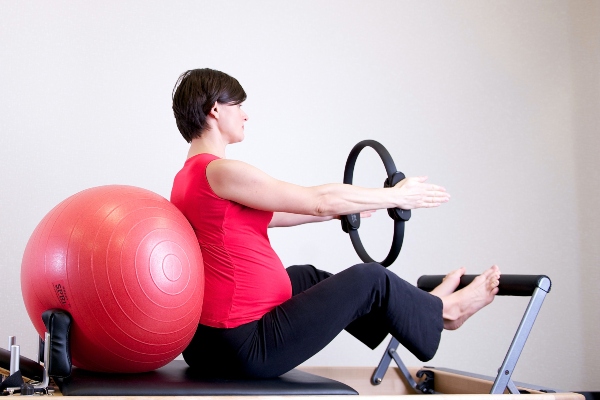
Whether you use it at home, at the office or in the gym, the exercise ball or "E-ball" serves many purposes. It can be like an upright bench and a flat bench. It can be used to properly perform crunches, squats, push-ups and more. The possibilities are virtually endless! By performing your workout using the E-ball, you are omitting the stability factor and forcing your core muscles to engage while still focusing on the target muscles being trained. This will simultaneously help tone, firm and strengthen the midsection (core) as well as the intended muscle or muscle group and, as a bonus, requires more overall caloric expenditure.

The following is an explanation and partial demonstration of a basic upper body workout being performed on an exercise ball:

Back
Begin face down on the E-ball with your chest slightly lifted. With dumbbells, extend arms out at about shoulder level (with elbows slightly bent). Lower weights to about 30 degrees, and rise back to starting position while contracting your back and squeezing your shoulder blades. Remember to exhale slowly while rising, and inhale during descent. Hold the contraction (at the top) for a two to four count, and repeat.

Chest
Remain seated on the E-ball, and slowly walk your feet out until your head and shoulders are resting on the ball. Extend arms out to shoulder level with elbows slightly bent and inhale. Slowly exhale as you begin to raise arms to "V" position while contracting and pulling in with your chest. Slowly lower the weight to starting position and repeat. Note: Abs and glutes should remain engaged at all times.

Shoulders
Sit on the E-ball with knees at hips' width (and over ankles). Sit up tall (engaging your abs) and raise arms up and out 90 degrees from your shoulders. Inhale. Then slowly begin to exhale as you raise the weights up overhead to parallel. lowly lower back to starting position and repeat.

Biceps
Begin while seated in the same position as for the shoulder workout, lower your arms down by your sides, keeping your elbows slightly in front of your ribcage). Raise weights up to a bicep curl, hold for a count and return to starting position. Repeat.

Triceps
While maintaining the same position on the E-ball, extend arms straight up and parallel with weight over shoulders. Keeping arms parallel, bend elbows to 90 degrees. Raise back to starting position (focusing on the triceps contraction) and repeat.

NOTE: The above exercises should be performed with a properly sized exercise ball. Hips and knees should be at 90 degree angles when seated.

Shannon Sutton is an independent certified personal trainer. Her certifications include ISSA, NASM, APEX and Reebok. She has invested years in helping individuals reach health, fitness and wellness goals. Contact her at (210) 722-3962, or E-mail her at jssutton2003@yahoo.com.

Aaron Peñaloza

| No Comments
feature0607.jpgKeeping a steady pace

By Kelly A. Golff
Photography by Robert French

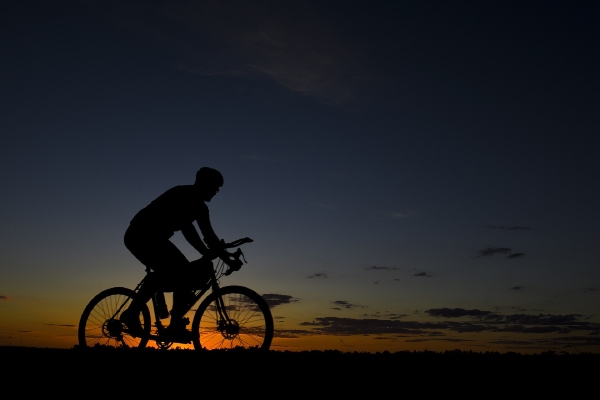
Like a rare gem, cycling provides San Antonio jeweler Aaron Peñaloza with a deep sense of satisfaction. "I love the fact that you can cover so much ground and go fast," the 59-year-old says enthusiastically. "You can actually get somewhere on a bicycle!"

Peñaloza started biking when he was in college at UT-Austin some 40 years ago. He borrowed his brother's Schwinn 10-speed and made regular trips out to Lake Travis to visit his grandmother. "That's when I was young and stupid," he laughs. "I'd go on these 30-mile rides with no water bottle, no helmet, have lunch with grandma, drink a couple of beers and head home."

Boy meets Buffalo
That was during the first bike craze in the '70s. Peñaloza had been bitten by the two-wheeled bug and was eager to get a bike of his own. "My uncle was importing bikes from Mexico called Buffalos. They must have been made from steel plumbing pipe because they were heavy! However, they did come with fancy alloy cranks and gears made in Italy, so when I got mine I rode it everywhere," he remembers.
 
After getting married, Peñaloza moved back to San Antonio in 1973 and continued his love affair with biking. "Then I joined my dad in his jewelry business that he had started in 1958. I continued to ride for a bit, but there was more traffic to contend with, and my new job had a lot of responsibility. From there it just faded out of my life," Peñaloza sighs. "And I spent the next 20 years as a couch potato. The most exercise I got was mowing the lawn and trimming the trees."

Buffalo rides again
In 1990, Peñaloza decided to leave his father's business to start his own. He had to get a physical exam to qualify for health insurance. His cholesterol level was high, and his doctor urged him to start exercising to help lower it. Fortunately, Peñaloza still had his beloved 35-pound Buffalo bike. "I dusted it off and took a spin around the block. I came back wheezing, but I kept at it," he says. "I laid out a 10-mile course through Olmos Park and Alamo Heights. The first time I could average more than 12 miles per hour I was elated. I kept improving and soon broke an 18 mile per hour pace."

Soon after, a good friend gave him a membership to the San Antonio Wheelmen, a cycling organization for men, women and families, as a Christmas gift. "And I got a new bike -- a Schwinn," he purrs. "Let's just say it was a lot lighter than the old Buffalo, and I couldn't wait to get out there and go as fast as possible!"

That's just what he did. As he was out putting his Schwinn through its paces, he took a curve too fast and went down "really hard." Although there was no permanent damage to his bike, he did end up with a concussion. "I called my doctor when my headache wouldn't go away after a couple of days," Peñaloza chuckles. "He said I should have called him right after the accident, but since I was still alive that I would probably be fine."

Before Peñaloza got back on his bike, he finally got a helmet. In addition to his always wearing a helmet when riding, Peñaloza recommends taking advantage of the Rider Education Series sponsored by the San Antonio Wheelmen (www.sawheelmen.com). The course is designed for new riders, people returning to recreational cycling or anyone preparing for a charity ride. A team of volunteers teaches all aspects of cycling including clothing, gear, nutrition, hydration, safety and bike handling. "Getting the knowledge when you start really increases your confidence on the road," says Peñaloza.

Pace line power
Soon Peñaloza discovered the joys of riding with a group. "I started going on rides with the Wheelmen. It was a revelation to me how cool it was to get in a pace line and be able to go faster and further because someone else was breaking the head wind," shares Peñaloza.

He says bicyclists have this undeserved reputation of being standoffish to new people. "Most of us go out of our way to help people new to the sport because we want to share the fun," he notes.

"Undeniably there is a bit of hesitation among cyclists when a new person wants to join their pace line. It doesn't stem from rudeness but more from a concern for safety. The group doesn't know what the ability or style is of a newcomer. I can see how some would be a bit leery. A pace line requires a lot of faith in the cyclist six inches in front of or behind you.

Ironically it wasn't a pace line crash that derailed Peñaloza but a dog. "I was going about 20 miles per hour and a big dog ran in front of me. The bike stopped but I didn't! I went right over the handle bars and slammed into the pavement with my shoulders and head," he says. His helmet protected his head, but his collarbone wasn't as lucky. He ended up with two surgeries and a four-inch metal plate screwed into his collarbone. Either his injury didn't really hurt, or he loves biking too much to stop, because he says he road with it broken for months and was back on the bike within a couple of weeks after his surgeries.
 
Full circle
Unlike so many hardcore cyclists, Peñaloza is less than scientific about his body when it comes to long rides. "I'm pretty sloppy about protein replacement. What I really like after a long ride is a cold beer and watermelon," he confesses. Perhaps it reminds him of those long rides out to Grandma's.

"Biking has been really good to me," says Peñaloza who's resting heart rate is in the low 40s. "It's friendly to old joints and keeps my weight in check. I see guys out on rides in their 80s going strong up hills. That's where I want to be when I'm that age."

Texas Bicycle Laws
When it comes to traffic laws, bikes are the same as cars. Follow these rules of the road for your safety so motorists around you know what to expect:

1. Never ride against the flow of traffic.

2. Always obey all traffic signs, signals and rules of the road.

3. When riding at night, you must have a lamp on the front of the bike that emits a white light visible at a distance of at least 500 feet.

4. In San Antonio, it is illegal to ride a bicycle on the sidewalk.

5. You may only ride side by side if you are not impeding the normal and reasonable flow of traffic. If you're riding side by side on a laned roadway, you must use only one lane.

6. Bicycles may be ridden on roadway shoulders except where expressly prohibited by law.

7. You must have at least one hand on the handlebar at all times.

8. When riding at less than the speed of traffic, you must ride as near to the right curb or edge of the roadway as possible, except when: a) you're passing another vehicle going in the same direction, b) you're preparing for a left turn at an intersection onto a private drive or road, c) roadway conditions make it unsafe to ride next to the curb or roadway.
 
VIA Bike and Ride
VIA Metropolitan Transit buses have bike racks that can hold two bikes at a time. Load your bike closest to the bus, and be sure to close the rack after unloading. Using both modes of transportation can contribute to better air quality, help relieve traffic congestion and move people faster.
 
Get the map!
Created by the San Antonio and Bexar County Metropolitan Planning Organization, the Bike Ride Suitability Map is a must for anyone riding bikes. The comprehensive map marks dangerous streets, suitable bike routes and paths, VIA Park and Ride sites, public restrooms and more. You can get a copy at most bike shops or call (210) 230-6911 to request one.