February 2008 Archives

Going Green w/ ReBeca Drury

| No Comments
fitinsa10208.jpgby Bonny Osterhage

ReBeca Drury is hot! And no, it's not just because this 43-year-old woman has the body of a 20-year-old or because she has a flawless complexion. It's because Drury is a Bikram yoga instructor who conducts her classes in a 105-degree studio with nearly 50 percent humidity. Sweating is mandatory!

Practicing and teaching Bikram yoga is just one part of Drury's commitment to keeping her body healthy by following an all-natural and organic lifestyle. And, as a certified traditional naturopath, she works hard to help others do the same.

The healthy life
For Drury, healthy living has always been a way of life. As a daughter of a registered nurse, she grew up understanding the importance of a well-balanced diet. "My mom always focused on food and not medicines," says Drury.

A San Antonio native, Drury ran track at MacArthur High School and went on to graduate from UTSA with a degree in physical education and a masters in education. Her love of sports and fitness led Drury to a place on a competitive aerobics dance team and careers as the director of the aerobics program at Bally's, a high school track and field coach and an instructor in the kinesiology department of her alma mater, UTSA.

When a neighbor turned her onto yoga, Drury was hooked.
"I've always been more into fitness and the human body rather than competitive sports," she admits. But although she led a healthy life, it wasn't until her youngest son was diagnosed with ADD that she jumped headlong into an organic and all-natural lifestyle.

"My son's diagnosis was the impetus for my lifestyle change," recalls the 5-foot 5-inch, 115-pound dynamo. "I was determined that he was not going to take those meds." Drury began eliminating sugar from her son's diet and giving him supplements of fish oil and herbs, and after one year he was able to stop taking his medication. "He was fine when I took him off," she says. "His mood changes were much less dramatic."

The life organic
Adopting an organic lifestyle takes time, but Drury was 100-percent committed. "Once I learned about it, there was no going back," she says simply. She began with baby steps, incorporating organic food into her family's diet and then progressing to organic cleaning supplies, organic sheets, pillows, cosmetics, skin care products and clothing, and she is even in the process of procuring a latex organic mattress. She also composts and recycles, ensuring that nothing goes to waste.

"Almost everything I buy for my house, for use on my body or that I put into my body is organic," she says. "Initially, it requires effort to make the crossover, but you become used to it. I am passionate about it," she says. Not long after her switch, Drury began to reap the benefits of the life organic, including increased energy, a positive mental outlook, reduced PMS and menstrual cramps and an overall sense of balance. She then felt she had to educate others.

The path to naturopathy
While flipping through a yoga magazine, Drury came across an ad for the natural health program at Clayton College, and so she got her doctorate in naturopathy online. Today she spends her time between teaching and practicing at her Bikram Yoga studio helping clients remedy physical and mental issues using all natural methods.

People come to Drury for help with a myriad of problems, including insomnia, managing menopause and weight loss. And although she stresses that she is not a healer, through the use of supplements, natural remedies such as massage and acupuncture and good nutrition, she is usually able to be of help. "I firmly believe that chronic conditions can be made better naturally," she explains. "My job is to teach people to take responsibility for their own health and not depend on the American health care system, which I believe is failing us."

The initial $75 consultation consists of Drury's checking each client's ph balance and hormone levels. She also takes into account the supplements and medications the client is currently taking. She asks about exercise, stress levels and how often the body eliminates waste. Then she asks the biggest question of all:
"I ask them if they are committed to doing whatever it takes to be healthy."

A proponent of eating for your blood type, Drury instructs her clients on what foods to eat and what foods to avoid, and she encourages them to buy organic whenever possible, even going with them to the grocery store when necessary."I really believe in the genetic research behind this way of eating," she states emphatically. "Plus it gives my clients something concrete to look at."

Drury offers advice on supplements and guidance on exercise and stress management and the end result is a lifestyle change that leaves each client looking and feeling his or her best -- just like Drury.

"I feel good and energized every single day, and I have a great outlook on life," she says with a big smile. "It is possible for people to feel good every day. They just have to make that choice."

fitinsa20208.jpg

Dr. D's Super Smoothie

Drury gives her famous smoothie recipe to all of her clients. It is the perfect breakfast on the go or mid-afternoon pick-me-up. Make sure you use all-organic ingredients for best results.

2 rounded teaspoons Quantum Tocotriene Complex (optional)

1 teaspoon Quantum Super Foods Greens Mix (optional)

20 drops grapefruit seed extract

1 capful organic lignan flaxseed oil

1/2 Cup organic blueberries (fresh or frozen)

1/2 Cup organic strawberries (fresh or frozen)

1 organic banana

2 Cups organic juice: Black cherry (all blood types); cranberry/blueberry (blood type B); pineapple juice (blood type A); cranberry (blood type AB).

Optional: 1 to 2 scoops vanilla soy cream (blood type O, A) or vanilla yogurt (type B, AB)

Put both powders in a blender, and put grapefruit seed extract and flax oil on top of that. Next add fresh or frozen organic fruit. Follow with the soy or yogurt. Finally, add the juice. Blend until smooth.

Revamp Your Resolution

| No Comments
fitness10208.jpgBy Shannon Sutton

So you made your New Year's resolution and probably did well until February 1, and now you're thinking, "I'll start up again in March and work toward a summer beach body." Whether you need to look sexy in your little red dress, or you want those biceps to turn some heads, this is no time to let your workout slide. If the thrill of Valentine's Day is not enough to keep you motivated, how about doing it for yourself?

If you find yourself feeling in a rut, or you feel like you aren't seeing results, remember you are only a month into the new year! It takes time to see results; the point is to stick with it. Many people find that one of the best ways to stay with an exercise plan is to change it up. You don't work the same muscle group every day, and you shouldn't do the same cardio workout every day either.

For example, if you spend an hour of cardio on the elliptical machine five days a week, it's time to change your routine - your body is bored. Try 30 minutes each on the elliptical and the treadmill, and the next day, 45 minutes on a Stairmaster. The third day hit it hard with an hour on the bike. You can mix and match, but make sure you have a plan each day. By changing up your workout, you keep your body excited, and it continues to respond, helping you stay on track for the new and improved healthy you in 2008.


Shannon Sutton is an independent C.P.T. (Certified Personal Trainer). Her certifications include ISSA, NASM, APEX and Reebok. She has invested years in helping individuals reach health, fitness and wellness goals. Contact Sutton by phone at (210) 722-3962 or via E-mail at jssutton2003@yahoo.com.

Restorative Yoga

| No Comments
For the Whole Family

by Laura Brookover, Jenn Brookover Photography

Relax, refresh, rejuvenate with these restorative yoga poses designed to bring renewal to body, mind and spirit.

Now that the holidays are over, most of us are left needing a little pick-me-up. Parents and children alike, while enjoying the holiday and New Year spirit, often get caught up in a whirlwind of activity. Try these useful asanas or positions to reset your inner yogi.

Relaxation pose
Often referred to as "corpse pose," this asana is deceptively challenging, especially after a long period of activity. The simplicity and stillness of it can seem impossible to those who need it most!
Find a comfortable, quiet place and five uninterrupted minutes, at least. Lie flat on the back with the hands facing up, palms to the sky.

Allow the body to melt into the earth below. Begin to focus on the rise and fall of the chest and belly. Try bringing an egg timer, and start with three to five minutes. When the mind wanders, simply turn the awareness back to the breath.

Hero's pose
This one can be hard on the knees for some adults; most children have no problem with it. If it bothers your knees, simply sit either kneeling or in any comfortable seated position, including in a chair (but maintain good posture). Keep the spine long and tall. Again, focus the awareness on the breath for three to five minutes.

Embryo pose
This is a restful variation of child's pose. This pose allows the body to melt into itself. Allow the head to turn to either side. Place the top of the head on the ground or yoga mat. The backs of the hands are to be on the ground, and the palms are to face to the sky. As you bring the awareness to the breath, notice how the body processes the breath differently in the embryo pose than it does in the other two poses; this is a more compact position. Feel the nurturing withdrawal of the senses as you slip into a cozy and protected state of heightened, yet relaxed, awareness.

Namaste!

Laura Brookover teaches a limited number of classes in San Antonio, including Prenatal & Mommy-Baby Yoga at Destination Maternity and Bikini Bootcamp at Anytime Fitness, (210)497-0000. For more information, log onto the Web site at www.laurabrookover.com, or E-mail info@laurabrookover.com.

Prolotherapy:

| No Comments
health10208.jpgPain relief without surgery

by Annette M. Zaharoff, M.D.

In sports, few athletes get by without spraining at least an ankle in their careers. And many know that once an ankle is badly sprained, it may be susceptible to re-injury in the future. With multiple injuries, the ligaments may eventually fail to keep the joint stable. This happens in other areas of the body as well. Shoulders, wrists, low back, neck, feet, hands and toes may all be susceptible to arthritis after an injury.

Athletes aren't the only ones affected by chronic sprains and unstable joints. Anyone who is physically active can be vulnerable to ligaments getting damaged and causing chronic problems of pain and arthritis.

Prolotherapy is a nonsurgical technique that has been used by many athletes and people all over the world to help repair these damaged ligaments, allowing them to return to sports and everyday activities.

What is Prolotherapy?
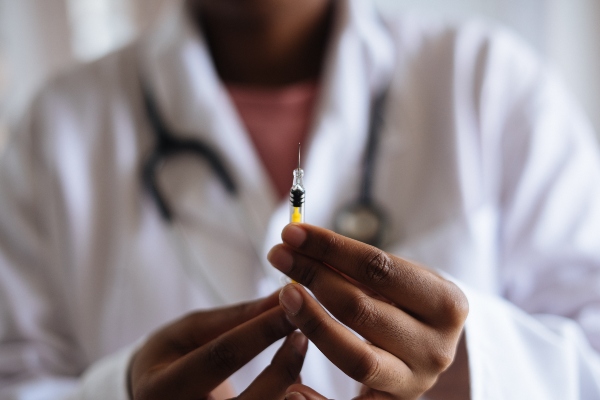
Prolotherapy ("Prolo") is an injection treatment to stimulate your body's own ability to strengthen weak and painful ligaments, tendons, cartilage and other musculoskeletal tissue. The substances injected set in motion the body's own natural healing response to restore stability to the damaged tissue. Prolotherapy is a medical procedure performed by medical doctors who have received specialized training in this technique.

How does Prolotherapy work?
A little knowledge of anatomy helps in understanding how Prolotherapy works. Ligaments are bands that connect two bones together. Tendons are the connectors between muscle and bone. Weak or damaged ligaments and tendons may become lax, leading to pain, weakness, and instability. Strengthening these tissues reduces pain and stabilizes the structures, allowing you to comfortably perform the activities you desire.

Secondary problems such as muscle spasm and degenerative arthritis may accompany the chronic joint instability. Therefore, by strengthening the tissue, muscle spasm may improve and long-term further degeneration of the joint may be prevented. Once stability returns to the ligaments, tendons, and cartilage, you can enjoy your physical activities once again.

For what conditions may Prolotherapy be used?
Since most orthopedic injuries involve damage to the ligaments, tendons, and cartilage, just about all musculoskeletal injuries can be treated with Prolotherapy. Bursitis, tendonitis, sprains, strains, low back and neck pain will most likely improve and potentially be CURED with prolotherapy.

Examples include ...
1. Shoulder injuries such as rotator cuff tendonitis and bursitis, chronic instability and subluxations.
2. Elbow/wrist injuries, such as tennis and golfer's elbow and carpal tunnel syndrome.
3. Low back/neck injuries including degenerative disc disease, pinched nerve pain, sacroiliac joint injuries and sciatica.
4. Hip/pelvic injuries, including burisits/tendinosis and degenerative joint disease, sciatica.
5. Knee injuries, including ligament sprains, cartilage tears and osteoarthritis.
6. Foot/ankle injuries such as ankle sprains, plantar fasciitis and heel pain and Achilles tendonitis.

Complete ligament tears and fractures do not respond to prolotherapy unless surgery or immobilization is performed first.

Are there any complications?
Fortunately, complications are rare. Since prolotherapy is an injection treatment, the risks are no different from other common injection therapies. Surgery has far greater risks. Prolotherapy is an ideal treatment to use before nonemergent surgeries are performed. The proliferants injected are natural substances such as high concentration dextrose (sugar). Steroids, like cortisone, are NOT used.

Numerous research studies are now available demonstrating the effectiveness of prolotherapy. Major academic institutions and medical centers as well as many sports medicine centers are utilizing Prolotherapy as a nonsurgical alternative to treat painful injuries to ligaments, tendons, and cartilage.

Dr. Annette Zaharoff is a sports medicine physician specializing in the nonsurgical evaluation and treatment of injuries. She maintains a private practice in San Antonio and may be reached by calling her office at (210) 616-0646 or visiting her Web site www.drZmd.com.

Smart Cycling on Mountain Bikes

| No Comments
cycling10208.jpgAvoid risks but still get the rush!

Ask anyone who rides, and he or she will tell you that cycling is an addictive sport. Mountain biking in particular offers adrenaline junkies a rush with the challenge of navigating difficult terrain and making split-second decisions. As with any sport, there are risks for injury involved in mountain biking, regardless of skill level. For the novice, however, the risks may be greater because of inexperience, overconfidence, improper bike fit and more.

Dr. Marque Allen, a podiatrist with Sports Medicine Association of San Antonio, says that besides contusions associated with falls, the most common bike injuries are broken wrists, ankles and collarbones.

"A fractured collarbone is almost a rite of passage in mountain biking," he chuckles. He should know -- this 2004 state mountain bike champion has broken his collarbone not once but twice.


How can you avoid cuts, scrapes, broken bones and concussions while biking off-road?

One of the first ways is to understand that a mountain bike is nothing like the 10-speed you had as a kid.

For starters, mountain bikes are equipped with many different gears that allow you to keep the resistance easy and consistent if you know how to use them properly. Another difference is that, in addition to back brakes, mountain bikes sport front brakes as well, and those can cause all sorts of problems for the novice rider.

"Front brakes are a big nemesis," says Dr. Allen. "Braking is an art," he continues. "It should be a gradual descent. If you slam on the brakes, you will go over the top, and that's when you get a fractured collarbone."

cycling20208.jpg

The fit of the bike may be the most important part of riding.

The staff at a good bike shop should measure you for proper seat height and proper distance between the seat and handlebars. Your body weight should be evenly distributed between the handlebars, seat and pedals for optimum comfort and longer rides.

Dr. Allen recommends that begin-ners avoid purchasing the clip-in pedals most avid cyclists use until they become confident on the bike. Although they allow for a more effective pedal stroke, clip-on pedals can be difficult to get out of during a fall, and that can result in broken feet and ankles. When you do transition to the clip-on, keep the fit loose until you become accustomed to the feel of it.

Finally, know your skill level, and then ride on a trail compatible with that level. If you are unsure, walk the trail first or ride with someone who is familiar with the terrain. And, of course, always wear a helmet.

Following these guidelines will make it easy for bikers of every skill level to enjoy all that this sport has to offer. With a little common sense, it can be as easy as riding a bike!

Texas Rubies

| No Comments
nutrition10208.jpgWinter's Treasure

by Fran Werner

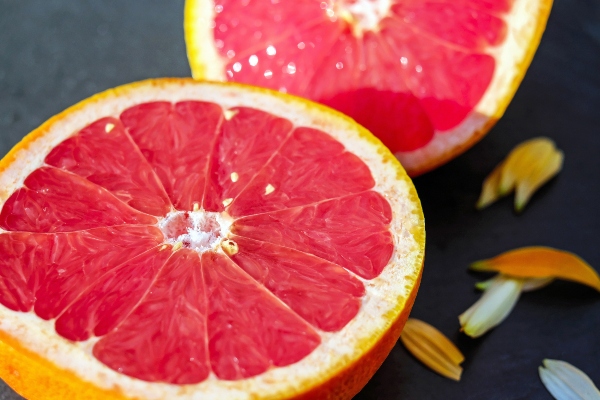
Texas growers produce the reddest, sweetest grapefruit in the world, and the Ruby-Sweet and Rio-Star varieties being shipped to supermarkets right now are proof of success.

Grapefruit is notoriously good for you. Besides containing high levels of Vitamins C and A, grapefruit contains a phytochemical called lycopene, which has been shown to reduce the risk of certain cancers. Also, grapefruit are an excellent source of dietary fiber and contain no fat, sodium or cholesterol. One grapefruit contains about 100 calories, 77 mg. vitamin C and 3.5 mg. lycopene. And Texas red grapefruit, which are tree-ripened, are so naturally sweet that adding sugar would be gilding the lily.

A grapefruit a day -- particularly the red variety -- can help keep heart disease at bay, according to a new study. In a study of patients with heart disease, the scientists found that feeding some patients the equivalent of one grapefruit daily significantly reduced levels of cholesterol in comparison to patients that did not eat grapefruit. The patients who received either red or white grapefruit showed significant decreases in blood lipid levels. Red grapefruit was more effective than white in lowering lipids, particularly blood triglycerides. It is likely that antioxidants in the grapefruit are responsible for their health benefits, and the red variety generally has higher antioxidant levels than the white. But it's also possible that red grapefruit may contain unknown chemicals that are responsible for the observed triglyceride-lowering effect.

Grapefruit is known to interact with certain medications -- sometimes adversely -- so consult with your doctor or pharmacist to determine whether your prescription medicine will interact with consuming grapefruit products.

nutrition20208.jpg

Ensalada de Noche Buena
(from Cooking Light magazine)

1 large ruby red grapefruit
4 large navel oranges
3 Cups cubed (1" cubes) peeled jicama (about 1 pound)
1/4 cup slivered red radishes (about 6 medium)
1 1/2 teaspoon grated lime rind
2 Tablespoons fresh lime juice
3 Tablespoons plain fat-free yogurt
2 Tablespoons light mayonnaise 4 Cups chopped romaine lettuce
1 1/2 Tablespoons honey 1 Cup pomegranate seeds
1/4 teaspoon freshly ground black pepper 3 Tablespoon unsalted pumpkin seeds, toasted
Dash salt 2 Tablespoons chopped cilantro

Peel and section grapefruit and oranges, reserving juice; add sections to the juice. Add jicama and radished to mixture; toss gently. Cover and chill 30 minutes. Combine rind and next 6 ingredients (through salt) in a small bowl, stirring until smooth. Arrange lettuce in a large bowl. Using a slotted spoon, place citrus mixture over lettuce and drizzle with dressing. Sprinkle with pomegranate seeds, pumpkin seeds, and cilantro. Yields 8 servings.

Nutrition information: 133 calories, 3 grams fat, 2 grams protein, 26 grams carbs., 6 grams fiber, 3 mg. cholesterol, 1 mg. iron, 58 mg. sodium, 65 mg. calcium.

Fran Werner is a certified lifestyle and weight management consultant as well as a certified personal trainer specializing in weight management. She is the owner/director of Lifestyle Consulting. You can contact her at (512) 794-3848 or by E-mail at fran@lifestyleconsulting.com. Visit her interactive Web site at www.lifestyleconsulting.com.