June 2008 Archives

Ski Bees

| 1 Comment
fitinsa10608.jpgEndless Summer - Water ski club celebrates 56 years on Lake McQueeney

By Bonny Osterhage

Lake McQueeney is a veritable beehive of activity this time of year as the popular Ski Bees water-ski club gears up for the summer season and their weekly trick-ski shows. Celebrating their 55th anniversary this summer, The Ski Bees are a group of water-skiers ranging from the very young to spry seniors. The Ski Bees perform every Thursday night, delighting large crowds with jumps, trick skiing, huge human pyramids and other awe-inspiring feats. Throughout the years, the Ski Bees have turned out regional and national water-ski champions, as well as three world champions. And today, after 56 years, The Ski Bees are still all the buzz - young skiers still growing and going strong.

Founded by the three "Bs," Buzz Mueller, Betty Mueller and Bob Spalten, the Ski Bees originated as a club for children who wanted to ski in competitions -- and they often won regional and other competitions, even as early as 1961.

While today's Ski Bees now have a weekly show at a private lakeside club each summer, in the early years the ski show was a separate entity called The Buzz Mueller Ski Show. The show consisted of skiers performing tricks and jumps, and there were clown and ballerina acts. The ballerina act included a line of girls who skied in tutus and did impressive tricks as they passed in front of the cheering crowd watching from the banks. Even now, these many years later, these acts are still part of each show.

fitinsa20608.jpg

Over the years, the Buzz Mueller Ski Show and the club merged to simply become what is known today as The Ski Bees. There was a brief pause in the 1960s when the Bees temporarily disbanded, but their old buzz still hung in the air. So it wasn't long before the club's resurrection came around in the late 1970s at the hands of those who had grown up on the lake and loved to water-ski. Local lake lovers Dan Daniels and Mike Stautzenburger dug the old ski jump out of the dump and started a sign-up sheet for kids that were interested in joining the club.

"We really just wanted young people to have access to a safe water sport," says Daniels, Ski Bees comedic show announcer for 15 years.

The response was overwhelming, and in recent years the Ski Bees have had from 60 to 100 members. The group still turns out champion skiers (such as nationally ranked jumper Brian Harris), and many of the kids who learned to ski with "the Bees" spend summers working as ski pros at SeaWorld.

"The Ski Bees show-ski club is a great place for kids to learn to ski and to encourage them to help one another and work together. It's a great team-building and character-building opportunity for the kids, and the adults and teenagers mentor the young ones," says one Ski Bees parent.

Daniels agrees: "All the hard work and practice is good exercise and good discipline, too. Then all the work, exercise, fun and learning cumulate into an exciting weekly show. It's a win-win situation for everyone, and it keeps the kids outside in the sun and unplugged from computers."

Today's Bees are a well-choreographed colony of "Bees" who perform with costumes and music, and they still perform the pyramids, flag lines and tricks such as "thread the needle" and "helicopters."

fitinsa30608.jpg

Each week, the show begins with a line of the smallest skiers carrying flags that spell out "Ski Bees," so even novice skiers and very young children have a part in the show. There is no age limit for skiing on either end -- old or young. However, skiers have to officially join the group, pay dues, attend practices and ski clinics, and, of course, the Ski Bees carry good insurance, have a governing board and are USA Water Ski affiliates. There are fund-raisers, such as T-shirt sales, and there's something for each member to do.

The tricks that the kids can do are nothing less than amazing, and the high level of professionalism the performers exhibit often awes first-time spectators.

There are ballerina lines in which young girls will slalom ski with no hands, holding on to the rope with their toes and swiveling around, skiing backward--all on the one ski. Others do "conventional doubles," wherein a line of girls will take off from the dock on the shoulders of the boys. Then, as they ski past the crowds, they throw their arms and heads back down toward the water or stand on the boys knees and lean forward, balancing on the ropes with no hands. Some ski barefoot; others may ski with a kite that flings them high into the air. There are wake-boarders and knee-boarders. There are funny events where some may ski on a lawn chair or in a tuxedo. If there's a way to ski differently, the Bees have tried it. Sometimes celebrity skiers like Banana George have made surprise guest performances. Each week brings something new. But perhaps the most popular event in the show is the ski jump.

"We are known for our jumping," says Stautzenburger. "It's like the bull riding of the ski world. You don't have to be big or strong -- you just have to have the right attitude." Well-trained skiers with a lot of practice and safety training wear helmets and ski up a big ramp in the water. While they are in the air, it is perfectly timed so that another skier (also in a helmet) skis right below them, so the others are literally jumping over another skier. Watching it is a nail-biter, to be sure.

Stautzenburger assists with coaching the Killer Bees, a group of young people ages 14 and older who perform most of the flying or jump acts, complete with colorful suits, helmets and fireworks. "There is a lot of hot-dogging," laughs Stautzenburger.

fitinsa40608.jpg

The biggest attraction, however, seems to be the end-of-summer "Old-Timers" show, where skiers 60 and older perform. This one-time-only event is usually held in August and has been known to draw more than 1,000 onlookers. Many consider it an annual memorial show honoring a beloved long-time Ski Bee, the late Sambo Muir, who was one of the early Ski Bees as well as a ski instructor and a mentor to kids on the lake.

The Ski Bees begin training in May, and jump clinics are held every Saturday morning. The best part is that anyone who can put on water skis can join -- no matter how young or old they are.

"We want to give everyone who wants it the opportunity to ski," says Stautzenburger. That's the buzz!

Hot Bodies Wanted

| No Comments
fitness10608.jpgThe Anywhere Boot Camp

By Shannon Sutton

Summer is here and "hot bodies" are everywhere (in more ways than one)! Is yours one of them? It's never too late to start working on yours, and the sooner you get started ... well, you know the rest.

Warm up!
Give yourself five or 10 minutes to warm up (and sitting in a hot car doesn't count). You can speed walk, jog or do good, old-fashioned jumping jacks, lunges, squats, etc.

Grab some lightweight dumbbells
(3 - 10 lbs.)

1. Squats with front raise: Stand with your feet slightly wider than your shoulders, toes pointed out and dumbbells in hands. Squat until knees are almost 90 degrees while simultaneously raising the weights over your head. Hold for a couple of seconds and return to starting position. Focus on squeezing your glutes and drawing in your abs. Repeat for 25 repetitions.

2. Lie down on your back with feet flexed and raised toward the sky. Try to keep your legs straight, and slowly raise your rear end a couple of inches from the ground (with palms face-down near your hips). This should be a smooth, controlled movement (you should not look like a fish out of water). Perform 25 reps.

3. Flip over for push-ups. Keep your abs tight and try NOT to arch your back. When you feel you can do no more, drop to your knees and continue. Go for 25 or more.

4. Hop up with your dumbbells and proceed right into walking (or alternate leg) lunges with a bicep curl. Do 25 right and 25 left or 50 paces walking.

5. Sprint, jog or speed walk for five minutes.

6. Drop back down into "plank" position (push-up position) and hold for 25 seconds. Without dropping down, rotate to side plank and hold (both sides, of course).

Be sure to stay well-hydrated throughout this continuous series. Try to move from one exercise to the next with minimal rest (providing your heart rate remains in a safe zone). Repeat the series three to five times. Watch the inches melt away, and discover (or rediscover) your own hot body!

Shannon Sutton is an independent certified personal trainer. Her certifications include ISSA, NASM, APEX and Reebok. She has invested years in helping individuals reach health, fitness and wellness goals. Contact her at (210) 722-3962.

The Tree Pose

| No Comments
yoga10608.jpgby Laura Brookover


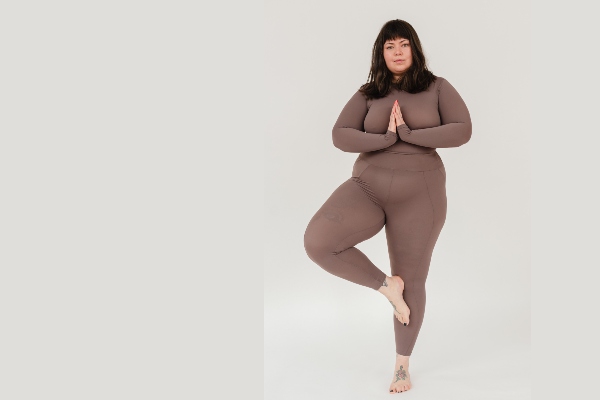
This is one of the best postures of all to develop a personal sense of balance. It is also a very calming posture, which is very adaptable to individual levels, as there are several different forms of Vrikasana from which to choose. Consult your yoga teacher for the position best suited to your physical state, or try these variations, and see which feels best for you.

"Rooted tree"
This is a nontraditional version of the Tree Pose that feels very comforting and grounding. Use your foot with the ball of the foot on the floor for balance. Realize that our balance changes daily. Both men and women have monthly hormonal cycles. For women, balance and strength is at a peak during ovulation. Pregnancy is the most challenging time for balances, as the body is ever changing and constantly adapting to the changing center of gravity. When we feel wobbling or destabilization during balances, think of this as a blessing. With every wobbly movement, tiny stabilizer muscles all around the joints are being strengthened. In one study, geriatric patients who practiced yoga had 90 percent fewer falling injuries. By intentionally challenging our stability, we have the opportunity to become stronger.

yoga20608.jpg

The second version of Tree Pose is performed by placing the curved area of the arch of the foot where it fits most comfortably around the curve of the calf. It is always useful to select a "dristi" while balancing. A "dristi" is a fixed point upon which to place your visual focus. Keeping your gaze focused on your dristi, center the hands in "Anjali Mudra," also known as "prayer position" or "heart salute." Bring the awareness to the breath. Count five natural exhales. Very slowly bring the elevated foot back to the ground.

For the advanced Yogi or the very flexible, the "High Tree" position is a nice option. It is practiced in the same manner as the others; however, a common mistake is that, in trying too hard to force a body that might not necessarily have the right structural makeup for this posture, many people end up putting a lot of pressure on the knee joint. If you want to work on "High Tree," be sure that there is absolutely no contact with any part of your foot and the standing knee. The big toe of the elevated foot should be well above the knee for maximum safety and benefit. A good way to accomplish this is by using the hand to grasp the ankle and place the foot in a very high position on the leg.

yoga30608.jpgHave fun. Laugh at your wobbles! We like to call this posture "Tree in the Breeze" on our less solid days! Namaste.


Laura Brookover is a body-mind trainer. She teaches EmPOWERment Yoga at Destination Maternity, (210) 694-4692, and Bikini Bootcamp at Spectrum, Rogers Ranch, (210) 408-9050. For more information visit her Web site at www.laurabrookover.com. Photography courtesy of Jenn Brookover Photography.


Good Vibrations

| No Comments
health0608.jpgThe ups and downs of vibration training

by Annette M. Zaharoff, MD

Sports medicine specialists and athletes are looking for new way to facilitate training and rehabilitate injuries. Clinicians have recently investigated the use of whole body vibration (WBV), in which patients stand on a platform that provides gentle to challenging constant vibration that reverberates through the body. The vibrational therapy units that are generated reproduce the effects of gravity, which are thought to have systemic and therapeutic benefits.

Although WBV technology has been around for over 40 years, research studies are inconsistent regarding the effects of vibration on the body. Here are some of the benefits that have been reported:

Similar to aerobic and anaerobic exercise, WBV may increase strength and endurance by increasing oxygen uptake and stimulating involuntary muscle contractions.

Comparable to weight training, WBV may increase muscle strength and work tolerance with less effort and in shorter time periods by enhancing neuro-muscular activity.

Balance and coordination may improve by challenging the body's stretch receptors and tendons reflexes.

Osteoporosis may be combated by enhancing hormones and increasing mechanical stressors on bone, which may facilitate increased bone density.

Pain of arthritis may be reduced by improving circulation and fluid delivery to the joint space, thereby possibly improving joint mobility and decreasing stress.

Post-operative recovery may be enhanced by stimulating the release of serotonin and growth hormone with WBV.

Cardiovascular benefits of WBV may include improved cardiac output and decreased plaque buildup.

Although no research to date has proven WBV can enhance athletic performance, many collegiate and professional sports teams utilize vibration platforms as an adjunct to standard dynamic warm-up routines. There are also anecdotal reports from athletes using WBV in their workouts and rehabilitation to improve the efficiency of their strength training, allowing the use of less weight and fewer repetitions without diminishing the benefit.

While WBV is fairly safe, there are certain conditions where WBV should not be used or used with caution. These include patients with serious cardiovascular disease, pacemakers, recent surgery, epilepsy, severe diabetes, acute hernias and metal implants. Also, patients who are pregnant, have had recent infections, have active tumors or have metal plates or pins should avoid WBV.

WBV is a new concept with much research yet to be performed. It may be years before researchers can conclusively determine the best way to use vibration training in athletes; however, many practitioners are not necessarily waiting for those findings. As with any treatment or training question, contact your sports medicine specialist to find out if vibration makes sense for you.

Dr. Annette Zaharoff is a sports medicine physician specializing in the nonsurgical evaluation and treatment of injuries. She maintains a private practice in San Antonio and may be reached by calling her office at (210) 616-0646 or by visiting her Web site www.drZmd.com.

SA Bicycle Clubs

| No Comments
cycling0806.jpgJoin the pack

Whether you are a cycling enthusiast or you just purchased your first bike, joining a bicycle club is a great way to meet others who share your passion.

San Antonio is home to several clubs that vary in skill level, dues, meeting requirements and more, but they all have one thing in common, and that is a love of biking. One of the user-friendliest groups in the Alamo City is the Hill Country Bicycle Touring Club (HCBTC), which focuses on easy-paced rides that average approximately 30 miles.

"We ride to eat," jokes president Vernon Jeys, who explains that the rides usually start and end at a restaurant. "We usually ride in one big loop."

The second largest club in the city, HCBTC boasts a membership of close to 200 people and offers several group rides each week. Jeys leads three of those weekly tours and says that the group is one of the most inclusive in the area.

"We are small enough where anyone can join, but you don't have to join to be able to ride with us -- you just have to show up," he says. "You can't go the overnight trips or attend the social events if you don't join though," he adds.

Those social events and overnighters include weekend tours to places like Goliad and Fredericksberg, a couple of yearly camping trips and out-of-state trips once or twice a year. Members also attend monthly meetings, where guest speakers provide helpful information on topics including nutrition, hydration and, most importantly, safety.

"We have a motto of 'try to leave no one behind,'" explains Jeys. "We give a safety talk before we start off, and each ride usually features a leader and a 'sweep' who brings up the rear. We also encourage people to bring their cell phones in case they need help."

In addition to the great exercise and camaraderie of joining a bicycle club, it is also a good way to give back to the community. HCBTC members participate in a trash pick-up along a two-mile stretch of Government Canyon Park every three months, and each Christmas they donate up to $500 to purchase bikes for disadvantaged children.

For more on the HCBTC as well as links to other local bicycle clubs, visit www.hcbtc.org.

Whole Grains Guide

| No Comments
nutrition10608.jpgA Recipe for Good Health

by Fran Werner

Whole grains -- like bulgur, amaranth, buckwheat, quinoa and barley -- have always been at the top of my list of favorite foods because they're so delicious and versatile. But now I have even more reason to love them: New nutrition studies reveal that they cut heart disease risk by 21 percent and diabetes risk by 30 percent, and that antioxidants in grains reduce inflammation in the body, protecting against diseases like asthma and arthritis. They're also rich in fiber and B vitamins. On top of all that, whole grains are digested slowly, so they keep you full longer, helping you keep your weight in check. You could get the recommended three daily servings of whole grains from whole-wheat bread and cold cereal, but why not try them in their natural form? If you follow these tips, your meals will be fast, easy and delicious.

Toast them first
This will add a depth of flavor to your dishes. Toast the grains in a sauté pan on top of the stove, or put them in the oven. Simply heat for a few minutes; remove when they start to give off a nutty aroma.

Vary the cooking liquid
Enhance your dish by using fruit juice (good if you're having the grains for breakfast), broth (to give them a savory flavor) or even tomato juice (perfect with brown rice or bulgur). If you use water, toss in garlic, ginger or your favorite herbs to add some zip.

Spice them up
Grains take on the flavor of the ingredients they're paired with, so pick a flavor combo you like -- scallions, red pepper, broccoli and soy sauce for an Asian twist, for instance, or chickpeas, garlic, cumin, lemon and parsley for a Mediterranean slant -- and start experimenting.

Pay attention to cooking times
Overcooked grains are mushy and bland. Many of them, like amaranth or quinoa, are ready in as little as 15 minutes; others, like barley and wheat berries, can take up to 45. Taste them close to the end of the cooking time -- you want them to be slightly chewy, not soft. Improve their texture by fluffing: Run a fork gently through the grains, then cover and let sit five minutes before serving.

Serve them warm
Whenever I prepare grains, I cook more than I need for a recipe because they keep in the fridge, tightly covered, for up to five days. But bring them to room temperature or reheat them before serving. When chilled, the starches in grains harden and the flavors fade a bit.


nutrition20608.jpg

Mushroom-Barley Casserole
1 Tbsp. margarine
1 (8 oz.) package pre-sliced mushrooms
1 (3 1/2 oz.) package shiitake mushrooms,
stems removed and caps sliced
1 cup uncooked pearl barley
1 (1 ounce) envelope onion soup mix
(such as Lipton's)
4 cups water
Chopped chives (optional)


Directions
1. Preheat oven to 350 degrees.

2. Heat margarine in a medium nonstick skillet over medium-high heat. Add mushrooms; sauté five minutes or until tender. Set aside.

3. Combine barley, onion soup mix and water in a three-quart casserole, and stir in mushroom mixture.

4. Cover and bake at 350 for one hour and 15 minutes or until liquid is almost absorbed.

Garnish with chives, if desired.

Yield: 6 servings, 1/2 cup each.


Nutrition per serving: 161 calories, 2.5 grams fat, 4.4 grams protein, 31 grams carbohydrates, 6 grams fiber, 434 mg. sodium, 0 cholesterol.


Fran Werner is a certified lifestyle and weight management consultant, a certified personal trainer, and a certified lifestyle coach, specializing in weight management. She has been the owner/director of Lifestyle Consulting since 1981, and has maintained an office in Austin, Texas since 1993. Werner has helped thousands of individuals achieve and maintain healthy weights and healthy lifestyles. You can contact her at (512) 794-3848 or at stfh@lifestyleconsulting.com. Visit her Web site, www.lifestyleconsulting.com. Werner's weight management program is now available on CD, www.thelifestyleprogram.com.

If the Shoe Fits

| No Comments
Running Shoe Clinic 101

By Paul Baltutis


The good news: There's a wide selection of styles and varieties of running shoes. The bad news: There is a wide selection of styles and varieties of running shoes. Yes, there are many bands, models, categories and technical terms to learn, such as pronation, supination, and biomechanics, so how can you possibly sort all this out?

After owning over 120 pairs of running shoes (four pairs a year for 30 years) and by working at a running store for the past five years, I've learned a few things about the selection process and the shoe industry. Here are some helpful tips on running shoes:

Determine what foot type you have
Do you have a high arch, medium arch, or are you flat-footed? You can determine this by getting your feet wet and standing on a brown paper bag. Now look at the impression left behind. Compare it to the graphics to the left. Each of the three foot types operates differently, and the shoe manufacturers factor this into the design of the shoe.


running20608.jpg

High arch
High arches appear like caverns under your feet, and the accompanying bone structure of this foot type is generally rigid and firm. I equate these to truck suspension on a vehicle. The suspension is solid, but the ride is firm. This foot type is considered suppinating (rolling to the outside) or neutral. The proper shoe for runners in this category should provides cushioning while not changing the basic motion of the foot. This type is called cushioning or neutral category.


running30608.jpg

Medium arch
Medium arches and mid-range arches display more inward flex or pronation than a high arch. Given the vehicle analogy, the average arch is like a standard car sedan. This arch type provides reasonable shock absorption and flex; however, since the motion of the arch goes inward, a greater degree of firm arch support is needed to keep the foot properly aligned The shoe industry calls this type the stability category.


running40608.jpg

Low to flat arch
The characteristic that best describes this category is over-pronation. The lower the arch, the more flexible it is, and while the flat foot distributes shock very effectively, the arch is so flexible that it goes "overboard." The best vehicle analogy is a sedan with a mushy or a too-springy shock absorber. Picture a low-rider car that has hydraulic shocks installed and keeps bouncing up and down. For your foot, however, this excessive pronation needs additional support to control this excessive motion and is called motion control shoes.


Once you know the category that fits your kind of foot, try several brands and see how they feel on your feet. Simply trust your foot to tell you what feels natural and comfortable. While you can certainly do this on your own, going to a specialty running store with a knowledgeable sales staff is a smart way to find out what will work best for you. Getting a good fit is still a trial and error process, but a little knowledge goes a long way toward making your running experience the best it can be.

Paul Baltutis, is manager of Soler's Sports and a certified marathon coach for Team in Training. For more information, please contact Paul Baltutis via e-mail at sage_run03@yahoo.com.