December 2008 Archives

Holi-Day Trips

| No Comments
map.jpg
Family fun trips encourage festivity this season

By Bonny Osterhage

It can sometimes be hard to catch the holiday spirit when you live in South Texas and the temperature rarely drops below 80 degrees. But believe it or not, you can experience the magic of old-fashioned holidays (and maybe even see some snow) by taking a short drive into the Texas Hill Country and visiting one of the 11 communities participating in the 2009 Hill Country Lighting Trail.

Thousands upon thousands of twinkling lights, parades, horse-drawn carriages and, of course, appearances by the Big Guy himself are just a few of the things to experience. The following are just a few highlights, but for a complete list of festivities visit www.tex-fest.com.

Boerne:
The quaint town of Boerne is transformed into a Dickens Village on Friday, Dec. 5 with costumed shopkeepers and horse-drawn carriages. December 20 and 21 brings the Cowboy Christmas at Enchanted Springs Ranch. An active western town and movie set has shows, hayrides, caroling, a petting zoo and a Cowboy Santa.

Burnet:
The little town of Bethlehem is recreated in the little town of Burnet. Main St. Bethlehem will be open the first two weekends in December (only)-Dec. 5, 6, 7 & 12, 13, 14. Walk the streets of the ancient town of Bethlehem from 6 to 9 p.m., located on Washington St. 1 block south of Hwy. 29, at Vanderveer St. Step through the city gates, and begin your journey back in time. Authentically costumed townspeople bargain at the city market, draw water from the well, bake bread and pay taxes to the tax collector. As you walk through the village, watch out for the camels, donkeys and other animals! As you near the exit, you will see Joseph, Mary and baby Jesus in a cave.

holiday1.jpg
Fredericksburg:
It may seem hard to believe but during December the Fredericksburg Marktplatz is home to an outdoor ice skating rink. Located in theheart of the Texas Hill Country Fredericksburg is filled with events and decorations flavored by its German and frontier heritage.

Llano:
If snow is what you want, snow is what you will get in Llano. Saturday, December 13 is Snow Day. Beginning at 1 p.m., kids of all ages can come enjoy the snow and tube down the snow hill.

Marble Falls:
Romance abounds in the Marble Falls Walkway of Lights. The self-guided winter wonderland walk will dazzle you with the largest lighted pole-tree boasting over 17,000 multi-colored lights and a lighted tunnel touting over 12,000 clear bulbs. This lighted wonderland will fill your holiday season with enchantment. 

Working Out

| No Comments
Helps Keep Elf in Good Health

By Bonny Osterhage

With the holidays upon us, you might wonder how an elf stays in shape. If that elf is Elf Louise, the answer is through determination and a refusal to ever give up.

Beautiful and generous 59-year-old Louise Locker, better known to the community as Elf Louise, lives a full and active life. When she is not busy making Christmas dreams come true for thousands of underprivileged children in San Antonio, she is working as psychotherapist and life coach. Such commitments require boundless energy, which this vivacious redhead has in spades -- but that wasn't always the case.

A fan of tennis and racquetball, Locker enjoyed playing team sports through college. But after an injury when she was 7 1/2 months pregnant left her with chronic disc problems, that lifestyle took a drastic turn.

"I went from being extremely active to having even the slightest movement setting off disc pain that shot down my legs," she recalls.

Things only got worse as Locker began to suffer from degenerative disc disease, acute arthritis and even atrial fibrillation that, three months ago, required a surgical procedure.

Not one to be deterred, Locker looked for ways to alleviate her pain and stay in shape. She opened a Curves fitness center in Alamo Heights with the idea of not only helping herself but helping others for whom exercise was difficult.

"I thought I would be a good motivator," she explains of her decision.

After four years, Locker made the difficult decision to sell Curves in January 2008. "My arthritis had gotten so bad over the past couple of years that even my physical therapy was getting difficult," she recalls.

But with the same determination that has driven her to success in every other area of her life, Locker simply refused to accept defeat. Instead, she joined the Spectrum Health Club, hired a trainer with a background in rehabilitation and began taking baby steps on the road to better health.

"The first question my trainer asked was 'What are your goals?' I told her my first one was to simply be able to show up," she chuckles. "I just wanted to improve enough to be able to keep coming."

Today, Locker spends 2-3 days per week in the gym lifting light weights and participating in low-impact aerobic activities. Her goal is not results, but actions.

"Happy people plan actions, not results because you have more control over your actions than you do over the results of those actions," she explains of her philosophy.

She also never look back but continues to look forward, doing the best she can and giving herself credit for simply making the effort.

SOME LIKE IT HOT!

| No Comments
yoga1.jpg
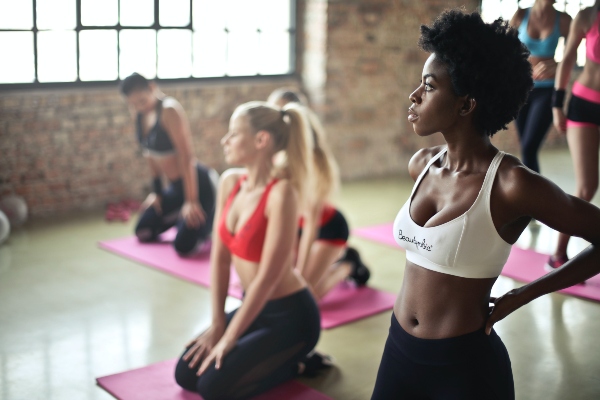
Bikram Yoga is the hottest thing in yoga today.

By Bonny Osterhage

If you think yoga isn't for die-hard athletes -- think again!  Ninety minutes of executing 26 poses in 105 degree temperatures burns can burn hundreds of calories.

"The body has to work so hard to cool itself that, in a Bikram yoga class, one can burn upward of 800 to 1,000 calories, depending on how hard one works," says ReBeca Drury, Bikram instructor and practitioner.

Many people are scared to try Bikram due to the intense heat, but the truth is that Bikram is one of the most beneficial forms of Hatha Yoga that you can practice, and the results are amazing. We asked Drury, who has spent the past 5 ½ years devoted to Bikram, to address some of the most commonly asked questions about this unique form of exercise.

F&H: What is the purpose of the heat?
RD: The heat is a tool for deeper and quicker access to the muscles and for improved flexibility. Performing these yoga postures in a cold environment can potentially cause harm or injury. The idea is to practice yoga to reconstruct the body. In order to do this, you must first heat the body, making it pliable and malleable. By provoking the body's cooling mechanism -- sweat -- to kick into high gear, detoxification of organs, glands and tissues takes place. Detoxification is one of at least five steps to good health.

yoga2.jpg
F&H: What benefits does Bikram offer that other forms of yoga do not?
RD: Bikram differs from other forms of yoga in that it is 26 postures, two breathing exercises and 90 minutes in a hot room every time. The postures are done in the same order every time. Bikram Choudhury, the founder of Bikram yoga, put these 26 postures together very strategically through years of research. In order to teach Bikram, one must attend a nine-week, 700-hour intensive training that requires the trainee to relocate to the site for the entire time. It is there that they learn not only the physical aspects of Bikram Yoga but also the dialogue, which is a distinct set of verbal instructions.

F&H: We have seen yoga classes billed as "hot yoga" or "hot body yoga." Are these the same as Bikram?
RD: In order to call yourself a Bikram Yoga studio, you must have gone through the training and teach the yoga to Bikram's specifications. Many studios that teach "hot yoga" teach a similar series to Bikram's but with some changes. This is not to say that what they are offering isn't beneficial -- it just cannot be called Bikram.

F&H: Is it safe to work out in such extreme temperatures?
RD: It is absolutely safe, as long as the students stay hydrated and listen to their bodies. We instruct students to lie down if they feel dizzy or light headed.

F&H: What can a first-timer expect?
RD: We ask that first-timers arrive 15 minutes before class for an orientation. We tell them that they can expect to sweat profusely, that the class will move quickly with lots of dialogue and instruction and that they will leave with a good diagnostic of themselves.

F&H: Is passing out or vomiting a real danger?
RD: It is rare.

Yoga3.jpg
F&H: What type of clothing should one wear?
RD: I personally recommend that you wear the least amount of clothing in which you are comfortable. Basically, wear anything you like as long as it fits tightly to your body and the fabric does not bind.

F&H: Should you eat before the workout? What about hydration?
RD: Do not eat two hours before practicing Bikram. After class, hydrate with water and electrolytes.

F&H: What are the benefits of Bikram?
RD: There are so many! A few include increased energy, improved cardiovascular function, improved circulation, stress management, improved sleep, weight loss, improved posture, cleansing of arteries and veins, relief of lymphatic congestion, improved elimination, improved digestion and many, many more benefits. 

Ultrasound

| No Comments
ultrasound.jpg
It's Not Just for Babies Anymore

By Annette M. Zaharoff, MD

Most people are familiar with the use of ultrasound as an imaging tool during pregnancy. In recent years, however, the use of ultrasound has become widely used to diagnose injuries in the field of sports medicine. During the recent 2008 Olympic Games in Beijing, several studies were performed highlighting the use of musculoskeletal ultrasound in the field of sports medicine. Olympic, professional, and recreational athletes as well as weekend warriors are benefitting from musculoskeletal ultrasound imaging to diagnose their aches and pains.

Diagnostic medical ultrasound uses high-frequency sound waves to create images of organs and structures inside the body. Ultrasound images are called sonograms. In sports medicine, diagnostic ultrasound may be used to diagnose injuries such as muscle tears, rotator cuff tendinitis, tennis elbow, ankle sprains and other soft tissue problems. Wrist, hand, shoulder, hip, knee, ankle and foot problems may all be assessed. Unlike many other imaging procedures, ultrasound does not involve ionizing radiation like x-rays. An instrument called a transducer is placed against the body and a special gel helps transmit the sound waves. The sound waves then bounce off a structure and return to the transducer and are processed by a computer to create images that are displayed on a monitor.

WHAT ARE THE ADVANTAGES OF ULTRASOUND IMAGING?
Ultrasound scans can be done quickly and with little to no discomfort for the patient. Since the test is readily available and at a lower cost relative to MRI testing, serial sonography is a practical means to evaluate the rate and stage of healing to reduce the risk of re-injury. Ultrasound imaging has been shown to be 90 percent accurate in evaluating various soft tissues structures. While ultrasound is limited to a certain depth of scanning and provides minimal information about bony injuries, it remains very a practical tool to assess soft tissue injuries.

WHAT ARE THE RISKS AND BENEFITS?
• Ultrasound scanning is noninvasive (no needles or injections) and is usually painless.
• Ultrasound is widely available, easy-to-use and less expensive than other imaging methods.
• Ultrasound imaging uses no ionizing radiation.
• Ultrasound scanning gives a clear picture of soft tissues that do not show up well on x-ray images.
• Ultrasound causes no health problems and may be repeated as often as is necessary if medically indicated.
• Ultrasound provides real-time imaging, making it a good tool for guiding minimally invasive procedures such as needle biopsies and needle aspiration of fluid in joints or elsewhere and performing ultrasound guided injections for tendons and joints.
• Unlike the strong magnetic field of magnetic resonance imaging (MRI), ultrasound is not affected by cardiac pacemakers, ferromagnetic implants or fragments within the body. Ultrasound is also an excellent alternative to MRI for claustrophobic patients.
• Ultrasound may actually have advantages over MRI in seeing tendon structure, which is better appreciated by ultrasound than MRI.
Risks
For standard diagnostic ultrasound there are no known harmful effects on humans.

The use of diagnostic ultrasound has expanded beyond babies and may be just what the doctor ordered the next time you over due your activities. More information about the use of diagnostic ultrasound may be found at: www.med.umich.edu/rad/muscskel/mskus or visit my Web site at www.drZmd.com

Mission to Mission Bike Tour

| No Comments
mission.jpg
Enjoy family fun while helping others

By Bonny Osterhage

Beautiful scenic routes past some of San Antonio's oldest and most historic landmarks are just part of the reason why people from all across the state will flock to San Antonio on Saturday, December 6, for the Mission to Mission Bike Tour. Now in its eleventh year, the Mission Trail Rotary Club hosts the tour with proceeds benefiting such charitable organizations as the Seton Home, Los Compadres, Meals on Wheels, the Rape Crises Center and more.

Registration begins at 8:30 a.m. with the first ride starting at 9 a.m. sharp. This performance/extended ride is 34/58 miles in length and stretches beyond the Mission Trails along city and county roads toward Braunig Lake and further on to Elmendorf.

The 12 to15 mile Family Ride begins at 10 a.m. and takes place along the scenic San Antonio River on the historic Mission Trails from Mission Concepcion to Mission Espada. The 15-mile stretch meets a badge requirement for the Boy Scouts of America.

Along both trails are plenty of volunteer-manned break stops with refreshments. There will also be tools and other equipment available in case of emergencies, but riders are encouraged to bring their own spare tubes if necessary. Both on- and off-road bikes are permitted; however, since 85-95 percent of the trails are dedicated bike routes, there will not be many opportunities to go off-road.

The most important thing to bring is enthusiasm.

"This is a fun ride, not a race," points out Richard Contreras, Mission to Mission Ride Director. For more information and online registration, visit www.teamcure.org. Here you will also find a place to sign up for the Rotary Clubs Polio Plus Community Challenge walk which is also part of the day's events. 

The Season's Most Fattening Foods

| No Comments
By Fran Werner

icecream.jpg
Ice cream.
I scream, you scream, we all scream for ice cream ... and unless you're careful, the calories in these chilly treats add up in a hurry. So forget the toppings, candy mix-ins and waffle cones, and stick with a single scoop of your favorite ice cream. Better yet, choose frozen yogurt or sorbet. At home, stock your freezer with calorie-controlled novelty treats, like ice cream sandwiches or bars, or try the new light ice creams that taste like super-premium brands. Also, the snow cone trailers often have sugar-free (and, thus, calorie-free) options.

Hot dogs.
Plain, with chili and cheese, or wrapped in cornbread -- go hand-in-hand with football season, tailgate parties, hayrides and bonfires. If you're going to have one, keep it simple: Top it with relish, and limit it to one dog because hot dogs are not only high in fat but also contain plenty of sodium.

Chocolates and other candies.
Show up Halloween and during the holidays, and in some households they're an everyday treat. Dark chocolate does has some health benefits, but only if you eat a small portion -- not an entire bag of trick-or-treats. The health benefits are found with just one ounce. Candy and caramel apples are delicious, but go easy on all sweets, including these.

Topping, dressings and sauces.
On otherwise healthy foods can spell diet disaster. Hollandaise sauce on asparagus, whipped cream on strawberries or high-fat salad dressings on salads turn a perfectly healthy food into a high calorie landmine. To keep calories in check, choose lighter versions of your favorite topper, or just add a little dab.

coffee.jpg
Seasonal beverage.
Like ice cream drinks, iced coffee drinks, champagne, hot cocoas with peppermint sticks are favorites for sipping with friends by the fire. But beware: Liquid calories can quickly add up.

Salads
Loaded with mayo, such as chicken and potato salad, or Waldorf salad and ambrosia (popular with many families during the holidays) are loaded with fat and calories.

Grilled foods.
Cool campfire weather means it's time to fire up the grill and enjoy grilled foods like burgers, hot dogs, ribs and steaks. Instead, fill your grill with items that are lower in fat: Why not grill poultry, fish, lean meats, fruit and veggies?

Fran Werner is a certified lifestyle and weight management consultant, a certified personal trainer, and a certified lifestyle coach, specializing in weight management.  She has been the owner/director of Lifestyle Consulting since 1981, and has maintained an office in Austin, Texas since 1993.  Fran has helped thousands of individuals achieve and maintain healthy weights and healthy lifestyles. You can contact her at (512) 794-3848 or at stfh@lifestyleconsulting.com. Visit her Web site, www.lifestyleconsulting.com. Fran's weight management program is now available on CD, www.thelifestyleprogram.com .  

Julie Dudley

| No Comments
marathon.jpg
Marathon Training - Sometimes it takes more will than skill

By Bonny Osterhage

Chances are you know someone who competed in the Rock and Roll Marathon held here in San Antonio on November 16. The day was unseasonably cold, but that didn't deter the more than 24,000 participants from lacing up their running shoes and hitting the 26-mile long road.

One of those participants was Certified Personal Trainer Julie Dudley. Dudley, who works at Dynamic Fitness, was on the cross country team at her high school but says she was not serious about the sport until after the birth of her first child seven years ago.

We caught up with Dudley, who qualified for the Boston Marathon with her time of 3 hours and 44 minutes, and we asked her for some tips for those interested in competing in next year's event.

F&H: How did you get started running?

JD: Like many new moms, I wanted to get back into shape after having a baby. I started out really slowly, walking a little and running a little. Slowly but surely, I worked up to three miles of straight running. As my children got older, I joined a local running group and started training to compete in local races.

F&H: How does someone go about training for a marathon?

JD: The good news is that anyone who is healthy can run a marathon if he or she has a proper training program. The key is to start out very slowly. Most programs start with three miles, and that is where someone who has never trained before should begin. I highly recommend training with a group for beginners as well as more experienced runners. I learned so much about training from the other runners, and the advice that I received from everyone in my training program was invaluable. Another advantage of training with an experienced group is having other people there to motivate you. Marathon training is not only hard on the body, but it is also mentally taxing. I often tell people that long distance running takes more "will than skill." Finally, group running is so much safer.

F&H: Is it better to train on a treadmill or outside?

JD: The treadmill is propelling you forward and doing most of the work. It is essentially not as hard as running outside. It is imperative that you do most of your training outside in order to acclimate your body to running in the elements. Sometimes it is unavoidable to have to do some of your training inside; I just do not recommend doing all of your training on a treadmill.

F&H: The morning of the race was unexpectedly cold. Are there precautions a runner takes when running in the cold?

JD: There are several guidelines to follow when running in cold weather. First, wear layers because as the temperature warms up you don't want to overheat. The bottom layer should be moisture wicking so your skin does not stay wet. Second, it is important to stay hydrated even when its cold. Last, you need to keep moving, especially when you are standing around before a race or training run.

F&H: What are three things you recommend for anyone considering for a marathon?

JD: First, and most important, you need a running plan or training plan that consists of three to four training runs during the week with one long run on the weekends. This varies according to how long one has been running. Second, you need a good nutrition and hydrating plan. This is experimental throughout your training program.

Last, you need a rest and recovery plan. Resting your muscles is very important to get maximum performance and decrease risk of injury. Of course, the most important thing is to train safely and get the advice of a professional if you are a beginner.