March 2007 Archives

Increase Your Fiber

| No Comments
nutrition0307.jpgMaintain Better Health

By Marisela Andrade-Krasiewski, MPA

Despite much of the talk that you've probably heard about fiber's many health benefits, most of us do not have a fiber-rich diet! Unfortunately, the foods we often crave do not contain enough fiber to provide the necessary benefits needed to maintain optimal health. However, if we take small steps toward changing some of the foods we regularly eat, we may end up much healthier and loving fiber-rich foods.

There are two types of fiber, insoluble and soluble.

Insoluble fiber is found in whole grains, cereals, breads and promotes regularity. In the long run, it may also lower the risk of rectal and colon cancer.

Soluble fiber is found in beans, peas, barley, apples and oats, along with other fruits and vegetables. These fiber-rich foods can help lower blood cholesterol and will help normalize blood glucose and insulin levels, which can ultimately prevent heart disease.

Foods that are high in fiber like fruits and vegetables provide plenty of bulk to meals without adding additional calories, high fat and sugar; therefore, you will not only feel full longer because of the bulk that fiber adds, but you may inadvertently provide yourself with a means to long-term weight control.
"High-fiber foods require more chewing and take longer to eat," explains Leslie Bonci, M.P.H., R.D., author of the American Dietetic Association Guide to Better Digestion. "Because your mouth is more involved in the chewing of high-fiber foods, you feel more satisfied with a high-fiber meal," she added.

How much fiber should I add to my diet and how do I get it?

The desirable fiber intake is 25 to35 grams per day for healthy adults. Children need about five grams more. If you aren't getting the desired daily amount, be sure to add fiber slowly, but be consistent to prevent gas. Begin to make small increases over the course of one month, and be sure to drink plenty of water to keep food moving though your system as quickly as possible. Once your body has acclimated to the intake, try not to skimp on fiber because it can cause uncomfortable bloating and weight gain.

It is always better to get fiber from your daily meals than from a fiber supplement, for foods high in fiber will provide other important nutrients you need for good health. Dietary fiber will only be found in plant foods; animal foods and meat do not contain dietary fiber.

One easy way to ensure that you are meeting your daily fiber needs is to consume daily the recommended amount of five fruits and vegetables, as well as choosing to eat whole- and high-fiber grain products and legumes, which are essential for maintaining good health. Choosing foods that are not processed will typically equal more fiber. So, instead of drinking an eight ounce glass of apple juice, eat a fresh apple with its skin.

Good fiber sources?
Whenever possible, it is always a good idea to choose whole-grain and bran food products. Breakfast is a good way to begin your day with a high-fiber cereal. Look for one with no less than three grams of dietary fiber per serving. Make sure to select a cereal that you enjoy so that you will continue to eat it regularly. These are some other good fiber sources:

• 1/2 cup 100 percent bran cereal (10-18 grams of fiber)
• 1/2 cup dried beans (5-8 grams of fiber)
• 3/4 cup of bran flake cereal (4-6 grams of fiber)
• 1/2 cup cooked corn (4 grams of fiber)
• 3 cups of air-popped popcorn (4 grams of fiber)
• 1/2 cup of cooked broccoli (3 grams of fiber)
• 1 cup red raspberries (5 grams of fiber)
• 1 small red apple (3 grams of fiber)

Good fiber alternatives?
To get you started, make one small change per meal such as trying whole wheat pasta instead of regular pasta and see if your family can tell the difference. Here are some other practical ways to implement fiber into your diet without making drastic changes.

Instead of:                                Try A high fiber alternative:

White bread                             Whole-grain bread
Chocolate chips                       Raisins or nuts
White flour                                Whole-wheat flour
Sugar cookies                          Oatmeal raisin cookies
Cream of tomato soup             Lentil or split pea soup
Potato chips                             Air-popped popcorn
Canned vegetables                  Fresh vegetables
Canned fruit juice                     Fresh fruit with skins
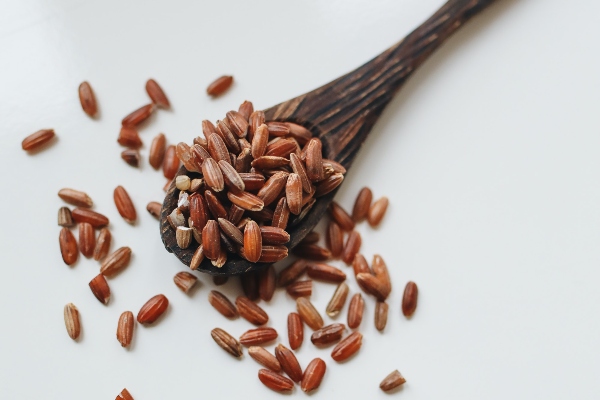
Instant white rice                      Brown rice
Mashed potato                         Baked potato with skin

Marisela "Marcy" Andrade-Krasiewski, MPA is the media and community liaison for Steps to a Healthier San Antonio (Steps-SA), a program of the San Antonio Metro Health District. The program is funded by the U.S. Department of Health and Human Services as part of Steps to a Healthier US, a national program focusing on the prevention of diabetes, obesity and asthma by addressing related risk factors: poor nutrition, physical inactivity, tobacco use and exposure.

Where oh Where is my T-Shirt?

| No Comments
running0307.jpgAnother run at the
Austin American-Statesman
Capitol 10K


By Paul Baltutis

They don't make T-Shirts like they used to ... they actually make them better these days. With that in mind, I have a long lost T-shirt and an old memory that I hope to reclaim when I run the 30th Annual Austin American-Statesman Capitol 10,000 on March 25.

If there is one thing I own, it's a lot of running T-shirts. I have acquired a large collection of T-shirts from the 400+ races I've completed. While I can't account for them all, the pack rat in me has kept most of them. All tolled, I have a dresser drawer full of T-shirts, dozens hanging in my closet, two large boxes of them in the garage and even a quilt made out of those shirts. Alas, the Austin American-Statesman Capitol 10,000 T-Shirt from 1978 is missing-in-action.

As you might guess, there's something enduring to me about the 1978 Capitol 10,000. It was my second road race ever. It was an overwhelming spectacle that helped put Austin in the company of Bay-to-Breakers in San Francisco, the Peachtree 10K in Atlanta and the Bolder Boulder in Colorado.

This Capitol 10,000 is a true Texas original, complete with a unique race logo, which is an animated running armadillo. This armadillo has a distinctively "cool" attitude, complete with sport sunglasses. It was this initial armadillo sighting on the 1978 race flyer posted at a Fort Hood Gym that caught my eye and propelled me to make the drive to Austin to run the 10K.

Evidently a lot of runners from the greater Austin area thought the race would be "hip," and so they entered. I don't think the race officials were prepared for the number of runners that arrived on the morning of the race. I certainly had never had seen so many runners before in one race - and certainly nowhere near that number. The only other races I'd entered were low-key U.S. Army cross-country races and one other road race, which was a half marathon in Phoenix that had around 100 runners.

I had a hard time just making it to the staging area and then getting anywhere close to the starting line. There were thousands of runners and mass confusion all the way around. When the gun went off, it took an eternity just to get moving. This was before chip timing, so every second counted against you. I finally got clear sailing about a mile and a half into the race. I started passing lots of runners while I was hoping to make up the some of the time I'd lost. I picked off runners the whole way, and at the same time I tried to soak in the atmosphere surrounding the colossal event. I finished in 37:09, which turned out to be 137th place according to the Austin American -Statesman. It was a decent finish, but it was still about two minutes slower than I knew I could do. I chalked it up to experience.

I do remember getting the T-shirt they were handing out at the finish. Only about half of the runners got one, so it was a big deal. While I was really psyched about getting the T-shirt, little did I know that it would turn out to be a bit of a let down.

First of all, it shrunk about two sizes on the first wash, but it still was too wide around my waist. While the design was cool, the fit was atrocious. Then I sort of accidentally spilled bleach on it. But I continued to wear it, nonetheless. It made it through its natural life span, and I couldn't see any reason to keep it in that condition, being that it was so tattered and torn.

But the spirit of Austin and the running armadillo on the T-shirt still lives on in my memory, and I'm determined to bring it back to life this year for the 30th anniversary. Back in 1978, the T-shirt industry was still trying to figure out how to make a well-fitting shirt; also, back then, it was hit or miss as to whether runners would even get T-shirts, and they were often only handed out as a "finisher's shirt." However, now in 2007, runners are almost guaranteed a T-shirt at packet pick-up if they register ahead of time. And with the improvement of the manufacturing of T-shirts today, I am certain this year it will fit like a dream.

Paul Baltutis is the manager of Soler's Sports in Alamo Heights. He is a certified marathon coach for Team in Training. He can be reached at sage_run03@yahoo.com.

Education and Culture

| No Comments
health0307.jpgImportant factors
influencing health literacy


By Nicole Rogers, MPH, CHES

Have you ever struggled to understand how to take a prescription drug or been confused by directions given to you by your physician? If you have ever found yourself in any of these situations, you have experienced first hand the importance of health literacy.

Nearly half of all American adults (90 million people) have difficulty understanding and using health information, according to the Institute of Medicine. These are not just people who have problems with literacy in general, but they also include people who manage the rest of their lives very effectively. Examples of health information include your doctor's instructions, your prescriptions at the local pharmacy, physician referrals, health insurance coverage and/or information on federal programs such as Medicaid, Medicare and CHIP.

People who have limited literacy skills often have problems with the medical system, and this limitation frequently results in poorer health outcomes and increased medical care costs. Even well-educated people with strong reading and writing skills may have trouble comprehending a medical form or doctor's instructions regarding a drug or procedure.

The San Antonio Health Literacy Initiative (SAHLI) recently conducted a study to examine the health literacy of adults in Bexar County. The SAHLI is a collaboration of individuals who have organized to address the issue of health literacy in the San Antonio area. The vision of the SAHLI is that the people of San Antonio will develop skills and behaviors which achieve and maintain the best possible health for them, their families and the community.

For the recent study, the Short Test of Functional Health Literacy in Adults (STOFHLA) was used to measure health literacy. All survey instruments were available in both English and Spanish. The test required that respondents read parts of an informed consent document and parts of an instruction sheet for a medical procedure. Approximately every fifth to seventh word is deleted in the passage and subjects are given a list of words from which to select words that best fit in the blank. Prior to the study, there was no published data about health literacy in San Antonio or the surrounding area. Among the findings of the study were...

Education and culture most influence STOFHLA scores compared to either the location within Bexar County or ethnicity. People with less than a high school education are most likely to have low levels of health literacy, followed by those who have a high school education only.

When examining health literacy scores among different ethic groups, Mexican Americans and people of other ethnic groups have the highest rates of inadequate health literacy. Even among those who speak Spanish and English equally, almost 16 percent have difficulty with health literacy.

The majority of people participating in the study had adequate health literacy. However, there is still a significant number of people who scored in the marginal and inadequate range. People with low health literacy scores are geographically spread throughout the city, but they share characteristics which are supportive of previous literature including being a minority, having less education, and less financial resources. Additionally, these were more likely to be Spanish-speaking people.

Prior to this study, health literacy levels had not been measured in any Texas city or county. If the community has evidence that a significant proportion of the population has low health literacy, it may help motivate health care systems and providers to strive to be more accessible and to provide a more user-friendly environment for our citizens.

Nicole Rogers, MPH, CHES, is the executive director of The Health Collaborative. For more information, visit the Web site at www.healthcollaborative.net

Training for Tighter Triceps

| No Comments
fitness0307.jpgSculpt your arms and
show them off this spring


By Shannon Sutton, CPT

We hope that February's article on biceps provided you with some helpful and useful tips.

As I've mentioned before, balance and symmetry are important among opposing muscle groups. The focus this month is on the triceps (back of the arms). With warmer weather right around the corner, it is becoming more and more difficult to keep those arms covered. Why not kick it up a notch this year and sculpt those arms into something you can proudly bare? By choosing exercises that you enjoy, you are more likely to be consistent with your workouts and, as with other muscle groups, there are numerous exercises to choose from when planning your fitness routine. I suggest choosing a few of your favorites and really committing to your workouts! Give it six weeks and add to or replace them with a few more.

Triceps' press
Begin by gripping a barbell (overhand ) at shoulders width. Lie back on a bench or an E-ball until your head and shoulders are rested. Press your lower back down, engage your abdominals, and raise the bar directly above shoulders. Slowly bend at the elbows to 90 degrees. Extend back up while focusing on the tricep contraction (inhale down, exhale up). Repeat desired number of reps, rest and stretch, and repeat for 2 - 3 sets. Note: These are also called skull crushers - so you may choose to use a spotter until you feel comfortable performing these exercises.

Tricep extension
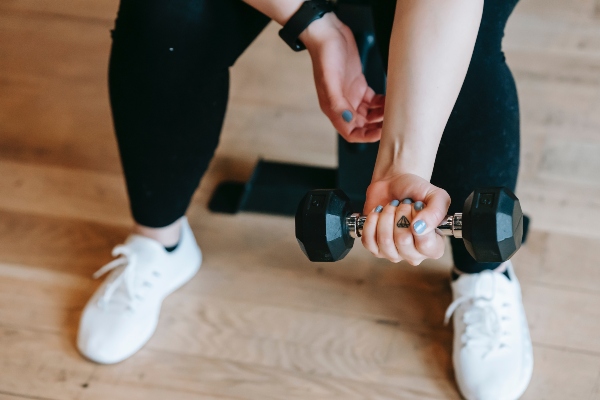
Begin seated on a bench or an e-ball. Grasp a dumbbell at its end with both hands and extend overhead. Slowly lower dumbbell (slightly behind your head), bending your elbows to 90 degrees. Be sure to keep your upper-arms near your ears and focus on the tricep contraction as you raise yourself back up to starting position. Use the same breathing, rep and set pattern as mentioned above.

Narrow push ups
Begin in plank/push up position with shoulders directly above your wrists. Be sure to keep a tight core and neutral spine throughout the entire exercise. Note: This may be performed with your knees on the floor or with your weight on hands and toes. Slowly lower your upper body toward the floor keeping elbows in by your sides, hold for a count and return to the starting position. Keep in mind that at no point should your back be arched. Repeat (Stop if you begin to experience ANY back pain).

Tricep dip
Begin seated on a bench with feet elevated on a platform or e-ball. Place your hands on the bench at shoulder width (near your hips). Slowly shift your weight to your hands while maintaining balance. Lower your upper body until your elbows reach 90 degrees (keeping abs and shoulders tight) and slowly raise yourself back to starting position. Repeat.

With these exercises, proper nutrition, regular cardiovascular exercise and resistance training you will have your arms moving as a beautifully sculpted unit in no time!

Shannon Sutton is an independent certified personal trainer. Her certifications include ISSA, NASM, APEX and Reebok. Contact her at (210) 722-3962.
feature0307.jpgFitness trainer Laura Anata's
workouts emphasize Pilates,
Perfect Ten Training, yoga
and good nutrition


By Kelly A. Goff
Photography by Robert French


Laura Anata's Bikini Bootcamp class has a cult-like following with enthusiastic regulars who swear by their instructor's methods and philosophies.

"I've lost 20 pounds in just three months," said Yvette Leija, a 38-year-old mother of four. The stay-at-home mom attributes her enthusiasm and dedication to making exercise and nutrition a main priority in her life to Anata. Leija does daily early morning cardio work outs and takes fitness classes at Women's Super Fitness five times a week. She most looks forward to Anata's Bikini Bootcamp classes, which she attends twice a week. "Anata is very inspirational and really motivates me to pay attention to my entire health and well-being - from nutrition to self-image. And I appreciate that she's not trying to force me into a size five!" laughs Leija.

The making of a motivator
Anata is a 38 year-old mother, as well as a certified personal trainer with 17 fitness certifications from yoga and Pilates to Super Slow and kickboxing. As the daughter of an Olympic gymnast, Anata became a member of the U.S.A. Gymnastics Team at age 12. At 19, after years of traveling the world and starving her 5 foot, 5 inch frame down to 95 pounds in order to compete against pre-teens, she quit gymnastics and started college. In just six months she ballooned to 170 pounds. That's when her interest in balanced fitness and health emerged. She made a commitment with her dad and stepmother to run together -- even going so far as making a star chart where she could record her achievements. Eventually they ran an 8K fun run together. "It was the first athletic event I'd ever done that wasn't a competition for me, and it felt good," says Anata.

Those early experiences set her on a continuous quest for knowledge about what the body responds to and how it works. She expounds the results in her group exercise classes and one-on-one coaching sessions with personal training clients. "Basically I teach other women about the healthiest choices I've found for my body through a lot training, research and experimentation," she explains. "In Bikini Boot Camp I combine high-intensity core training using movements and principles derived from Pilates, a variety of yoga practices and Perfect 10 training, which is based on the Super Slow philosophy of low repetition, high exertion [exercise] until muscle failure is reached." The class focuses on building a corset of muscles around the mid-section and developing lean muscles that burn calories even at rest.

Buddy system
A unique aspect of Bikini Boot Camp is the buddy system. "Research shows people do 50 percent better when they have a training partner," says Anata. During classes she trains everyone in the Perfect 10 training and breathing techniques. "Then they can pair off at the gym and coach one another. These women become very proficient coaches and benefit by encouraging each other to incredible levels of fitness. They say it's the hardest workout they've ever done, but they love it."

Think like a cave woman
That's the nutrition advice Anata gives her students and clients. "I don't give calorie or fat restrictions, and I don't believe in dieting. Instead I make it simple and tell them to eat like a cave woman - meaning plants and animals. Eating whole foods leads to radiant health," Anata says. "I advise an 80/20 eating plan. When you eat 80 percent whole foods and 20 percent soul food, you're mostly feeding your body with nutrient-dense calories that won't wreak havoc on your glycemic index. The 20 percent soul food might include small amounts of cheese, wine or chocolate -- things that make eating feel luxurious."

Anata abhors processed foods. "Diabetes, decay, depression and death all come in a box. It's absolutely unacceptable to subsist on processed foods," she admonishes. Anata is adamant that we should be nourishing our bodies, not forcing them to ride a roller coaster of insulin spikes and sugar cravings. But as her 20 percent soul food advice demonstrates, she's not a complete nutritional commando. "I tell them to have a 'party day' each week where they can eat some of their favorite foods. Ultimately the body has this amazing ability to balance everything out," says Anata.

You are not a number
Anata's pillars of healthy guidance wouldn't be complete without her confidence-boosting catechism of "love thyself." She says women tend to evaluate themselves based on a number, such as pounds on a scale, dress size or age. That's why she tells her clients to stay away from the scale -- measuring their progress instead with calipers to determine fat loss. "I really think it's important to work with women to love their bodies healthier, not hate themselves thinner," she says. "I tell them we're divine creatures, and our bodies are a beautiful wrapping. We tend to forget that because we're bombarded by advertising images that are impossible to attain."

She says once she convinces a student or client that every woman has her own unique shape and that it's not about how much you weigh, but body composition, things start to happen. "When their self-view changes, you see their bodies start to change for the better," swears Anata. "The thing I really like the most about my job is watching the transition of women who come to my classes. You can tell when they start feeling good about themselves -- when they feel happy and empowered."

Striking a balance
The name Bikini Bootcamp conjures flat abs and anorexic swimsuit models, but Anata says it's really about taking what you have and making it firmer. "It's about looking better naked," she laughs. Anata strives to understand a client's goals and motivations to help them identify what will really make them happy. "I try to help them understand the difference between 'fitness,' which is one-dimensional and concentrates on the outward appearance versus 'wellness,' which is a more about focusing on a healthy mind, body and spirit." She notes that if you want your body fat to be under 30 percent, you're in the vanity zone. "Women with six-pack abs are probably not menstruating, and that's not necessarily healthy," she says. "I'd rather they feed their muscles and nourish their bodies."

High on life
Apparently Anata has a formula that works. Another one of her students, Diana Reyes, has lost nearly 50 pounds and nine inches over the past five months. "I was about to give up on working out until I met Laura," said the 37-year-old Reyes who had been exercising regularly for two years and hadn't noticed any appreciable results before she met Anata. In just a few months, her borderline hypertension has disappeared, she no longer requires iron supplements for anemia and she's set a goal of fitting into a Dallas Cowboys' cheerleader outfit by this Halloween. Reyes also plans to become a certified group fitness instructor so that she too, can help women like herself realize their health and fitness goals.

"Diana called me the other day and said, 'Laura, I don't know what's wrong with me. I'm feeling sexy!'" recalls Anata. "I told her she's supposed to feel like that all the time, it's a fabulous fringe benefit of good health."