May 2008 Archives

Parkour Anyone?

| No Comments
fitinsa10508.jpgBy Bonny Osterhage

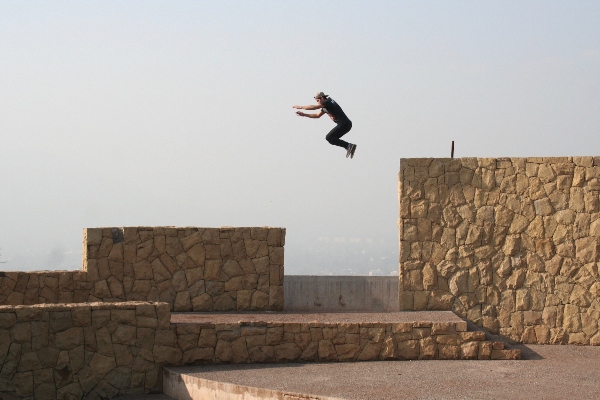
Eighteen-year-old Mike Avery is bouncing off the walls--literally! This McArthur High School senior leaps from a standing position to land softly on a skinny rail where he then walks with cat-like balance and precision before vaulting himself over a waist-high wall and executing a roll on the ground. No, he's not auditioning for SpiderMan 4: He's practicing Parkour, an extreme sport where the objective is to navigate and overcome physical obstacles in order to move from point A to point B as quickly and effectively as possible.

"It allows you to move freely when your surroundings confine you," describes Avery, who spends anywhere from three to eight hours a day practicing his art. "It's a physical philosophy."

An extreme lifestyle
Avery, who looks like a California native with long blond hair and a lean, toned physique, says he has always been drawn to extreme sports. Over the years he has dabbled in everything from skateboarding to BMX bike racing. Most recently, he was a devotee of aggressive in-line skating similar to the style found in Xgame competitions. In fact, it was his love of in-line skating that led him to Parkour.

"All of the friends I skated with were moving away, and I was surfing the Web looking for a local skate group," he explains. During his search he came across a U-Tube video titled "Evolution" that featured Parkour, and he was fascinated by what he saw. Further research turned up more videos and information, and soon Avery was teaching himself the moves at a local playground.

"I would watch the videos and then go out and try one of the moves," he says with a grin. " I'd mess up, go back and watch the video, and come back outside and try again. It took me a long time to get simple movements down."

It wasn't until a friend turned him on to the Web site www.texasparkour.com and its online message board that Avery discovered that he was not alone in his pursuit of the sport, and he began to train with other Parkour enthusiasts.

"Unlike other extreme sports, this is a very welcoming community," says Avery. "They offer help with anything you need."

fitinsa20508.jpg

The art of displacement
Parkour, or "the art of displacement" as it is sometimes called, has been around for many years. It was founded by Frenchman David Belle and is designed to train both the mind and the body to overcome obstacles.

The word Parkour actually comes from the French word parcours, which means obstacle course. The origin of the idea dates back to pre-World War I when French naval officer Georges Hébert traveled to Africa and was astounded by the way the indigenous tribes developed their bodies and skills using nothing but nature and natural skills.

Hébert developed a motto of "be strong to be useful;" and, upon returning to France, he began to teach what he referred to as his "méthode naturelle," or the natural method. His method involved 10 basic exercises, such as running, jumping, walking, climbing and other natural movements, and through those he developed an obstacle course that became a part of military training.

Today Parkour continues to be popular in Europe and has just recently begun to gain notoriety in the United States after it was featured during a chase scene in the James Bond movie Casino Royale.
"It has always existed, but now it has a name," laughs Avery.

The world is his training ground
One of the best things about Parkour is that you can do it anywhere. You don't need a gym or fancy equipment -- just motivation and a desire to push yourself to the next level. "You see your environment as an obstacle course," explains Avery as he glances around the courtyard of the building where we sit. "This is a virtual playground," he exclaims. "There are trees to climb and parking blocks for balancing. Everything can be used to further yourself physically and mentally."

From a physical standpoint, Parkour conditions the body to work in a "fight or flight" mode. It is not about seeking a fight but rather avoiding one by reacting quickly and naturally in order to navigate an unfamiliar terrain and get yourself or someone else to safety.

Overcoming physical obstacles goes in hand with overcoming mental obstacles. "You work with navigating the physical in order to navigate the mental," says Avery, who explains that Parkour has caused him to be more relaxed and to react differently in certain situations.

But regardless of the good it is doing for the body and mind, it is still a little odd to see a bunch of guys leaping around downtown San Antonio, and Avery admits that people are skeptical when they first see him and his friends practicing. "The public views us as a bunch of kids recklessly jumping around," he laughs. "But when we speak to them about Parkour philosophically, they aren't sure what to think."

A safe start
As Parkour continues to grow in popularity, it is becoming easier for those who are interested to learn more about the sport. Avery is quick to point out that those new to Parkour should not follow his self-taught example.

"You will get hurt sometimes," he says. "Try to find a gym and someone to train with when you begin." A good place to start is www.texasparkour.com. The group welcomes everyone regardless of skill level and teaches participants the basic moves in a safe environment. "You have to start slow and go through lots of training on every technique to get it to work for you," he says. "It's hard for people to understand that they need to take it slowly."

Avery adds that Parkour is not a competitive sport, and every person should take it at his or her own pace. The Parkour experience is different for every person, and that is part of what makes it so unique and what keeps Avery motivated. "It is deeper than you can express," he says with more wisdom than you would expect from an 18-year-old. "You have to discover it for yourself. It is like a form of enlightenment."

Take it Outside

| No Comments
fitness0508.jpgStaying Fit and Having Fun

By Shannon Sutton

Tired of the same old same old?
Do you feel you've reached a fitness plateau?


Maybe you're just ready for a change of scenery. Lets take that workout to the great outdoors! A stadium, such as one at a school or athletic center, makes for a great outdoor gym. You might want to bring a towel or a mat, and of course be sure to bring lots of water and/or low-calorie sports drinks. Some lightweight dumbbells would be great, too.

• Begin with a couple of warm-up laps.

• Now it's time to hit the bleachers. Fast, slow, it is all beneficial; however, you may want to take it more slowly on the way down. Remember to engage your core muscles and focus on gluteal contraction.

• Time to bring your heart rate back down with crunches, banana rolls, Pilates "teaser," plank, etc. This is where a mat comes in handy.

• Do lunges, lunges and more lunges! Lunge-walk the straights, and speed walk the curves. It's a good idea to incorporate bicep curls, lateral raises and tricep kickbacks with the lunges.

• When you need a break, get back to abdominal work.

This cardio/resistance workout is sure to burn some serious calories! Don't forget the sunscreen when you head outdoors, and be sure to stay well-hydrated.

Shannon Sutton is an independent certified personal trainer. Her certifications include ISSA, NASM, APEX and Reebok. She has invested years in helping individuals reach health, fitness and wellness goals. Contact her at (210) 722-3962.


Do the Twist

| No Comments
yoga10508.jpgThe "human pretzel" benefits of yoga

by Laura Brookover

Licensed physical therapist and certified Iyengar yoga teacher Julie Gudmestad recommends a "twist a day" to cleanse and detoxify the organs. Twists also trim the waist. Add a "twist-a-day" to proper hydration, eating clean whole foods (especially water-rich foods like watermelon and celery), and you'll be on your way to getting that beach body just in time for summer!

Modern day yoga Icon, Baron Baptiste, recently published a yoga book for children, dedicated to his own three sons called My Daddy is a Pretzel.

To many who do not practice yoga, the idea that in yoga you "turn your body into a pretzel" is a common one. While the focus of yoga is often more grounded in the development of a balance of mental and physical flexibility, strength, endurance and tranquility, it is an undeniable truth that yogis do twist a lot during a well-rounded practice.

According to Yoga Journal, "Twists provide an abundance of benefits ... to the circulatory system and internal organs, structural benefits to the musculo-skeletal system, and focusing benefits to your consciousness."

Twists, known in yoga as "parivrtta asanas" (pronounced "pav-rish-tah ah-sah-nahs") are promoted by Indian yoga master B.K.S. Iyengara as having a beneficial "squeeze-and-soak" action which is believed to detoxify the organs through a "wringing out" effect. In much the same way a wet towel is twisted and water is squeezed out, the blood flow to our organs follows a similar pattern. After the twist, the blood flow is renewed, carrying fresh oxygen to all the major organs and essentially renewing the system. People lose full spinal rotation due to sedentary lifestyles, surgical joint fusions, trauma or injury to the body and/or arthritis.

yoga20508.jpg

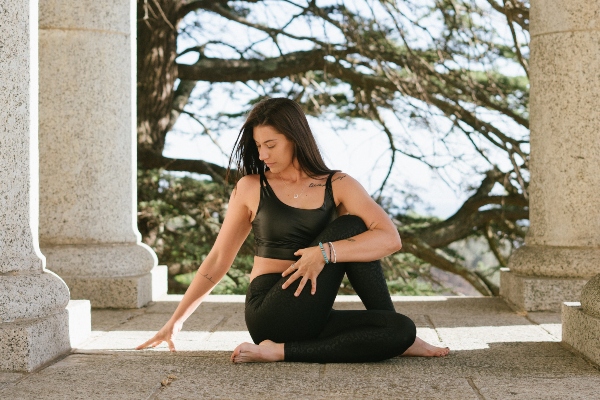
In the photographs here are some twists that may be practiced as shown or modified to suit your physical comfort levels by practicing "forgiving limbs yoga," which means, if any yoga posture (asana) ever looks or feels too intense, the individual who is practicing (not the instructor) can modify the posture by "softening" or slightly bending the knees and/or by "softening" the twist by not twisting quite as far. Twists are contraindicated for women who are pregnant or think they might be pregnant.

A simplified variation of the twist is called "Bharadvajasana." This means "pose dedicated to the sage Bharadvaja." This is done while sitting in chair with the same benefits to the organs and spine as all other twists. It has the added feature of accessibility, as it can be practiced at the office, in school, in a wheelchair or even in a nursing home.

Always remember to elongate the spine, and work to keep the bellybutton facing forward while the upper spine twists gently. This helps avoid unnecessary back pain from over stretching and also tones the oblique abdominal muscles for a smaller waist.

Remember that the best way to twist is by performing the twisting motion on the exhale. This creates more room in the body cavity to twist. Inhale, lift the spine tall, exhale, and gently twist. Continue to breathe naturally, using the exhales to intensify the stretch as needed and the exhale to "soften" or decrease the twisting motion as befits the comfort of your spine.

Have fun with these challenging asanas. If you do, you'll be on your way to a fresh new you that you can flaunt at the pool this summer.

Laura Brookover is a body-mind trainer. She teaches EmPOWERment Yoga at Destination Maternity, (210) 694-4692, and Bikini Bootcamp at Spectrum, Rogers Ranch, (210) 408-9050. For more information visit her Web site at www.laurabrookover.com. Photography courtesy of Jenn Brookover Photography.

Exercise Induced Asthma

| No Comments
health0508.jpgExercise Induced Asthma - To exercise or not: That is the question

by Erica Haller-Stevenson, MPH, CHES

Asthma is a chronic lung disease that causes breathing problems known as asthma attacks. During an asthma attack, the cells in the air tubes of the lungs produce a thick sticky mucus causing the air tubes to obstruct. In addition, the muscles in the air tubes tighten, causing them to narrow and making it hard to breathe. Asthma attacks are caused by several things, which are called "triggers."

These can include ...
• A cold, the flu, or respiratory infection.
• Air pollutants such as cigarette smoke, ozone, vehicle exhaust or dust.
• Allergens like pollen, animal hair, mold or dust.
• Stress or excitement.
• Vigorous exercise.

Most asthmatics (90 percent) suffer from exercise-induced asthma (EIA). However, some people who are not chronic asthmatics experience symptoms only during exercise.

The triggers associated with EIA often involve the following:
• Breathing airborne pollens when exercising.
• Exercising when ill.
• Exercising in cold dry air.
• Breathing air pollutants while exercising.

If you, or someone you know, is experiencing these symptoms, contact your doctor or other medical care provider for further testing. EIA can be diagnosed through a medical history, physical examination and by performing breathing tests, such as peak-flow testing during and after exercise.

So does a diagnosis of EIA mean you can't exercise?
Absolutely not. It just means you have to take precautions when exercising. You should consult your medical care provider before you begin a new physical activity program. Then choose an appropriate exercise activity that won't aggravate your lungs. The best types of activities are those that allow for short bursts of exertion but offer periods of rest. Some of these activities are swimming, tennis, golf, baseball, volleyball, wrestling, football, hiking, leisure biking and walking.

One of the best types of exercise for those with EIA is swimming. This is because of the warm humid environment; it also allows for intermittent breathing and is available throughout the year.

Some types of activities, such as soccer, distance running, basketball and field hockey, should be avoided by people with EIA because of the physical and continuous demand on the respiratory system and potential for triggering EIA. Playing a sport during cold weather days can also trigger an episode of EIA.

Here is a list of other things you can do to prevent episodes of EIA:
• Be certain that your asthma is controlled prior to beginning an exercise program.
• Restrict exercise when you are sick.
• Increase physical conditioning.
• Warm up for 10 minutes before you begin.
• If you experience symptoms while you are exercising, stop and rest.
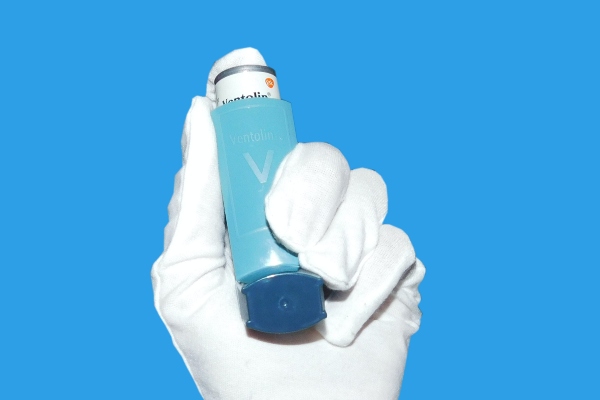
• Keep your medication available during activity.
• Drink plenty of water.
• Cool down for 10 minutes after exercise to allow your airways to recover.

For additional information on EIA, contact the American Lung Association of Texas at (210) 308-8978 or visit www.breathehealthy.org.

Erica Haller-Stevenson, MPH, CHES, is the Community & Media Liaison for Steps to a Healthier San Antonio, San Antonio Metro Health District. The program is part of Steps to a HealthierUS, a national program focusing on the prevention of diabetes, obesity and asthma by addressing related risk factors such as poor nutrition, physical inactivity and tobacco use and exposure.

Tour de Cure

| No Comments
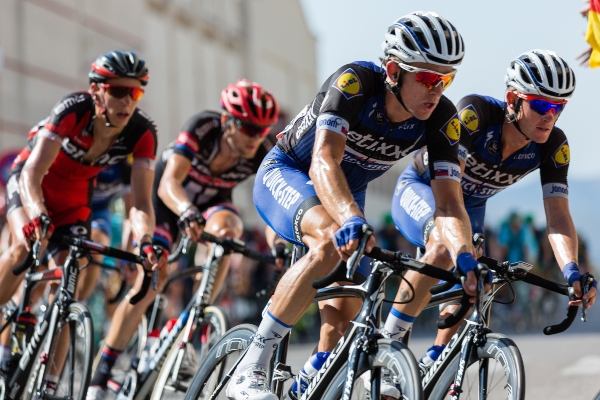
cycling0508.jpgCycle for a good cause with the American Diabetes Association

by Bonny Osterhage

More than one million Texans are living with diabetes, and an additional 440,000 don't even know they have it.

That is the latest startling statistic from the American Diabetes Association. Even more alarming is the fact that, in Bexar County alone, the rate of diabetes is twice the national average. That translates into 14 percent of the 1,444,646 individuals living in San Antonio that suffer from the disease and an additional one-third of that population who are completely unaware of their condition.

The American Association of Diabetes is committed to changing those numbers, and you can help by joining the thousands of participants who ride in the Tour de Cure taking place in San Antonio May 17 and 18.

The Tour de Cure is held in 40 states nationwide and is the only cycling event in Texas that is dedicated to finding a cure for diabetes, which is currently the fifth-leading cause of death by disease in the United States.

The tour consists of a one- and/or two-day ride from San Antonio to Austin via San Marcos. Riders select the appropriate mile-route for their fitness level and then enjoy a safe, supported and beautiful ride along the scenic back roads of the Texas Hill Country. Unlike a bike race, this tour is suitable for families, novices and cycle enthusiasts alike.

The fun begins on Saturday, May 17. Participants gather at 19500 Bulverde Road at 6:30 a.m., and hit the road to Texas State University.

That evening a party will take place on the campus, complete with dinner and awards for the top fund-raisers as well as the first-time riders. On day two, it's off to Austin, where the finish line awaits at Akins High School on the south side of the city.

Breakfast and lunch is provided both days, and free showers are available at both finish lines. Lodging at the Texas State University dorms is available Saturday night for $40 to $50, and shuttles will be available both days for a nominal fee.

Requirements to participate include a minimum $150 in funds raised, a $20 registration fee, a bike, a willingness to have fun and a commitment to finding a cure for diabetes. Ride alone, join a team or, if you aren't a rider, sponsor someone who is.

For information or to register call 1-(800) DIABETES, or visit www.diabetes.org. Here you will find everything you need to get started, including training and fund-raising tips. This is a wonderful opportunity to do something good for your own health while helping the more than 20 million Americans whose health is jeopardized by this deadly disease.

Go Bananas!

| No Comments
nutrition0508.jpgIt's Good for You

by Fran Werner

Bananas contain three natural sugars (sucrose, fructose and glucose) combined with fiber that give an instant, sustained and substantial boost of energy. Research has proven that just two bananas provide enough energy for a strenuous 90-minute workout. No wonder the banana is the No. 1 fruit with the world's leading athletes.

Providing energy isn't the only way a banana can help us keep fit: It can also help overcome or prevent a substantial number of illnesses and conditions, making it a must to add to our daily diet.

Depression: Bananas contain tryptophan, a type of protein that the body converts into serotonin, known to make you relax, improve your mood and generally make you feel happier.

PMS: Forget the pills; eat a banana. The vitamin B6 it contains regulates blood glucose levels, which can affect your mood.

Anemia: High in iron, bananas can stimulate the production of hemoglobin in the blood and help in cases of anemia.

Blood Pressure: This unique tropical fruit is extremely high in potassium yet low in salt, making it perfect to help beat blood pressure -- so much so, the US Food and Drug Administration has just allowed the banana industry to make official claims for the fruit's ability to reduce the risk of blood pressure and stroke.

Constipation:
High in fiber, bananas in the diet can help restore normal bowel action, helping to overcome the problem without resorting to laxatives.

Hangovers: One of the quickest ways of curing a hangover is to make a banana milkshake sweetened with honey. The banana calms the stomach, and, with the help of the honey, it builds up depleted blood sugar levels while the milk soothes and re-hydrates your system.

Heartburn:
Bananas have a natural antacid effect in the body, so if you suffer from heartburn, try eating a banana for soothing relief.

Morning sickness: Snacking on bananas between meals helps to keep blood sugar levels up and avoid morning sickness.

Mosquito bites: Before reaching for the insect bite cream, try rubbing the affected area with the inside of a banana skin. Many people find it amazingly successful at reducing swelling and irritation.

Nerves: Bananas are high in B vitamins that help calm the nervous system.

Ulcers:
The banana is used as the dietary food against intestinal disorders because of its soft texture and smoothness. It also neutralizes over-acidity and reduces irritation by coating the lining of the stomach.

Seasonal Affective Disorder (SAD):
Bananas can help SAD sufferers because they contain the natural mood enhancer tryptophan.

Smoking and tobacco use: Bananas can also help people trying to give up smoking. The B6 and B12 they contain, as well as the potassium and magnesium found in them, help the body recover from the effects of nicotine withdrawal.

Stress: Potassium is a vital mineral, which helps normalize the heartbeat, sends oxygen to the brain and regulates your body's water balance.

Strokes:
According to research in The New England Journal of Medicine, eating bananas as part of a regular diet can cut the risk of death by strokes by as much as 40 percent.

Warts: Those keen on natural alternatives swear that if you want to kill off a wart, take a piece of banana skin and place it on the wart, with the yellow side out. Carefully hold the skin in place with a plaster or surgical tape.

So, a banana really is a natural remedy for many ills. When you compare it to an apple, it has four times the protein, twice the carbohydrates, three times the phosphorus, five times the vitamin A and iron, and twice the other vitamins and minerals. It is also rich in potassium and is one of the best value foods around. So maybe it's time to change that well-known phrase and now say, "A banana a day keeps the doctor away!"

Healthful Banana Cookies

Prep Time: 15 minutes
Cook Time: 20 minutes
Serves: 36

Ingredients
3 ripe bananas
2 Cups rolled oats
1 Cup dates, pitted and chopped
1/3 Cup vegetable oil
1 teaspoon vanilla extract

Directions
Preheat oven to 350 degrees F (175 degrees C). In a large bowl, mash the bananas. Stir in oats, dates, oil and vanilla. Mix well, and allow it to sit for 15 minutes. Drop by teaspoonfuls onto an ungreased cookie sheet. Bake for 20 minutes in the preheated oven or until lightly brown.

Nutritional information (per one-cookie serving): Calories: 58, Carbohydrates: 8 g., Dietary Fiber: 1 g.,
Fat: 2 g., Protein: 0 g., Sugars: 5 g.

Recipe submitted by K. Gailbrath, courtesy www.allrecipes.com.

Fran Werner is a certified lifestyle and weight management consultant, a certified personal trainer, and a certified lifestyle coach, specializing in weight management. She has been the owner/director of Lifestyle Consulting since 1981, and has maintained an office in Austin, Texas since 1993. Werner has helped thousands of individuals achieve and maintain healthy weights and healthy lifestyles. You can contact her at (512) 794-3848 or at stfh@lifestyleconsulting.com. Visit her Web site, www.lifestyleconsulting.com. Werner's weight management program is now available on CD, www.thelifestyleprogram.com.

Alamo Series Announced

| No Comments
running0608.jpgRock 'N' Roll Marathon Pre-race Series

By Paul Baltutis

Austin has the RunTex Distance Challenge leading up to the AT&T Marathon, and Houston has a warm-up series leading up to the Chevron Marathon. So now the San Antonio Rock 'N' Roll Marathon has its own series of races to help prepare runners for the challenge of either the half or full marathon.

The appropriately named Alamo Series is a nine-race series that starts in April and builds up race lengths, cumulating in a 25K (15.5 mile) tune-up three weeks before the Rock 'N' Roll event on November 16. Half marathoners can also take advantage of the Alamo Series because of the variety of race distances it offers.

The Alamo Series is a cooperative effort between six entities in the San Antonio running community: San Antonio Roadrunners, Roger Soler's Sports, Fleet Feet, Run Gear Run, Run-A-Way Athletic Club and the San Antonio Spurs 5K. The San Antonio Sports Foundation provides administrative assistance for the Alamo Series, showing that the entire local running community is banding together to help make the city healthier and to make the Rock 'N' Roll event a success.

Here is a list of the nine proposed events:

May 24 - Police Officer's Memorial 5K at Grayson and Broadway.

June 14 - Flag Day 5K/10K, McAllister Park.

July 4 - The San Antonio Roadrunners 4th of July 4 Miler at Woodlawn Lake.

August 16 - Fleet Feet Sports Sunrise 10K at Fort Sam Houston.

September 1 - The San Antonio Roadrunners Whine Run 5 Miler at Dry Comal Creek.

September 21 - Army-Dillo Half Marathon and 32K at Fort Sam Houston.

October 11 - Soler's Sports Alamo Half Marathon, location TBD.

October 25 - Run Gear Run Fall Fest 25K and 8 Miler, location TBD.


There will be recognition awards for athletes who participate in seven or more of the events. For the latest information about the series, go to the Web site, www.alamoseries.com.

Paul Baltutis, is manager of Soler's Sports and a certified marathon coach for Team in Training. For more information, please contact Paul Baltutis via e-mail at sage_run03@yahoo.com.